

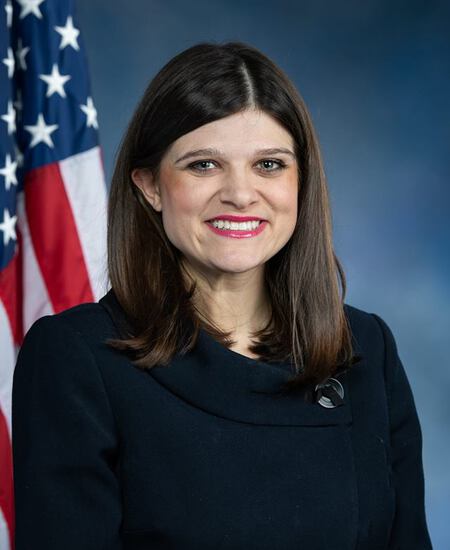
Photo of Haley M. Stevens
D United States House · District 11 · Michigan

Rep. Haley M. Stevens

Compare
Total votes
2,818
all sessions
Attendance
100%
9 missed
Higher than 76% of chamber peers
With party
97%
of cast votes
Near the chamber average
Bipartisan score
1%
crosses aisle rarely
Near the chamber average
Sponsored
1,259
bills & resolutions
Near the chamber average
Committees
5
assignments
1,259 bills and resolutions

Sponsored bills

Total
1,259
Primary
111
Co-sponsor
1,148
This page
1,259
matching current filters
Primary HR 7561
In committee · Ohio House · Lead sponsor
Local Infrastructure Tax Cuts Act

Maddy summaryHR 7561 modifies the federal tax code to change how state and local tax (SALT) deductions work. It eliminates the $10,000 SALT deduction limit for most taxpayers above specific income thresholds ($215,000 for joint filers, $161,250 for heads of household, and $107,500 for others), reducing the deduction to $0 for those exceeding these amounts. The bill also creates a new deduction for "qualified special assessment taxes" paid on a taxpayer's principal residence to fund specific local infrastructure projects like roads, schools, or utility systems within designated districts. These changes apply to tax years beginning after December 31, 2026.

In committee Feb 12, 2026 0 co-sponsors
Co-sponsor HR 7492
In committee · Ohio House · Co-sponsor
Michigan-Canada Partnership Act

Maddy summaryHR 7492, the Michigan-Canada Partnership Act, prohibits federal officials - including the President - from interfering with the opening or operation of the Gordie Howe International Bridge and its associated port of entry without congressional approval or a request from the Governor of Michigan. The bill requires federal agencies to take all necessary actions to ensure the bridge opens and operates continuously, preventing delays or obstruction. It directly affects federal agencies responsible for border operations and Michigan, which has a vested interest in the bridge's timely completion as a critical trade link with Canada. The law allows Michigan or local governments to sue to enforce these requirements if federal action impedes the bridge's operation.

In committee Feb 12, 2026 1 co-sponsor
Co-sponsor HR 4304
In committee · Ohio House · Co-sponsor
Fair Accounting for Income Realized from Betting Earnings Taxation Act

Maddy summaryHR 4304, the FAIR Bet Act, amends the tax code to allow gamblers to deduct 100% of their wagering losses instead of the current 90% limit. This change directly affects individuals who report gambling losses on their federal income tax returns. The key provision modifies Section 165(d) of the Internal Revenue Code to remove the 90% restriction on deducting gambling losses. The bill does not alter how gambling winnings are taxed, only the deduction available for losses.

In committee Feb 12, 2026 1 co-sponsor
Co-sponsor HR 7481
In committee · Ohio House · Co-sponsor
Department of Homeland Security Appropriations Act, 2026

Department of Homeland Security Appropriations Act, 2026 This bill provides FY2026 appropriations for various agencies and offices within the Department of Homeland Security (DHS), except for U.S. Immigration and Customs Enforcement (ICE), U.S. Customs and Border Protection (CBP), and management and oversight activities of the Office of the Secretary. Specifically, the bill provides appropriations to DHS for  the Federal Protective Service, the Office of Inspector General, the Transportation Security Administration, the U.S. Coast Guard, the U.S. Secret Service, the Cybersecurity and Infrastructure Security Agency, the Federal Emergency Management Agency (FEMA), U.S. Citizenship and Immigration Services, the Federal Law Enforcement Training Centers, and the Science and Technology Directorate. The bill does not provide appropriations for some agencies and activities that have been funded in prior DHS appropriations acts, including ICE, CBP, and management and oversight activities of the Office of the Secretary.

In committee Feb 11, 2026 1 co-sponsor
Co-sponsor HR 2110
In committee · Ohio House · Co-sponsor
Safe Vehicle Access for Survivors Act

Safe Vehicle Access for Survivors Act This bill requires providers of connected vehicle services, upon the request of a domestic violence survivor, to terminate or disable an identified domestic abuser’s access to a vehicle’s connected capabilities and data. Specifically, within two business days of receiving a request from a survivor, a covered provider must, if technically feasible (1) terminate or disable the connected vehicle account associated with the identified abuser or the relevant vehicle, or the vehicle’s connected capabilities; or (2) instruct the survivor on how to terminate or disable connected services directly. Covered providers may not make the termination of connected vehicle services or accounts contingent on any requirement other than the provision of specified information by the survivor. For example, a provider may not require a survivor to pay a fee or extend their contract with the provider. Under the bill, an abuser is an individual identified by a survivor who committed or allegedly committed certain acts against the survivor, including domestic violence, sexual assault, stalking, and sex trafficking. A survivor is an adult against whom such an act was committed. Further, a covered provider is a vehicle manufacturer, affiliate, or entity acting on behalf of a manufacturer that provides a connected vehicle service. Connected vehicle service is any capability that enables a person to remotely access data from or send commands to a vehicle. Finally, the Federal Communications Commission must prescribe regulations governing how covered providers address survivors’ requests related to connected vehicles.

In committee Feb 10, 2026 1 co-sponsor
Primary HR 7379
In committee · Ohio House · Lead sponsor
NASA C-UAS Act

Maddy summaryThis bill gives NASA specific authority to detect, identify, monitor, and track drones that pose threats to NASA facilities related to space launches, reentries, and protection of space vehicles or payloads. It allows NASA security personnel to intercept communications from threatening drones without prior consent, while requiring strict privacy protections including limiting communication records to 180 days and restricting disclosure to authorized personnel only. The bill requires NASA to conduct risk assessments of its facilities, coordinate with agencies like the FAA to avoid disrupting air traffic, and provide semiannual reports to Congress about drone monitoring activities. It specifically targets threats to NASA's space infrastructure, not general drone regulation, and expires on September 30, 2031.

In committee Feb 5, 2026 0 co-sponsors
Co-sponsor HRES 1002
In committee · Ohio House · Co-sponsor
Recognizing the value of the Older Americans Act of 1965 nutrition program in addressing hunger, malnutrition, and isolation, and improving the health and quality of life for millions of our Nations seniors each year.

Maddy summaryHRES 1002 is a symbolic House resolution recognizing the Older Americans Act (OAA) nutrition program, which provides meals and social services to seniors aged 60+. It directly affects millions of older adults - particularly those who are homebound, isolated, or facing hunger, malnutrition, or chronic health conditions - by highlighting how the program reduces hospital visits, lowers healthcare costs, and improves quality of life. Key provisions include acknowledging the program’s role in preventing falls and institutionalization, emphasizing volunteer support as its "backbone," and urging Congress to secure sustained federal funding. As a non-binding resolution, it does not change policy but formally endorses the program’s value and calls for community and legislative support.

In committee Feb 4, 2026 1 co-sponsor
Co-sponsor HR 7340
In committee · Ohio House · Co-sponsor
Rebuild America’s Schools Act of 2026

Maddy summaryThe Rebuild America's Schools Act of 2026 authorizes $20 billion annually from 2027 to 2031 to improve public school facilities nationwide. The bill provides grants to states to fund school construction, renovation, and modernization projects that focus on safety, energy efficiency, and accessibility, with priority given to schools serving high percentages of students eligible for free or reduced-price lunch. Funds cannot be used for routine maintenance, athletic facilities, or vehicles, and must meet specific environmental, safety, and energy efficiency standards. The bill also includes specific provisions for repairing school foundations affected by pyrrhotite, a mineral that causes concrete deterioration, and requires use of American-made materials for construction projects.

In committee Feb 4, 2026 1 co-sponsor
Primary HR 7337
In committee · Ohio House · Lead sponsor
Make Congress Drive Union-Made Act

Maddy summaryThis bill requires House and Senate members to purchase or lease official vehicles only if they are assembled in the U.S. by workers covered by a union collective bargaining agreement. It amends funding rules for congressional representatives' allowances (House) and office expenses (Senate), banning the use of those funds for non-compliant vehicles. The restriction applies to all new vehicle purchases or leases starting October 1, 2026. It directly affects how Congress members fund their official transportation, aiming to support U.S. manufacturing jobs with union labor. The policy change is limited to vehicle procurement under existing congressional funding mechanisms.

In committee Feb 3, 2026 0 co-sponsors
Co-sponsor HR 7322
In committee · Ohio House · Co-sponsor
True Shutdown Fairness Act

Maddy summaryHR 7322, the True Shutdown Fairness Act, requires federal agencies to pay regular wages to most employees and contractor workers during government shutdowns in fiscal year 2026, instead of furloughing them. It applies to all standard federal employees (excluding those on emergency duty) and contractor workers whose jobs would normally halt during a funding gap. Agencies must pay covered employees within 7 days of the bill's enactment for ongoing shutdowns, and contractors receive reimbursement for costs incurred keeping workers paid. The bill also prohibits agencies from implementing layoffs or placing employees on administrative leave for more than 10 days during a shutdown.

In committee Feb 2, 2026 1 co-sponsor
Showing 81 to 90 of 1,259 bills
Previous 1 8 9 10 126 Next