

Maddy summaryThis bill expands the review authority of the Committee on Foreign Investment in the United States to include real estate transactions involving specific foreign nations and entities linked to them. It designates certain locations, such as military bases, agricultural land, and critical infrastructure, as "sensitive sites" where purchases or leases by foreign adversaries face stricter scrutiny. Under the new rules, these transactions are presumed to pose an unresolvable national security risk unless the committee provides clear evidence that the threat can be mitigated. The legislation also ensures that existing state laws restricting foreign ownership of farmland remain in effect and requires the committee to issue new regulations within 120 days of enactment.
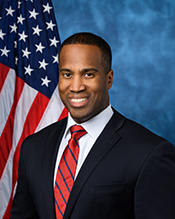
Rep. John James
Sponsored bills
Maddy summaryThis bill strengthens penalties for illegally importing electronic nicotine delivery systems, commonly known as vapes, into the United States. It directly affects companies and individuals who attempt to bring unauthorized vaping products into the country by increasing civil fines based on the number of devices and the severity of the violation. Under the new rules, fines can reach up to $5,000 per unit for fraudulent actions, $1,000 for gross negligence, and $500 for simple negligence, with multipliers applied for repeat offenses or attempts to evade customs laws. The legislation defines an unauthorized device as any vape product not approved by the Food and Drug Administration for sale in the U.S. and ensures that federal agencies retain their existing authority to pursue criminal or administrative actions alongside these new civil penalties.
Maddy summaryHR 5213, the "Keep Violent Criminals Off Our Streets Act," prohibits federal grants to states or local governments that have policies substantially limiting cash bail for individuals charged with specific violent or public disorder offenses. It directly affects state and local governments with bail policies allowing pretrial release for crimes like murder, rape, robbery, looting, or rioting. The bill amends federal law to block grant awards (under the Omnibus Crime Control Act) for any jurisdiction maintaining such bail policies for these covered offenses, starting in the fiscal year after enactment. This is a funding restriction, not a change to bail laws themselves.
Maddy summaryThe FLEETS Now Act aims to strengthen the U.S. shipbuilding industry by creating new government roles, establishing international partnerships with allies, and investigating unfair practices by Chinese state-owned shipbuilding companies. It creates a new Assistant Secretary position at the State Department to oversee maritime and space affairs, designates a lead official for international shipbuilding investment, and sets up an exchange program for shipbuilding experts between the U.S. and other countries. The bill also requires regular reports on Chinese shipbuilding entities, establishes a framework for allied countries to collaborate on ship production, and directs U.S. diplomats to advocate for changes at the International Maritime Organization regarding environmental regulations and leadership positions.
Maddy summaryThe Safe Water in Schools Act of 2026 directs federal funding to help schools and child care programs install point-of-use water filtration systems. These filters are intended to prevent exposure to lead in drinking water before testing occurs or to clean up existing contamination. The bill authorizes specific annual funding amounts, increasing from $60 million in 2026 to $72 million in 2030, to support these efforts. Local educational agencies will receive grants to implement the filtration systems at facilities under their jurisdiction. This legislation amends the existing Safe Drinking Water Act to formalize these requirements and funding levels.
Maddy summaryThe Defense Community Infrastructure Program Revisions Act expands an existing pilot program to include Coast Guard installations, which are currently under the Department of Homeland Security. This change requires the Secretary of Defense to coordinate with the Coast Guard Commandant when selecting and prioritizing funding projects for these facilities. Additionally, the bill ensures that grants awarded under this program can support any mission authorized for the Coast Guard. Ultimately, the legislation aims to align infrastructure support mechanisms with the operational needs of the Coast Guard alongside other military branches.
Maddy summaryThe VA Home Loan Affordability Act updates the Department of Veterans Affairs' home loan program to make it easier and more affordable for veterans to buy or refinance homes. Key changes include removing the requirement for third-party verification of lender fees, allowing refinancing without an appraisal in certain cases, and lowering the minimum interest rate cap for adjustable-rate mortgages from 200 to 75 basis points. The bill also expands loan guarantees for condominiums, caps closing costs and seller fees at 1.5% and 6% of the loan amount respectively, and mandates regular reviews of debt-to-income ratios. Additionally, it requires appraisers to hold state licenses, directs the VA to update property suitability regulations, and sets a deadline for submitting a plan to modernize the agency's loan administration technology.
Maddy summaryThis bill establishes a framework to protect American-owned closed-source AI models from unauthorized extraction by foreign entities, particularly those from China and Russia. It requires the Secretary of State to conduct assessments identifying which foreign entities are conducting model extraction attacks or facilitating them through fraudulent account networks, then publish a public list of these actors for up to five years. The legislation authorizes the President to impose economic sanctions on identified entities and their affiliates, while also creating mechanisms for industry coordination and sharing information about threats. Importantly, the bill distinguishes between legitimate AI research conducted under contractual terms and unauthorized extraction attempts that bypass access controls or violate usage agreements.
Maddy summaryThe MATCH Act requires U.S. agencies to align export controls on semiconductor manufacturing equipment with allied nations to prevent adversaries from accessing critical technology. It mandates a 150-day period for diplomatic efforts to secure countrywide denial policies from allied suppliers, after which U.S. jurisdiction would extend to equipment exported from countries not complying with these controls. The bill specifically targets semiconductor manufacturing equipment that the U.S. cannot currently produce in high volume and includes a list of Chinese companies deemed to warrant comprehensive restrictions. If allies fail to implement matching controls, the Act would allow the U.S. to regulate equipment exported from non-compliant allied countries and restrict servicing of restricted items at facilities in adversary nations. The legislation includes a sunset provision that expires five years after enactment, with annual reporting requirements to Congress on progress and compliance.
Maddy summaryThis resolution expresses the sense of the House of Representatives that establishing a "Veterans Appreciation Month" would be a powerful way for the nation to recognize veterans. It suggests this recognition should occur as the United States marks its 250th anniversary of independence.