

Maddy summaryHR 2325, the CEMAC Act, requires the U.S. to withhold its voting support at the International Monetary Fund (IMF) for any CEMAC member state until the IMF publicly clarifies that funds paid by oil companies to the Bank of Central African States (BEAC) for site rehabilitation cannot count toward a country's foreign exchange reserves. This directly affects U.S. oil and gas companies operating in the CEMAC region, as the bill aims to prevent CEMAC countries from misusing these restoration funds as reserves - a practice the IMF has not properly addressed. The key mechanism is the U.S. withholding its vote on IMF quota increases or special financial assistance for CEMAC nations until this IMF clarification occurs. The bill does not alter CEMAC's regulation but pressures the IMF to correct a policy that risks billions in oil investment.
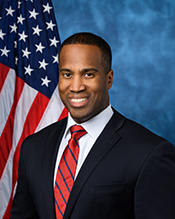
Rep. John James
Sponsored bills
Maddy summaryThis resolution (HRES 223) is a ceremonial measure honoring Selfridge Air National Guard Base in Michigan on its 108th anniversary. It commends the base’s historical contributions - such as hosting the Tuskegee Airmen, supporting post-9/11 security, and hosting KC-46A aircraft - and acknowledges its current role in national defense, economic impact (supporting over 4,500 jobs and generating hundreds of millions in local revenue), and community partnerships. The resolution does not create new policy or funding but formally recognizes the base’s significance to military history and regional security. As a procedural resolution, it has no direct effect on legislation or affected parties beyond symbolic recognition.
Maddy summaryThe FOCA Act of 2025 prohibits federal agencies from requiring or banning contractors from using union agreements in construction project bids or contracts. It directly affects federal agencies, contractors, and subcontractors working on federally funded or assisted construction projects (like buildings or infrastructure). The law requires bid documents to not favor or penalize contractors based on whether they have union agreements, aiming to promote open competition and prevent discrimination. This changes how agencies structure bids but does not affect union agreements themselves. The bill applies to all new contracts and subcontracts after enactment, with limited exemptions only for public health/safety emergencies or national security.
Metastatic Breast Cancer Access to Care Act This bill expedites payment of Social Security Disability Insurance (SSDI) benefits and eligibility for Medicare coverage for those with metastatic breast cancer (i.e., breast cancer that has spread to other sites in the body). Specifically, the bill eliminates the 5-month waiting period for SSDI benefits and the subsequent 24-month waiting period for Medicare coverage for individuals with metastatic breast cancer. Under current law, individuals generally must wait 5 months after the onset of disability to begin receiving SSDI benefits and an additional 24 months to become eligible for Medicare.
Maddy summaryHR 2058 amends the Workforce Innovation and Opportunity Act (WIOA) to formally define "evidence-based" for workforce programs. It specifies that an activity, service, or strategy must demonstrate statistical proof of effectiveness through rigorous studies (like controlled experiments or well-designed evaluations) or show a strong research rationale with ongoing evaluation efforts. This definition directly affects states and local workforce boards receiving WIOA funds, requiring them to describe how they prioritize evidence-based programs in their funding applications. The bill updates WIOA sections to include this definition and mandates states to detail their evidence-based program funding strategies in grant proposals.
Maddy summaryThe Disclose GIFT Act (HR 1999) requires eligible colleges and universities to implement policies for faculty and staff to disclose foreign gifts and contracts above certain thresholds. It mandates institutions to maintain a publicly searchable database of these disclosures (excluding personal information) and develop plans to manage potential security risks from foreign connections. The requirements apply to institutions receiving significant federal research funding (over $50 million in the previous five years) or participating in specific federal aid programs. Violations could result in civil actions by the government and fines up to $500,000 for repeated offenses, with severe consequences including loss of federal aid eligibility after three violations. The bill establishes clear definitions for "foreign country of concern" and "foreign entity of concern" to guide enforcement.
Maddy summaryThis bill extends current Medicare payment rates for durable medical equipment (like wheelchairs and oxygen) in non-rural areas through December 2025. It delays implementing a new payment rule for all areas until January 2026. The law directly affects Medicare beneficiaries needing equipment and the suppliers who provide it by maintaining existing reimbursement rates for an additional year. This avoids immediate payment reductions for non-rural areas while postponing the full transition to new rates.
Maddy summaryThis symbolic resolution (HRES 194) designates March 6, 2025, as "Great Lakes Day" to honor the Great Lakes region. It does not create new laws or funding but expresses non-binding support for the designation and recognizes the lakes' importance to the region's environment, economy (serving 40 million people, supporting $3.1 trillion in GDP), and cultural heritage. The resolution calls for continued preservation efforts through existing programs like the Great Lakes Restoration Initiative. It directly affects the eight Great Lakes-bordering states (MI, WI, MN, OH, IN, IL, PA, NY) and their residents.
Maddy summaryHR 1851 increases the minimum required fighter aircraft inventory for the Air Force and its reserve components to 1,900 total and 1,200 for the reserve by October 2030, up from current levels (Section 2). The bill allows temporary reductions below these totals for recapitalization, but only for up to two years and with a floor of 1,800 aircraft, requiring congressional notification (Section 2). It mandates quarterly reports to Congress detailing new aircraft acquisitions, assignments, retirements, and recapitalization plans for both active and Air National Guard units (Section 3). The bill specifically protects 25 existing Air National Guard fighter squadrons from fleet reductions until 2030 and requires new aircraft to be assigned to service-retained units at a 3:1 ratio with legacy aircraft retirements (Sections 5, 6).
Maddy summaryThis bill increases federal funding for sickle cell disease programs from $4.455 million annually (2019-2023) to $8.205 million annually (2025-2029). It revises existing law to expand the focus from "prevention and treatment of sickle cell disease" to specifically include "treatment of sickle cell disease and the prevention and treatment of complications." These changes directly affect patients with sickle cell disease and related blood disorders by prioritizing care for complications and increasing available resources. The bill amends Section 1106(b) of the Public Health Service Act to implement these funding and policy adjustments.