

Maddy summaryHRES 575 is a symbolic resolution designating July 10th as "Journeyman Lineworkers Recognition Day." It honors lineworkers who face significant risks daily - working at heights near live wires and responding to disasters like hurricanes and wildfires. The resolution specifically references Henry Miller, an early leader of the International Brotherhood of Electrical Workers, who died on July 10, 1896, while troubleshooting an outage. It encourages the public to recognize these workers' contributions but does not create new laws or allocate funding.
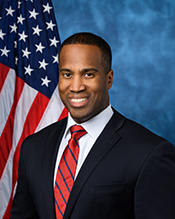
Rep. John James
Sponsored bills
Maddy summaryThe Veterans Appeals Efficiency Act of 2025 requires the Department of Veterans Affairs to track and report on key aspects of the appeals process, including average claim processing times after remand and reasons for case dismissals. It mandates the creation of guidelines for advancing cases on the Board's docket and authorizes the Board to aggregate appeals with common legal or factual issues to improve efficiency. The bill also expands the Court of Appeals' jurisdiction to handle class action claims and requires a study on common legal questions to help the Board make more consistent decisions. These changes aim to reduce delays and improve the accuracy of benefits decisions for veterans seeking appeals.
Maddy summaryThis bill modernizes the process for family caregivers of veterans seeking support services. It requires the VA to create a single digital system for all employees handling caregiver applications and appeals, replacing current fragmented systems. Crucially, it ensures that if a veteran dies during an appeal, the family caregiver automatically receives any monthly stipends they were entitled to on the veteran's death date, including unpaid amounts. These changes directly affect family caregivers of veterans who qualify for VA support services, streamlining access to benefits and ensuring continuity of payments during appeals.
Maddy summaryThis bill, HR 4043 (Line 5 Act), formally codifies the U.S. government’s obligation to comply with the 1977 U.S.-Canada treaty governing pipeline transit (TIAS 8720). It states that the President or their designee cannot violate this specific treaty agreement. The bill does not create new policy or affect any specific group; it simply reinforces existing treaty obligations. It is a procedural measure with no direct impact on legislation, regulations, or stakeholders beyond confirming adherence to an existing international agreement.
Maddy summaryH.J. Res. 87 (Public Law 119-15) is a congressional disapproval resolution that prevents an Environmental Protection Agency (EPA) rule from taking effect. The rule, submitted by the EPA on April 6, 2023 (88 Fed. Reg. 20688), related to California’s authority to enforce stricter vehicle emission standards, including for heavy-duty trucks, zero-emission airport shuttles, and advanced clean truck requirements. By disapproving this rule, Congress blocks California from implementing these specific pollution controls under its existing waiver authority. This directly affects California’s ability to regulate motor vehicle emissions independently, as the rule would have allowed the state to enforce its own standards beyond federal requirements.
Maddy summaryH.J.Res. 88 disapproves an Environmental Protection Agency (EPA) rule that would have allowed California to enforce its "Advanced Clean Cars II" vehicle emission standards. This rule, submitted by the EPA on January 6, 2025, sought to grant California a waiver to override federal preemption for its stricter vehicle pollution controls. The resolution, passed by Congress and signed into law on June 12, 2025, formally nullifies the EPA rule, preventing California from implementing its Advanced Clean Cars II program under this specific waiver. The bill directly affects California's ability to set its own vehicle emission standards for passenger cars and light trucks.
Maddy summaryHJRES 89 is a congressional disapproval resolution that blocks an Environmental Protection Agency (EPA) rule concerning California's vehicle and engine pollution standards. The resolution specifically targets the EPA's "Omnibus Low NOX Regulation" and waiver of preemption, which would have allowed California to enforce stricter emissions rules. By disapproving this rule under Chapter 8 of Title 5 U.S. Code, Congress has nullified the EPA's action, meaning the regulation will have no legal effect. This directly affects the EPA's authority to approve California's state-level pollution control standards for motor vehicles.
Maddy summaryThis resolution designates specific Capitol rooms (H-315 to H-319) housing the House Press Gallery as the "Frederick Douglass Press Gallery." It honors Frederick Douglass, who was the first Black journalist permitted to cover Congress in the Capitol press galleries (1871-1875), recognizing his pioneering role in journalism and advocacy during Reconstruction. The resolution is purely ceremonial, with no new policies, funding, or obligations; it only changes the name of an existing space to commemorate Douglass's historical significance.
Maddy summaryThis non-binding House resolution urges the President to appoint a Special Envoy for Sudan to lead U.S. diplomatic efforts addressing the ongoing conflict and humanitarian crisis. It specifically calls for the envoy to coordinate with the Middle East Special Envoy, secure humanitarian access, and advance U.S. national security interests. The resolution highlights that over 13 million people have been displaced and 30 million require aid in Sudan, with regional instability and extremist threats escalating. It also requests the State Department elevate Sudan as a strategic priority and ensure robust humanitarian assistance. The resolution reflects the House's view that a dedicated envoy would strengthen U.S. diplomatic engagement to support peace and stability.
Maddy summaryThe SAFE Sunscreen Standards Act (HR 3686) requires the FDA to update its approval process for sunscreen ingredients by establishing new standards that allow real-world evidence and non-animal testing methods to demonstrate safety and effectiveness. It directs the FDA to incorporate historical safety data from previously approved ingredients into pending applications and issue guidance on non-animal testing within 180 days. The bill also mandates annual reports to Congress on the implementation of these standards and the FDA’s progress in adopting alternative testing methods. This legislation aims to modernize a regulatory system that has not approved new sunscreen ingredients since 1999, potentially accelerating access to safer, more effective products.