Repealing Big Brother Overreach Act This bill repeals the Corporate Transparency Act. The act requires existing companies and newly created companies to report beneficial ownership information to the Department of the Treasury’s Financial Crimes Enforcement Network for purposes of addressing the financing of terrorism and money laundering.
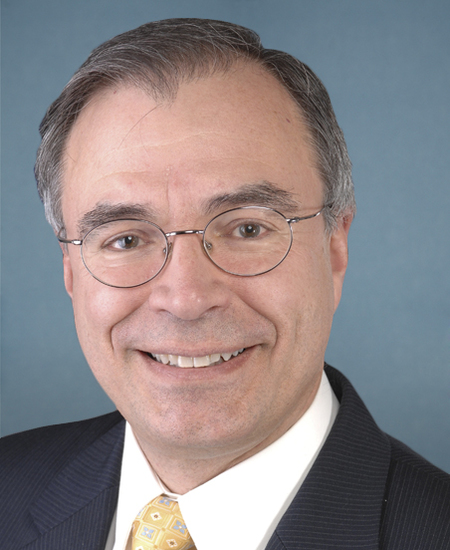
Rep. Andy Harris
Sponsored bills
Maddy summaryThis bill, known as the Stopping Harmful and Outrageous Torts Act, expands legal protections for firearm manufacturers and sellers by strengthening their immunity from civil lawsuits. It requires courts to immediately dismiss any pending cases against these companies that are based on the criminal or unlawful misuse of a gun by a third party, while also clarifying that sellers are not liable for negligence in entrusting products to others. The legislation further restricts who can file such suits by prohibiting foreign governments from bringing these claims and adding a specific exception for victims under the age of 17, though it maintains immunity for cases involving design or manufacturing defects. Additionally, the bill allows companies to move these cases to federal court and grants them the right to appeal dismissal orders immediately, along with the ability to recover legal fees if they win. Finally, it preempts state and local laws that attempt to impose liability on these entities for the same types of misuse-related harms.
Maddy summaryThis resolution introduces articles of impeachment against U.S. District Court Judge Eleanor Louise Ross, targeting her for three specific allegations of misconduct. The first article charges her with engaging in an undisclosed extramarital affair with a law enforcement officer while on the job, which created a conflict of interest and violated judicial conduct codes. The second article accuses her of attending a partisan political event sponsored by a district attorney's campaign and admitting to drinking alcohol before presiding over a criminal case. The third article alleges that she knowingly made false statements to federal judges during an investigation into her behavior, thereby obstructing an official proceeding and violating federal law.
Agriculture, Rural Development, Food and Drug Administration, and Related Agency Appropriations Act, 2027 This bill provides FY2027 appropriations for the Department of Agriculture (USDA), the Food and Drug Administration, and related agencies. The bill provides appropriations to USDA for agricultural programs, including the Office of the Secretary, Executive Operations, the Economic Research Service, the National Agricultural Statistics Service, the Agricultural Research Service, the National Institute of Food and Agriculture, the Animal and Plant Health Inspection Service, the Agricultural Marketing Service, and the Food Safety and Inspection Service. The bill also provides appropriations to USDA for farm production and conservation programs, including the Farm Production and Conservation Business Center, the Farm Service Agency, the Risk Management Agency, and the Natural Resources Conservation Service. The bill provides appropriations to the Federal Crop Insurance Corporation Fund and the Commodity Credit Corporation Fund. For USDA rural development programs, the bill includes appropriations for Salaries and Expenses, the Rural Housing Service, the Rural Business-Cooperative Service, and the Rural Utilities Service. The bill provides appropriations to the Food and Nutrition Service for Child Nutrition Programs; the Special Supplemental Nutrition Program for Women, Infants, and Children (WIC); the Supplemental Nutrition Assistance Program (SNAP); the Commodity Assistance Program; and Nutrition Programs Administration. The bill provides appropriations to the Foreign Agricultural Service for (1) Food for Peace Title II Grants, and (2) McGovern-Dole International Food for Education and Child Nutrition Program Grants. The bill also provides appropriations for the Food and Drug Administration, the Commodity Futures Trading Commission, and the Farm Credit Administration. Additionally, the bill sets forth requirements and restrictions for using funds provided by this and other appropriations acts. It also includes provisions that address the regulation of animal food, liability for donations of pet-related products, and payments for the construction of the Arkansas Valley Conduit.

Maddy summaryThis resolution proposes to officially designate June as "Family Month" to highlight the importance of the traditional nuclear family. It also calls for the House of Representatives to stop recognizing Pride Month, which it argues has replaced the celebration of family values. The bill is sponsored by a group of representatives who believe that strengthening traditional marriage is essential for societal stability and population growth.
Maddy summaryThis bill, known as the Preventing International Surrogacy Exploitation Act, aims to stop foreign nationals from using U.S. surrogate mothers for commercial surrogacy arrangements. It would make any surrogacy contract void and unenforceable if the intended parents are foreign citizens or permanent residents, with a specific exception for married couples where at least one partner is a U.S. citizen or resident. Additionally, the law prohibits surrogacy brokers from facilitating these agreements and imposes criminal penalties, including fines and up to 10 years in prison, for those who knowingly or recklessly assist in such contracts. Children born through these invalid agreements would have their custody determined by the state where the surrogate lives, focusing on the child's best interests rather than the contract. Finally, the bill prevents foreign parents from using their U.S.-born children to gain immigration benefits or rights under U.S. immigration laws.
Maddy summaryThe Protecting Kids from Creeps Act prohibits surrogacy agencies, their employees, and sex offenders from participating in surrogacy agreements, directly affecting fertility clinics, staff, and individuals required to register as sex offenders. The bill mandates severe criminal penalties, including fines and prison sentences of at least 10 to 20 years, for knowingly or recklessly facilitating such agreements, while also stripping convicted agencies of their tax-exempt status and eligibility for federal grants. Any surrogacy agreement formed in violation of these rules is declared legally void and unenforceable, meaning it cannot be used to establish parental rights. In cases where a child is born from an illegal agreement, custody decisions will be made solely based on the best interests of the child under the laws of the state where the surrogate lives, ignoring any prior contracts. Additionally, the Attorney General can pursue civil penalties equal to the compensation received or offered for prohibited conduct.
Maddy summaryThis bill creates new grounds for deporting non-citizens who are members of or associated with criminal gangs. It defines a "criminal gang" as a group of five or more people whose primary purpose is committing serious crimes like drug offenses, violence, trafficking, or weapons violations. The Secretary of Homeland Security can designate groups as criminal gangs after consultation with the Attorney General, and these designations make gang members ineligible for asylum, temporary protected status, parole, and other immigration benefits. The bill also establishes procedures for reviewing and revoking these designations, with limited judicial review options.
Maddy summaryHR 1041, the Veterans 2nd Amendment Protection Act, prevents the Department of Veterans Affairs (VA) from automatically sending veterans' personal information to the national background check system (NICS) solely because a court has appointed a fiduciary (like a guardian) to manage their benefits. This directly affects veterans who have a fiduciary appointed due to mental health or cognitive challenges but are not deemed a danger to themselves or others. The bill requires a court order finding the veteran poses a danger before any such information can be shared with the NICS. It changes VA procedures to block unnecessary barriers to firearm ownership for veterans who qualify for fiduciary support without a judicial determination of danger.
Maddy summaryThis bill, the Provider Reimbursement Stability Act of 2026, aims to create more predictable payment adjustments for physicians and other healthcare providers under the Medicare program. It directly affects medical practices and providers who receive reimbursement for services through the physician fee schedule. The legislation increases a threshold for certain budget neutrality calculations from $20 million to $54.3 million in 2027, with automatic increases every five years thereafter. It also requires the government to correct payment estimates when actual service usage differs significantly from projections, mandates regular updates to cost calculations for practice expenses, and limits how much Medicare payment rates can change from year to year to a maximum of 2.5 percent.