

Maddy summaryHR 909, the Crime Victims Fund Stabilization Act of 2025, modifies how funds from the False Claims Act are deposited into the Crime Victims Fund. It specifies that from 2025 through 2029, certain False Claims Act proceeds (specifically those for qui tam plaintiff payments and government damage reimbursements) cannot be deposited into the fund. This change directly affects the composition of the Crime Victims Fund by excluding these specific revenue streams during the specified period. The bill does not create new benefits or alter victim services; it only adjusts fund allocation rules for existing False Claims Act revenues.
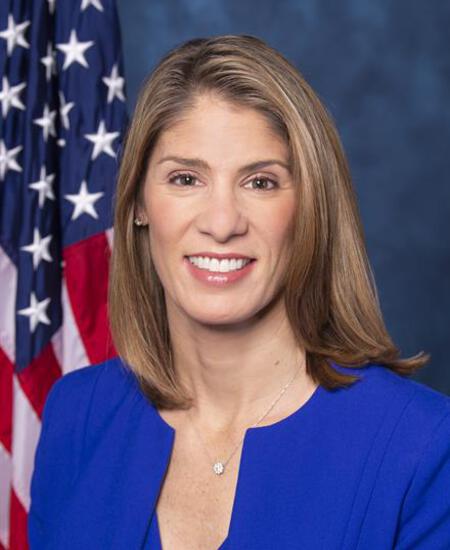
Rep. Lori Trahan
Sponsored bills
Maddy summaryHR 7016, the "No Funds for NATO Invasion Act," blocks federal funding for any U.S. military invasion of a North Atlantic Treaty Organization (NATO) member country or territory covered by NATO's Article 5 mutual defense clause. The bill prohibits using any federal funds for such invasions and bans U.S. officials from executing these actions. It directly affects U.S. military operations and funding decisions involving NATO members. The law applies to all federal spending, preventing the use of existing budgets for this specific purpose.
Maddy summaryThis concurrent resolution (HCONRES 69) commemorates the 15th anniversary of the January 8, 2011, Tucson shooting that killed six people and injured 13, including former Congresswoman Gabby Giffords. It honors the victims, survivors, and Giffords - now a prominent advocate for gun violence prevention - and recognizes her leadership in promoting civility and reducing gun violence. The resolution also commends Tucson residents and first responders for their resilience and reaffirms Congress’s commitment to respectful dialogue and opposing political violence. As a ceremonial resolution, it does not create new laws or policies.
Maddy summaryThis bill prohibits states from pursuing or collecting Medicaid recovery claims against individuals' estates for payments made during their lifetime. It requires states to withdraw all existing recovery liens within 90 days of enactment and notify affected individuals or their estates. The law specifically ends state efforts to reclaim Medicaid funds from beneficiaries' estates after death, applying to claims initiated before the law's effective date. It directly affects Medicaid beneficiaries and their estates who were subject to prior state recovery actions. The key mechanism is a mandatory 90-day withdrawal of all existing liens and a permanent ban on new recovery claims for correctly paid assistance.
Maddy summaryThis resolution (HRES 969) expresses support for designating the week beginning September 8, 2025, as "National Hispanic-Serving Institutions Week." It recognizes colleges and universities with at least 25% Hispanic undergraduate enrollment (known as Hispanic-Serving Institutions or HSIs) and their role in serving diverse, low-income students. The resolution does not create new policies or funding but encourages public observance through ceremonies and activities to honor HSIs’ contributions to higher education access and economic mobility. It applies symbolically to all 615+ HSIs across the U.S. and Puerto Rico.
Maddy summaryThis bill prohibits the use of federal funds for any military action against Venezuela from its enactment date through December 31, 2026, unless Congress either declares war or passes new specific authorization meeting War Powers Resolution standards. It directly affects all federal agencies and military operations that would require funding for actions targeting Venezuela. The key mechanism blocks funding for military force unless Congress explicitly authorizes it through one of two specific pathways. A narrow exception allows actions already compliant with existing War Powers Resolution rules. This is a funding restriction, not a ban on military action itself.
Maddy summaryHR 4611 (EACH Act of 2025) requires all federally funded health programs - including Medicaid, Medicare, military health plans, and the Indian Health Service - to cover abortion services without restrictions, repealing the Hyde Amendment's long-standing ban on federal funding for most abortions. This directly affects millions of people enrolled in these programs, particularly low-income women, women of color (including 25% of Black women and 22% of Hispanic women on Medicaid), and young people. The bill mandates coverage in all federally administered health plans and prohibits state or private insurers from restricting abortion coverage in health insurance. It aims to eliminate current federal and state barriers that deny abortion access to people who rely on government health programs.
Maddy summaryThe "Peace Through Strength Against Russia Act of 2025" proposes to significantly expand and strengthen U.S. sanctions against the Russian Federation and its supporters. The bill mandates blocking property and restricting visas for Russian government officials, state-owned financial institutions, and entities supporting Russia's defense industrial base or war efforts in Ukraine, including those involved in kidnapping Ukrainian children. Key provisions prohibit U.S
Maddy summaryThis bill establishes a pilot program (the Warfighter Traumatic Brain Injury Diagnostics Project) to support the development of new diagnostic tools for traumatic brain injury (TBI) among active-duty military members, particularly during deployments and combat. The program directs the Secretary of Defense to assess diagnostic technologies' ability to distinguish TBI severity, integrate with existing medical tools, and improve military readiness, while awarding grants to eligible research entities with priority for those with proven experience in TBI diagnostics. It authorizes $5 million annually (2026-2029) for research, development, and testing, requiring a congressional report on results and recommendations by 2029. The initiative directly affects service members with potential TBI, military medical providers, and research organizations developing diagnostic technologies for military use.
Essential Caregivers Act of 2025 This bill prohibits certain health care facilities from limiting the access of essential caregivers to residents of those facilities, including during designated emergency periods. Specifically, the bill generally prohibits Medicare skilled nursing facilities, Medicaid nursing facilities, Medicaid intermediate care facilities, and associated inpatient rehabilitation facilities from restricting the access of essential caregivers to residents of the facilities, including during emergency periods in which visitation rights are otherwise restricted. During emergency periods, facilities may restrict access for an initial period of up to seven days and for one additional maximum seven-day period (if the additional period is approved by the state health department). Facilities may restrict access for a total of 7 days (or 14 days with the approval of the state health department) during an emergency period. Essential caregivers must agree to comply with any safety protocols set by the facility, which may be no more stringent for caregivers compared to those for staff. Caregivers who fail to comply with these requirements may be denied access, subject to an appeals process.