

Maddy summaryThis bill establishes a new partnership program to coordinate conservation efforts across the five-state Connecticut River watershed, involving federal, state, tribal, and local groups. It creates a voluntary grant system that provides up to 90 percent federal funding for projects focused on restoring fish and wildlife habitats, improving water quality, and supporting environmental justice communities. The legislation also mandates regular reporting to Congress and authorizes funding from 2026 to 2030 to support these restoration activities.
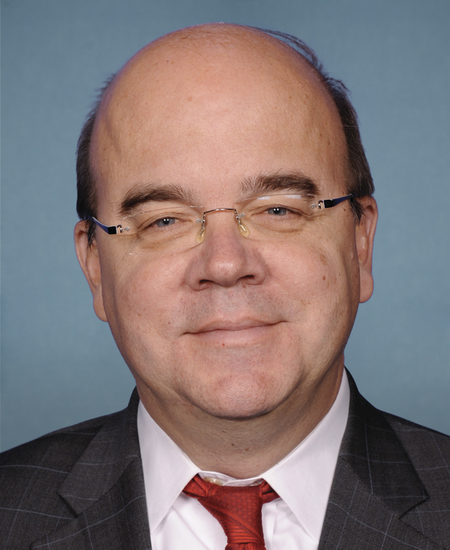
Rep. James P. McGovern
Sponsored bills
Maddy summaryThe Artificial Intelligence Environmental Impacts Act of 2026 directs the Environmental Protection Agency to study and report on the environmental effects of artificial intelligence, including energy and water use, pollution, and electronic waste. This bill requires large data centers to annually submit detailed public reports on their resource consumption and environmental footprint, with penalties for non-compliance. Additionally, it establishes a stakeholder consortium to develop standardized methods for measuring these impacts and to identify ways to promote beneficial uses of AI while reducing negative effects. The legislation aims to increase transparency and accountability regarding the growing environmental costs associated with AI infrastructure and operations.
Maddy summaryThis resolution expresses support for designating June 5, 2026, as National Gun Violence Awareness Day and June 2026 as National Gun Violence Awareness Month. The bill calls on the public to wear orange on the designated day to honor victims and promote awareness of gun safety. It highlights statistics on gun-related deaths and injuries to underscore the need for community discussions on making neighborhoods safer.
Maddy summaryThis concurrent resolution directs the President to withdraw all United States Armed Forces from Lebanon within seven days of the bill's adoption. It operates under section 5(c) of the War Powers Resolution, which allows Congress to mandate the removal of troops from foreign locations. The measure directly affects the executive branch by requiring immediate compliance with the specified timeline for troop withdrawal.
Maddy summaryThe Know Your Rights Act directs the Attorney General to create a new Office of Legal Access Programs within the immigration review system to educate detained noncitizens about their legal rights and immigration procedures. This office would develop orientation programs that provide information in English and the five most common languages spoken by detainees, aiming to help individuals make informed decisions while reducing costs and delays in immigration proceedings. The law requires these educational services to be offered within five days of a person entering custody and mandates that the government consider vulnerable groups, such as unaccompanied children and those with serious mental disabilities, for special attention. Importantly, the bill explicitly states that providing this information does not create any new legal rights or benefits that can be enforced in court.
Maddy summaryThe Postal Data Privacy Act of 2026 restricts the use of mail covers by requiring governmental entities to obtain a court order before accessing postal records for criminal investigations. To qualify for such an order, authorities must provide specific facts demonstrating that the requested data is relevant and material to an ongoing case, while state laws prohibiting mail covers would override federal requirements. Additionally, the bill mandates that postal officials preserve relevant records for up to 180 days while a court order is being sought or renewed. These provisions directly affect federal and state law enforcement agencies as well as the United States Postal Inspection Service by establishing new procedural safeguards for accessing mail data.
Maddy summaryThe American High-Speed Rail Act expands federal funding and streamlines regulations to support the development of high-speed and higher-speed rail projects across the United States. It authorizes billions of dollars in grants for corridor planning, technology improvements, and construction, while allowing the federal government to cover up to 100% of project costs under specific conditions. The bill also introduces new provisions to facilitate land acquisition, prioritize border projects, and extend labor protections to workers involved in federally funded rail infrastructure. Additionally, the legislation defines higher-speed rail as trains traveling between 110 and 186 miles per hour and includes tax incentives for rail carriers that sell or lease property to support these projects.
Maddy summaryThis concurrent resolution directs the President to remove U.S. Armed Forces from any hostilities within or against Cuba that lack explicit congressional authorization. The bill invokes the War Powers Resolution to require the executive branch to cease military actions unless Congress has passed a formal declaration of war or a specific authorization for the use of military force. It directly affects the President's ability to conduct military operations in Cuba without legislative approval. This measure seeks to enforce the constitutional principle that Congress must authorize war before the United States engages in armed conflict.
Maddy summaryThis bill, titled the Assuring the Future of Tibet Act of 2026, expresses the sense of Congress that the Tibetan people should be recognized as a distinct group with rights to self-determination and cultural preservation. It formally acknowledges the Central Tibetan Administration as the legitimate representative of Tibetans and asserts that the Gaden Phodrang Trust holds the sole authority to recognize future Dalai Lamas. To support these positions, the legislation directs the President and Secretary of State to advocate for the Central Tibetan Administration's observer status at the United Nations and to extend appropriate diplomatic courtesies to its leaders during visits to the United States. Additionally, the bill mandates that the Secretary of State lead efforts to engage with Tibetan officials at senior levels and requires annual reports to Congress on the implementation of these diplomatic and advocacy measures.
Maddy summaryThis bill authorizes the U.S. Mint to produce commemorative $5 gold and $1 silver coins marking the 25th anniversary of the September 11, 2001, terrorist attacks. The coins must feature designs honoring victims and first responders (including the inscription "Never Forget") and will be sold only during 2027-2028. All surcharges ($35 per gold coin, $10 per silver coin) collected from sales will fund the National September 11 Memorial and Museum at the World Trade Center, with no net cost to the federal government. The coins are legal tender but primarily intended for collectors, not circulation.