Maddy summaryHR 5969, the LABEL Act, requires abortion-inducing drugs to include specific labeling identifying both the drug dispenser's name/address and the prescriber's name. It directly affects pharmacies, clinics, and prescribers distributing these drugs by mandating this labeling on all such products. The bill prohibits states from imposing stricter labeling rules than this federal standard. It defines "abortion-inducing drug" as one intended or used to end a pregnancy (excluding drugs for miscarriage management or ectopic pregnancy treatment). This is a labeling requirement, not a restriction on drug access or use.
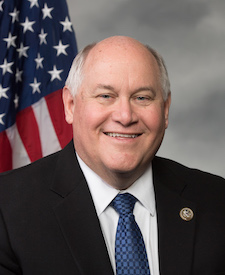
Rep. Ron Estes
Sponsored bills
Maddy summaryThis bill amends the National Instant Criminal Background Check System (NICS) process to strengthen due process for individuals denied firearm purchases. It requires courts to hold hearings on challenges within 30 days, places the burden on the government to prove ineligibility by "clear and convincing evidence," and mandates courts to award attorney fees to successful challengers. The bill also requires the FBI to submit annual reports to Congress detailing NICS challenge volumes, reversal rates, and processing times. These provisions directly affect people wrongly flagged in the NICS database who seek to correct their records. The law focuses on procedural fairness, not altering firearm eligibility criteria.
Maddy summaryThis bill adds Medicare coverage for multi-cancer early detection screening tests (blood or biological tests analyzing cell-free DNA) starting January 1, 2028. It directly affects Medicare beneficiaries aged 68 and older (starting in 2028, with the age limit increasing by 1 year annually), requiring tests to be FDA-cleared and deemed reasonable/necessary by the Secretary for early cancer detection across multiple organ sites. Payment will initially match current stool DNA test rates before 2031, then shift to a lower rate or new payment system after 2031, with limits preventing more than one test per year. The bill explicitly states it does not alter coverage for existing cancer screenings like breast, colorectal, or prostate cancer tests.
Maddy summaryThis bill would require all states to recognize valid concealed carry permits issued by other states, allowing permit holders to carry concealed handguns (excluding machine guns) in any state that either issues such permits or doesn't prohibit concealed carry. It directly affects law-abiding gun owners with valid permits from their home state, ensuring they can carry in states with similar permit systems or no prohibitions. Key provisions include treating valid permit documents as proof of legal carry (reducing officer stops), shifting the burden of proof to prosecutors if challenged, and allowing civil lawsuits for violations with attorney's fee awards. The bill does not override state laws restricting firearms on private property or government land, nor does it affect federal gun restrictions like those in section 922(q).
Maddy summaryHRES 719 is a House resolution honoring Charles "Charlie" James Kirk, the founder of Turning Point USA who was assassinated on September 10, 2025. The resolution condemns his assassination and all political violence, extends condolences to his family, and calls on Americans to reject violence while promoting civil discourse. It specifically recognizes Kirk's legacy as a defender of constitutional principles and his role in inspiring youth through free speech and faith-based civic engagement. As a commemorative resolution, it does not enact policy changes but formally expresses the House's stance on honoring his life and legacy.
Maddy summaryThis federal bill requires abortion providers to inform patients about potential reversal of mifepristone-based chemical abortions (the two-drug process) at least 24 hours before the procedure. After the first drug is dispensed, providers must give written instructions stating that reversal may be possible if the second pill hasn't been taken. Facilities must post visible signs about reversal options, and the government must maintain a website with reversal resources. Violations allow affected patients or family members to sue for damages.
Maddy summaryThis bill requires pension plan administrators to locate and notify beneficiaries of unclaimed retirement funds ($50 or more) before transferring them to state unclaimed property programs. Administrators must first attempt to update contact information through databases and send a clear notice explaining the transfer process, unless no updated contact can be found. It establishes a national clearinghouse for states to manage these transfers and mandates regular reports to the Labor Secretary about unclaimed funds, including beneficiary details. The law protects administrators from liability if they follow these procedures, ensuring forgotten retirement savings can be recovered by rightful owners through state programs.
Maddy summary# Summary of Proposed FEMA Reform Legislation (FEMA Act of 2025) This comprehensive legislative document proposes significant reforms to the Robert T. Stafford Disaster Relief and Emergency Assistance Act, with four main sections addressing: ## 1. Disaster Assistance Reforms - **Expanded eligibility** for assistance, including clarifying that absence of a fixed address doesn't disqualify individuals from sheltering assistance - **Improved rental assistance** with consideration of local post-disaster rent increases - **Direct assistance** for those unable to use financial assistance, with no requirement to show other assistance can cover costs (except insurance) - **Enhanced notices** for applicants, including documentation of denial decisions - **Clarification of displacement assistance** eligibility, stating insurance shouldn't be considered a duplication of benefits ## 2. Mitigation Program Enhancements - **Preapproved project mitigation plans** requiring states to develop plans with peer review processes - **Improved allocation of funds** with formulas prioritizing vulnerable communities, high-risk areas, and rural/economically distressed communities - **Resilient buildings** requirements for housing retrofits using the latest building codes - **Streamlined application processes** for hazard mitigation funds across multiple programs - **Study on mitigation benefits** to evaluate cost savings and effectiveness ## 3. Transparency and Accountability Measures - **Public dashboards** for both individual assistance (431) and public assistance (432) showing application status, approvals, denials, and funding - **Transparency requirements** for disaster declarations with detailed justifications for approvals/denials - **GAO studies** on numerous topics including: - Identity theft in disaster assistance (409) - Insurance utilization for public assistance facilities (410) - Wildfire management plans (411) - Effectiveness of alerting systems (412) - Cost savings of repair/rebuilding reforms (415) - **Prohibition on political discrimination** in assistance distribution ## 4. Workforce and Operational Improvements - **Study on workforce retention** in noncontiguous communities - **Pilot program** for preliminary damage assessments in remote communities - **Fast-moving disasters working group** to develop best practices for rapid response The legislation focuses on improving efficiency, transparency, and effectiveness of disaster relief programs while prioritizing vulnerable populations and communities with higher risk of disasters. It also emphasizes data-driven decision making through required studies and reports to continuously improve disaster management policies.

Maddy summaryHR 5036 removes a federal restriction that prevents land funded by the Land and Water Conservation Fund from being converted to uses other than public outdoor recreation. The bill specifically exempts Northeast Sedgwick County Park in Sedgwick County, Kansas, from this rule. This change would allow the park to be repurposed for non-recreation uses without violating federal funding requirements tied to the Land and Water Conservation Fund.
Maddy summaryHR 4964, the Child Interstate Abortion Notification Act, requires physicians performing abortions on minors traveling across state lines to provide 24 hours of actual or constructive notice to the minor's parent before the procedure. It directly affects minors (under 18) seeking abortions in a state different from their residence, their parents, and healthcare providers. Key provisions mandate parental notification unless exceptions apply - such as medical emergencies, court waivers, verified abuse disclosures, or the minor being accompanied by a documented parent. The law aims to ensure compliance with parental involvement requirements in the minor’s home state, with penalties for noncompliance including fines or imprisonment for physicians.