

Maddy summaryThis bill proposes a constitutional amendment requiring the federal government to balance its annual budget, meaning spending cannot exceed revenue unless overridden by a two-thirds vote in both House and Senate. It also caps annual spending at 18% of GDP unless a similar two-thirds vote approves an exception. The amendment mandates the President submit a balanced budget proposal each year and requires a two-thirds vote to pass new taxes or increase tax revenue. These rules would directly affect all federal spending decisions, including defense, social programs, and debt management, with limited exceptions for declared wars or national security threats.
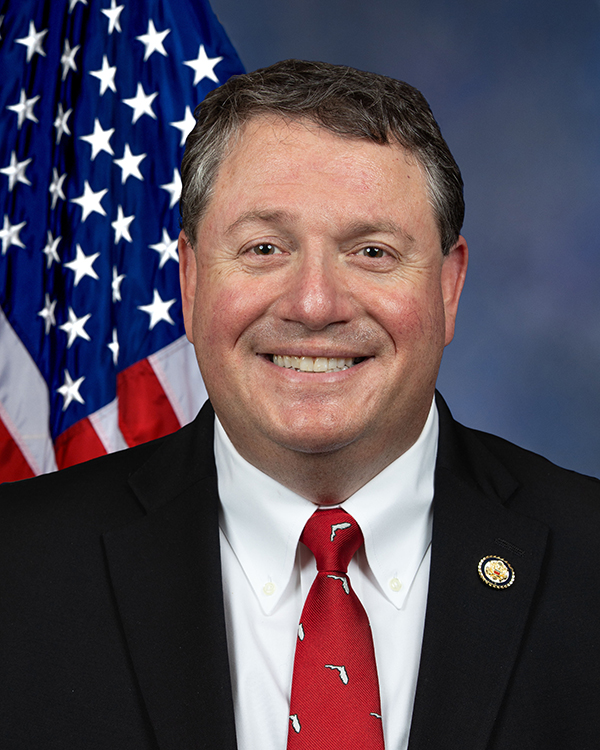
Rep. Randy Fine
Sponsored bills
Stopping Border Surges Act This bill modifies immigration law provisions relating to unaccompanied alien minors and to asylum seekers. The bill requires the Department of Homeland Security (DHS) to repatriate certain unaccompanied, inadmissible alien children, generally those not at risk of being trafficking victims nor having a fear of persecution. Currently, only inadmissible unaccompanied aliens from neighboring countries are subject to repatriation, and DHS has discretion whether to repatriate. When the Department of Health and Human Services releases an unaccompanied child to an individual, it shall provide DHS with certain information about that individual, including Social Security number and immigration status. The bill requires a stricter standard to find a credible fear of persecution and imposes additional rules on credible fear interviews. If an alien is granted asylum because of fear of persecution in a country, the alien shall be deemed to have renounced asylum status by returning to that country, if there has been no change in the country's conditions. The bill also (1) expands the definition of what constitutes a frivolous asylum application, (2) imposes additional limitations on eligibility for asylum, (3) shortens the deadline for applying for asylum, and (4) extends the time period an alien seeking asylum must wait before receiving employment authorization. Any individual who knowingly and willfully makes materially false statements or uses fraudulent documents in asylum-related proceedings shall be fined or imprisoned up to 10 years, or both.
Maddy summaryHR 208, the "No Budget, No Pay Act," requires Congress to pass a budget resolution by April 15 each year or risk having members' salaries withheld. If no budget resolution is agreed upon by that date, the payroll administrator must place all congressional salaries into escrow starting April 16. Salaries remain in escrow until either a budget resolution is passed or the end of the current Congress, whichever comes first. This bill directly affects all members of Congress, including delegates and resident commissioners, by tying their pay to the timely passage of a budget resolution. The law applies starting with fiscal year 2026.
Maddy summaryHR 137, the TCJA Permanency Act, makes permanent many tax provisions from the 2017 Tax Cuts and Jobs Act. It permanently increases the standard deduction for individual taxpayers, modifies income tax brackets, and makes permanent the child tax credit increase. The bill also permanently limits deductions for state and local taxes, mortgage interest, and miscellaneous itemized deductions. These changes affect most individual taxpayers who file federal income tax returns.
Maddy summaryHR 45 (FIND Act) requires federal government contractors to certify they do not discriminate against firearm businesses (including manufacturers, dealers, and trade associations) in their policies or practices. The bill mandates that contractors and subcontractors (for contracts over 10% of the prime contract value) certify they have no discriminatory policies and will not adopt them during the contract term. Violations could lead to contract termination and potential debarment. This applies to all federal procurement contracts awarded after the bill's enactment, excluding sole-source contracts. The law aims to ensure firearm businesses are treated equally in government contracting without restricting legitimate business criteria like creditworthiness or legal compliance.
Maddy summaryHR 114, the "Responsible Path to Full Obamacare Repeal Act," would repeal the Patient Protection and Affordable Care Act (ACA) and the Health Care and Education Reconciliation Act of 2010, effective October 1, 2025. This bill directly affects all Americans covered by the ACA's provisions, including those using health insurance marketplaces, Medicaid expansions, and essential health benefits. The key mechanism is the complete removal of these laws, restoring pre-2010 health care regulations as if the ACA had never been enacted. The bill does not introduce new rules but eliminates the existing framework governing health insurance coverage and subsidies.