

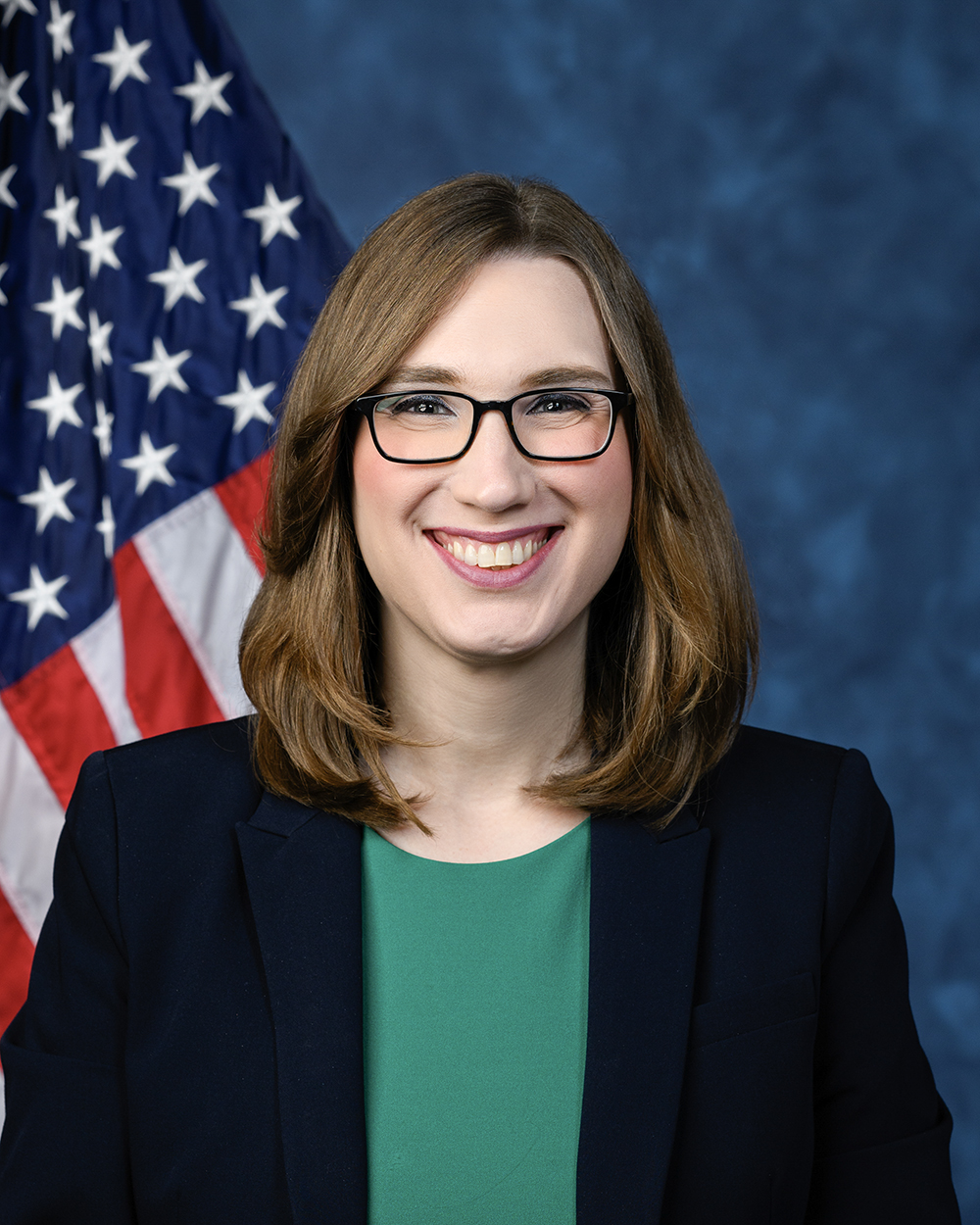
Photo of Sarah McBride
D United States House · District At-Large · Delaware On the 2026 ballot

Rep. Sarah McBride

Compare
Total votes
650
all sessions
Attendance
99%
4 missed
Higher than 83% of chamber peers
With party
96%
of cast votes
Near the chamber average
Bipartisan score
2%
crosses aisle rarely
Near the chamber average
Sponsored
669
bills & resolutions
Higher than 94% of chamber peers
Committees
5
assignments
669 bills and resolutions

Sponsored bills

Total
669
Primary
10
Co-sponsor
659
This page
669
matching current filters
Co-sponsor HRES 1087
In committee · Ohio House · Co-sponsor
Recognizing community water fluoridation as a safe, effective public health intervention to prevent tooth decay and promote oral and physical health.

Maddy summaryHRES 1087 is a non-binding House resolution recognizing community water fluoridation as a safe and effective public health measure to prevent tooth decay. It acknowledges decades of scientific support for fluoridation, including CDC recognition as a top public health achievement, and highlights its cost-effectiveness in reducing dental treatment costs. The resolution encourages states and localities to maintain or adopt optimal fluoridation levels but does not create new legal requirements or directly affect any specific group. It serves as a symbolic endorsement of existing public health practice, referencing support from major health organizations.

In committee Feb 26, 2026 1 co-sponsor
Co-sponsor HR 1965
In committee · Ohio House · Co-sponsor
Veteran Education Assistance Adjustment Act

Maddy summaryThis bill increases the annual stipend for books, supplies, and educational materials under the Post-9/11 GI Bill from $1,000 to $1,400, effective immediately. It also establishes a new automatic annual adjustment starting in fiscal year 2026, tying stipend increases to inflation using the Consumer Price Index (CPI). Specifically, the stipend will rise each year by the percentage difference between the current CPI and the previous year’s CPI. This directly affects veterans using the Post-9/11 Educational Assistance Program for their education expenses.

In committee Feb 24, 2026 1 co-sponsor
Co-sponsor HR 1957
In committee · Ohio House · Co-sponsor
End Veteran Homelessness Act of 2025

End Veteran Homelessness Act of 2025 This bill requires the Department of Veterans Affairs (VA) to furnish case management to certain veterans who are eligible for the HUD-Veterans Affairs Supportive Housing (HUD-VASH) program administered by the Department of Housing and Urban Development (HUD) and the VA. Specifically, the VA must furnish case management to veterans who are eligible for HUD-VASH that the VA determines require case management. The VA must prioritize vulnerable homeless veterans in assigning case managers and providing services. The VA must take certain actions if a veteran refuses case management. HUD or a public housing authority may not revoke assistance solely on the basis that a veteran has refused case management. Additionally, a veteran may not be evicted or penalized by the owner of a property solely on the basis that they have refused case management or cannot be provided case management for health and safety reasons. The Government Accountability Office must report to Congress on veterans who are served by the HUD-VASH program, case managers and case management services provided under the program, and metrics about housing stability for veterans participating in federal housing assistance programs. The bill also provides statutory authority to expand eligibility for the HUD-VASH program to any veteran who is homeless, at risk of homelessness, or receiving assistance under another housing assistance program if the VA determines a voucher under HUD-VASH is more appropriate. (Currently, assistance is statutorily limited to certain veterans who have chronic mental illness or substance use disorders.)

In committee Feb 24, 2026 1 co-sponsor
Co-sponsor HRES 1073
In committee · Ohio House · Co-sponsor
Expressing support for the designation of February 21 through February 28, 2026, as "National FFA Week", recognizing the important role of the National Future Farmers of America (FFA) Organization in developing the next generation of globally conscious leaders who will change the world, and celebrating the 50th anniversary of the chartering of the State of Alaska as a State FFA Association.

Maddy summaryHRES 1073 is a non-binding resolution designating February 21-28, 2026, as "National FFA Week" to recognize the National Future Farmers of America (FFA) Organization’s role in developing agricultural education leaders and to celebrate the 50th anniversary of Alaska’s State FFA Association. It does not create new laws or affect any specific groups or policies; instead, it formally expresses the House’s support for this commemorative week. The resolution highlights FFA’s mission to prepare students for leadership and careers in agriculture, food, and natural resources. As a symbolic gesture, it has no direct legislative or financial impact on constituents.

In committee Feb 23, 2026 1 co-sponsor
Co-sponsor HR 3340
In committee · Ohio House · Co-sponsor
Modernizing Access to Our Public Oceans Act

Maddy summaryHR 3340, the Modernizing Access to Our Public Oceans Act, requires the U.S. Commerce Department to create a public online map system showing fishing restrictions and recreational access rules in federal ocean waters. The system will display areas open or closed to fishing, vessel restrictions (like motorized propulsion limits), and rules for marine protected areas, updated at least twice yearly. It prohibits sharing sensitive information, such as tribal cultural sites or private commercial fishing data, and explicitly excludes Tribal fishing areas from its requirements. This bill directly affects recreational boaters, divers, and the public by making ocean access information clearer and more accessible through a single online resource. The data will be developed with input from states, tribes, and the public to ensure usability and compliance with existing laws.

In committee Feb 23, 2026 1 co-sponsor
Co-sponsor HR 7622
In committee · Ohio House · Co-sponsor
Iran Human Rights, Internet Freedom, and Accountability Act of 2026

Maddy summaryThis bill directs U.S. agencies to support Iranian people's access to uncensored information and hold Iranian officials accountable for human rights abuses. It requires the State Department and FCC to report on technologies (like satellite networks and mesh systems) that could bypass internet restrictions in Iran, and authorizes $2 million annually to develop such tools. The bill also establishes a new "Iran Kleptocracy Initiative" at FinCEN to track corruption, freeze assets of Iranian regime officials and state-owned businesses, and coordinate with international partners. These measures apply to U.S. policy toward Iran but do not alter Iran's domestic laws; they focus on U.S. sanctions, technology development, and anti-corruption efforts targeting the Iranian regime.

In committee Feb 20, 2026 1 co-sponsor
Co-sponsor HR 7600
In committee · Ohio House · Co-sponsor
Postal Supervisors, Managers, and Postmasters Fairness Act of 2026

Maddy summaryHR 7600, the Postal Supervisors, Managers, and Postmasters Fairness Act of 2026, requires the U.S. Postal Service to formally negotiate pay and benefits changes with unions representing supervisors, managers, and postmasters. Specifically, it mandates that the Postal Service provide written proposals to these unions 60 days before existing pay decisions expire or after new collective bargaining agreements affect these roles. The bill also shortens the dispute resolution timeline, requiring binding decisions from panels within 15 days after recommendations. This bill directly affects the Postal Service, the supervisors’ organization, and the postmasters’ organization by standardizing their negotiation process for pay and benefits.

In committee Feb 17, 2026 1 co-sponsor
Co-sponsor HR 7581
In committee · Ohio House · Co-sponsor
LOVE Act

Maddy summaryThis bill establishes a Medicare demonstration program to pay hospitals for training staff (called "facilitators") who help Medicare beneficiaries with kidney failure find living kidney donors and navigate the transplant process. It directly affects hospitals performing kidney transplants and Medicare patients with end-stage renal disease. The program runs for 8 years, with Medicare covering hospitals' costs for facilitator training, and requires annual reports tracking increases in living donors, transplants, and potential cost savings from reduced dialysis use. The Secretary must submit detailed reports to Congress on outcomes and program effectiveness.

In committee Feb 13, 2026 1 co-sponsor
Co-sponsor HR 7531
In committee · Ohio House · Co-sponsor
Healthy Families Act

Maddy summaryThis bill requires most employers to provide workers with earned paid sick leave. Employees would earn 1 hour of paid sick time for every 30 hours worked, up to 56 hours per year, which can be used for their own illness, medical care, caring for family members (including children, parents, spouses, domestic partners, or other family-like relationships), or addressing domestic violence, sexual assault, or stalking situations. The bill prohibits employers from retaliating against workers who use this leave and requires employers to inform employees about their rights. It ensures that workers who leave and return to the same employer within a year can reinstate their unused sick leave. This law would not override more generous state or local paid leave policies.

In committee Feb 12, 2026 1 co-sponsor
Co-sponsor HR 7521
In committee · Ohio House · Co-sponsor
United States-Cuba Trade Act of 2026

Maddy summaryThis bill would remove longstanding U.S. trade restrictions on Cuba by repealing key laws including the Cuban Democracy Act of 1992 and the LIBERTAD Act of 1996. It would allow U.S. businesses to trade with Cuba without restrictions, enable telecommunications services between the U.S. and Cuba, and eliminate limits on U.S. citizens sending remittances to Cuba. The bill also extends normal trade relations to Cuban goods, meaning Cuban products would enter the U.S. market without special tariffs. This would directly affect U.S. businesses, travelers, and Cuban citizens who receive remittances. The changes would take effect 60 days after enactment, with some provisions applying to goods entering the U.S. market 15 days after enactment.

In committee Feb 12, 2026 1 co-sponsor
Showing 111 to 120 of 669 bills
Previous 1 11 12 13 67 Next