

Maddy summaryThe No WAR Act prohibits Congress from using budget reconciliation procedures to fund military hostilities against Iran unless such actions are explicitly authorized by a formal declaration of war or a specific authorization for the use of military force. This legislation directly affects the legislative process by establishing a point of order that blocks any reconciliation bill attempting to provide budget authority for offensive military operations, strikes, or covert actions targeting Iranian military forces, territory, or government institutions. The bill also defines proxy forces as any foreign military or irregular groups operating with U.S. direction or material support, ensuring these entities are included in the restrictions on unauthorized funding. By amending the Congressional Budget and Impoundment Control Act, the measure aims to prevent the use of budgetary shortcuts to bypass the constitutional requirement for congressional approval before engaging in armed conflict with Iran.
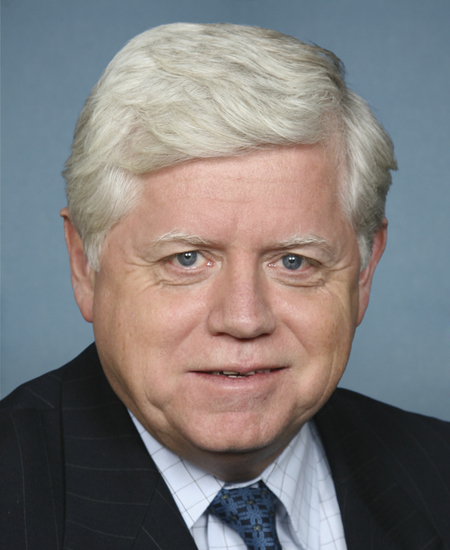
Rep. John B. Larson
Sponsored bills
Maddy summaryThe Long-Term Care Workforce Support Act aims to address the severe shortage and low wages of direct care professionals who support older adults and people with disabilities by increasing Medicaid funding, expanding training grants, and establishing new federal labor protections. To improve compensation and retention, the bill allows states to receive additional Medicaid funds if they implement specific workforce improvements, such as raising wages, providing paid leave, and ensuring stable scheduling, while also creating a national strategy to calculate fair labor costs. The legislation introduces comprehensive worker rights, including a requirement for written employment agreements, fair scheduling with advance notice, paid sick time, and a federal standard to prevent workplace violence. Furthermore, the bill establishes multiple grant programs to fund training, career advancement, and diversity initiatives, alongside a new commission to develop national training standards and a technical assistance center to address inequities within the workforce.
Maddy summaryThe HCBS Access Act requires Medicaid to cover a broad range of home and community-based services for people with disabilities and older adults, aiming to eliminate waiting lists and ensure these individuals can live in their communities rather than institutions. To achieve this, the bill mandates that states create detailed implementation plans, establishes a new advisory panel to recommend additional services, and sets a 100 percent federal funding match for these services to encourage state participation. The legislation also strengthens protections for family caregivers, requires states to remove financial liens on the estates of deceased beneficiaries, and creates a national technical assistance center to support the recruitment and training of direct care workers. Additionally, the bill directs the government to establish a separate occupational category for direct support professionals to better track workforce shortages and improve data collection on this critical labor force.
Maddy summaryThe Momnibus Act is a comprehensive legislative bill designed to improve maternal health outcomes across the United States by addressing social determinants of health, expanding access to care, and reducing disparities among pregnant and postpartum individuals. The bill establishes a federal task force to coordinate efforts between agencies and stakeholders to eliminate preventable maternal mortality and severe morbidity, while providing sustained funding to community-based organizations to address nonclinical factors like housing, nutrition, and transportation. Key provisions include extending WIC eligibility to 24 months postpartum, creating grants to grow and diversify the perinatal workforce, implementing respectful maternity care training for all healthcare employees, and establishing compliance programs to track and address bias in maternity care settings. The legislation also includes specific measures for incarcerated mothers, veterans, and vulnerable populations affected by climate change, alongside funding for maternal mental health services and technology-enabled care models to expand access in underserved areas.
Maddy summaryThis resolution expresses the sense of the House of Representatives that former President Donald Trump, his Special Envoy Steven Witkoff, and all federal officials must comply with the Constitution's Foreign Emoluments Clause. It specifically calls for them to immediately turn over to the Department of the Treasury any payments received from the United Arab Emirates or other foreign states. Furthermore, the resolution urges them to divest from all business interests linked to foreign governments, including those tied to United Arab Emirates officials.
Maddy summaryThis concurrent resolution (HCONRES 40) directs the President to remove U.S. military forces from hostilities with Iran, as required by the War Powers Resolution. It applies directly to U.S. Armed Forces deployed in conflict with Iran, except for forces needed to defend the U.S. or allies from imminent attack. The bill mandates removal unless the President complies with War Powers Resolution reporting requirements for self-defense actions, without needing new congressional authorization. As a procedural resolution, it does not create new law but compels executive action under existing legal framework.
Maddy summaryThis resolution formally impeaches Peter B. Hegseth, the Secretary of Defense, for six articles of high crimes and misdemeanors. The articles allege unauthorized military actions against Iran without congressional approval, violations of international law regarding civilian casualties, mishandling of classified information, obstruction of congressional oversight, politicization of military decisions, and discriminatory conduct toward service members based on gender, race, and sexual orientation. If the House votes to adopt this resolution, the matter would be sent to the Senate for a trial to determine whether Hegseth should be removed from office.
Maddy summaryThis bill, the VA Police Recruitment and Retention Act of 2026, prevents federal officials from lowering the pay grade or status of law enforcement positions within the Department of Veterans Affairs. It directly affects VA police officers and other law enforcement staff by blocking any proposed position downgrades and ensuring that no federal funds can be used for such reductions. The law also requires that any downgrades made between October 1, 2025, and the bill's enactment be reversed, restoring affected positions to their previous status and ensuring employees receive the pay they would have earned. By defining covered positions broadly to include all law enforcement roles regardless of funding source or employment type, the measure aims to protect the compensation levels of these workers from administrative reductions.
Maddy summaryThe ALERT Act (HR 7613) requires the Federal Aviation Administration to improve aviation safety through several key measures. It mandates the evaluation and potential implementation of enhanced collision avoidance systems (ACAS-Xa) for commercial aircraft and ACAS-Xr for rotorcraft, with specific deadlines for rulemaking and installation. The bill establishes committees to develop recommendations for safety technology requirements, requires safety risk assessments for air traffic controllers, and addresses operational procedures at high-traffic airports like Ronald Reagan Washington National. These provisions affect air carriers, air traffic controllers, rotorcraft operators, and Department of Defense aircraft operations. The act aims to enhance situational awareness and reduce midair collision risks through technology upgrades and improved safety protocols.
Maddy summaryThis bill establishes a 17-member Commission on Presidential Capacity to Discharge the Powers and Duties of the Office. This commission, composed primarily of medical professionals and former high-ranking executive officials, would be activated by a concurrent resolution of Congress. Its duty would be to conduct a medical examination of the President to determine if they are mentally or physically unable to discharge the powers and duties of the office due to conditions such as illness, disability, or substance use. Following the examination, the commission would report its findings and a declaration on the President's capacity to Congress and the Vice President, with any refusal by the President to undergo examination taken into consideration.