

Maddy summaryHR 5119, the National Security Climate Intelligence Act of 2025, requires the Director of National Intelligence to produce regular assessments on how climate change affects national and economic security. Specifically, it mandates an Intelligence Community Assessment every six years (starting four years after enactment) covering these security impacts. The report must be submitted to congressional intelligence committees, and if classified, must include an unclassified executive summary. This bill directly affects the intelligence community and Congress by establishing a formal, recurring process for evaluating climate-related security risks.
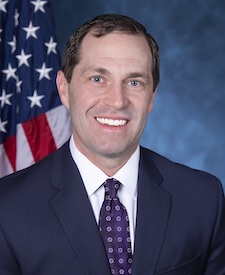
Rep. Jason Crow
Sponsored bills
Maddy summaryThis bill prohibits Members of Congress, their spouses, and dependent children from owning or trading certain investments, including stocks, commodities, and derivatives (referred to as "covered investments"). It requires affected individuals to divest these investments within 90-180 days, with specific exemptions for Treasury bonds, diversified mutual funds, small business interests, and family trusts meeting strict conditions. Violations incur penalties of 10% of the investment's value plus disgorgement of profits, paid directly to the U.S. Treasury. The law applies to all covered individuals during federal service, with exceptions for investments acquired through inheritance or occupational trading (e.g., a spouse’s finance job).
Maddy summaryThis bill suspends U.S. funding for Tunisia's security forces linked to human rights abuses or repression and requires the President to create a public list of Tunisian officials who undermine democracy or commit serious abuses against citizens. Sanctions include blocking U.S. assets and banning visas for listed individuals, with conditions for ending sanctions (restoring Tunisia's 2014 constitution, holding free elections, and releasing political prisoners). The law expires after four years, and the State Department must submit a democracy restoration strategy to Congress within 180 days. It directly affects Tunisia's security services and targeted officials, not the general population.
Maddy summaryThis bill permanently establishes the Coordinator for Afghan Relocation Efforts (CARE) within the State Department, expanding their role to prioritize family reunification for U.S. military personnel and veterans with Afghan allies. It mandates the Coordinator to collect detailed data on Afghan applicants (including special immigrant visa seekers, refugees, and parolees), vetting timelines, and pending family reunification cases into a centralized database. The Coordinator must report this data to Congress every 90 days to ensure transparency and inform policy decisions. The law directly affects Afghan allies and their families seeking U.S. relocation, particularly those connected to U.S. military service.
Maddy summaryHR 4966 prohibits grocery stores from selling items at "grossly excessive prices," defined as 120% or more above the average market price over the previous six months (with exceptions for unavoidable cost increases like supply chain issues). It bans using facial recognition or personal data to set different prices for individual customers (e.g., adjusting prices based on shopping history) and requires clear signage if facial recognition is used. Stores over 10,000 square feet must replace electronic shelf labels with physical price tags. The Federal Trade Commission enforces these rules, allowing consumers to seek $3,000 per violation or actual damages, with penalties for willful violations.
Maddy summaryThe TRAPS Act establishes a federal Task Force on Payment Scams, chaired by the Treasury Secretary, to coordinate efforts across agencies like the FTC, Federal Reserve, and consumer groups. The Task Force will study current scam tactics (such as fake text messages or fraudulent payment platforms), evaluate prevention strategies, and develop recommendations to help consumers avoid and report scams. It must submit an initial report within one year and annual updates, focusing on improving federal-state coordination and education programs. This bill directly affects government agencies and stakeholders participating in the Task Force, with the goal of protecting consumers from evolving payment scams.
Maddy summaryThe PUPP Act of 2025 creates a federal grant program to fund housing for unhoused people who have pets. It authorizes $5 million annually (2026-2030) for grants to local governments, nonprofits, or housing providers to build or retrofit properties that offer both human housing and pet-friendly accommodations. Key requirements include on-site veterinary care for pets (spaying, vaccinations, etc.), supportive services like mental health counseling for residents, and coordination with local animal care providers. This directly affects unhoused individuals with pets - often excluded from standard shelters - and the organizations managing these housing programs.
Maddy summaryHR 4895, the Afghan Adjustment Act, creates a pathway to conditional permanent resident status for Afghans who supported U.S. military or government efforts in Afghanistan. Eligible individuals include Afghan citizens or nationals who were employed by or on behalf of U.S. forces, worked with U.S. intelligence, or were part of specific Afghan security forces (including members of the Afghanistan National Defense and Security Forces), and who served for at least one year during the relevant period. The bill establishes a 4-year conditional period before full permanent residency is granted, requires security checks similar to refugee processing, prohibits fees for processing applications, and creates a referral system for processing applications from Afghans still in Afghanistan. It also provides eligibility for benefits available to refugees and establishes an Interagency Task Force to oversee implementation.
Maddy summaryThis bill amends Medicare rules to improve payment for air ambulance services. It requires air ambulance providers to submit detailed cost and revenue data every three years (including fixed costs per base, utilization rates, and revenue) to the Medicare Secretary. The Secretary must then revise fee schedules based on this data and stakeholder input, aiming to better align payments with actual costs. A separate provision mandates the GAO to study average operating costs, payment adequacy, geographic variations, and make recommendations within one year of data collection starting. The bill directly affects Medicare beneficiaries using air ambulances and the providers operating those services.
Maddy summaryHR 4696 amends Section 249 of the Immigration and Nationality Act to update eligibility for a registry program that provides a pathway to legal status for long-term residents. It changes the requirement from entering the U.S. before January 1, 1972, to entering at least 7 years before the application date. This adjustment bases eligibility on a rolling 7-year window instead of a fixed historical cutoff, allowing more recent long-term residents to qualify. The bill directly affects individuals who entered the U.S. after 1972 but maintained continuous residence for at least seven years prior to applying.