

Maddy summaryThis resolution (HRES 770) is a symbolic statement expressing the House's support for "Military Sexual Trauma Awareness Day" observed on September 25. It directly affirms the House's commitment to military sexual trauma (MST) survivors - impacting both women and men in the military - by highlighting the need to reduce stigma and improve support systems. The resolution encourages the Department of Defense and Veterans Affairs to expand access to MST-related services and promote transparency in handling cases, but it does not create new laws or funding. As a non-binding resolution, it serves only to formally acknowledge the issue and encourage existing agencies to prioritize survivor care.
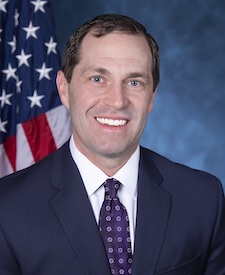
Rep. Jason Crow
Sponsored bills
Maddy summaryHR 5586, the TRICARE Transition Transparency Act of 2025, requires the Department of Defense to provide advance written notices to military health care beneficiaries about upcoming changes to their TRICARE coverage. Beneficiaries affected by required plan changes (such as due to age) will receive three electronic notices: one year, 180 days, and 30 days before the transition. The bill also mandates an annual outreach campaign via website, social media, and family groups, plus yearly reports to Congress on implementation progress. This law aims to improve beneficiary awareness of coverage transitions without altering TRICARE plan options or costs.
Maddy summaryHR 5615 establishes the FireGuard Program as a formal, mandatory program within the National Guard under Title 32 of the U.S. Code. It requires the Secretary of Defense to provide annual reports to Congress starting in 2026, detailing which states, counties, municipalities, and tribal governments received wildfire data, comparing fire maps before and after containment, analyzing detection-to-alert times, and reviewing technology integration efforts. The program is set to end on December 31, 2031, with no further authorization after that date. This bill directly affects National Guard operations and local emergency responders receiving wildfire data.
Maddy summaryHR 5569, the PILOT Act, requires the Secretary of Defense to submit a report within 180 days of enactment on traumatic brain injuries (TBIs) among active-duty military pilots. The report must study whether repetitive flight activities like high-speed maneuvers and catapult launches cause TBIs, summarize current Department of Defense policies for identifying and treating pilot TBIs, propose a strategy to improve care, and recommend regulatory or legislative changes. This bill directly affects active-duty military pilots by mandating a comprehensive review of their TBI risks and care protocols. The legislation focuses on gathering data and improving health outcomes, without changing existing laws or funding.
Maddy summaryThe SAVES Act (HR 2605) creates a 5-year pilot program where the Department of Veterans Affairs (VA) awards competitive grants to nonprofit organizations to provide service dogs to veterans with specific disabilities. It directly affects veterans with covered conditions like blindness, mobility impairments, PTSD, traumatic brain injury, or other disabilities deemed appropriate for service dog assistance by the VA. Key provisions include: grants capped at $2 million per nonprofit (with $10 million annually authorized), no fees charged to veterans, VA-provided lifetime veterinary insurance for the dogs, and requirements for nonprofits to train veterans and maintain humane animal standards. The program aims to expand access to service dogs as a support tool for veterans managing qualifying disabilities.
Maddy summaryHJRES 126 is a joint resolution directing the removal of U.S. Armed Forces from military operations against specific targets without congressional authorization. It requires the President to end hostilities involving: (1) foreign terrorist organizations designated after February 20, 2025; (2) countries where those groups operate; or (3) non-state groups trafficking illegal drugs, unless Congress explicitly authorizes such actions through a war declaration or specific law. The bill cites recent military strikes on vessels as examples of unauthorized hostilities and emphasizes that drug trafficking alone does not justify military force under the War Powers Resolution. This resolution applies to all current and future operations targeting these groups without prior congressional approval.
Maddy summaryThis resolution condemns the use of federal regulatory agencies (like the FCC) or lawsuits to suppress lawful speech critical of political parties or the President, specifically referencing concerns about tactics mirroring authoritarian practices. It does not create new laws but formally warns that such actions undermine First Amendment protections and democratic norms. The resolution directly affects media organizations, journalists, and public discourse by calling on government agencies to avoid using their power for political retaliation. It reaffirms the House’s commitment to protecting free expression and urges officials to refrain from pressuring media to silence criticism.
Maddy summaryHRES 746 is a non-binding resolution passed by the U.S. House of Representatives condemning all political violence - including attacks on elected officials, candidates, and public figures - and rejecting rhetoric that dehumanizes opponents. It specifically urges law enforcement to investigate and prosecute such violence, calls on public officials and media to avoid inflammatory language, and references recent incidents like the 2025 assassination of activist Charlie Kirk and targeted shootings of Minnesota legislators. The resolution does not create new laws but formally expresses the House’s commitment to protecting public servants and promoting peaceful political discourse. It directly affects the House’s public stance and serves as a call to action for officials, media, and communities to foster civil engagement.
Maddy summaryThe Tyler Clementi Higher Education Anti-Harassment Act of 2025 requires U.S. colleges and universities participating in federal financial aid programs to create and distribute clear anti-harassment policies covering harassment based on race, color, national origin, sex (including sexual orientation and gender identity), disability, or religion. These policies must explicitly prohibit harassment in all settings - including online, on campus, off-campus housing, and during school-sponsored activities - and outline reporting procedures and support services for victims. The bill also establishes a $50 million annual grant program to fund schools developing prevention programs, victim support services, or staff/student training on recognizing and addressing harassment. Grants are competitive, require annual reporting on effectiveness, and must be used to improve existing efforts without replacing existing civil rights laws like Title IX.
Maddy summaryHJRES 122 proposes a constitutional amendment that would grant Congress and states explicit authority to regulate campaign contributions and spending intended to influence elections. It would allow for reasonable, viewpoint-neutral limits on how much money candidates and others can raise or spend, as well as enable public financing systems to reduce private wealth's influence in campaigns. The amendment would permit distinguishing between individuals and corporations in campaign finance rules, potentially banning corporate spending to influence elections. It explicitly states this amendment would not affect the freedom of the press.