

Maddy summaryThe VA Home Loan Navigator Act establishes a free, voluntary program to help veterans and eligible borrowers navigate VA home loan benefits. The Department of Veterans Affairs will fund independent, neutral organizations to provide education, counseling on loan processes, and assistance with issues like foreclosure prevention and understanding costs. To ensure fairness, the law strictly prohibits these service providers from receiving payments from lenders or real estate agents and requires them to remain operationally separate from any mortgage or brokerage businesses. Designated entities must meet specific criteria, including HUD approval and a primary mission of serving military families, while individual counselors must be certified and recertified every three years. The program will be monitored through regular reports to Congress evaluating borrower satisfaction and outcomes such as foreclosure prevention rates.
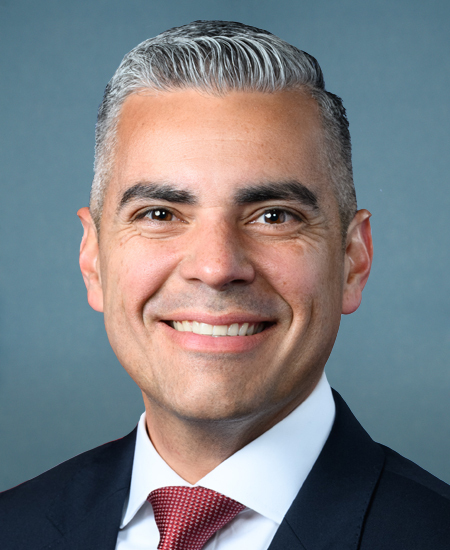
Rep. Juan Ciscomani
Sponsored bills
Repealing Big Brother Overreach Act This bill repeals the Corporate Transparency Act. The act requires existing companies and newly created companies to report beneficial ownership information to the Department of the Treasury’s Financial Crimes Enforcement Network for purposes of addressing the financing of terrorism and money laundering.
Maddy summaryThe Romance Scam Prevention Act requires online dating platforms to send immediate notifications to users who message someone banned for scamming. These warnings must include the banned user's profile details, a fraud alert, safety tips to avoid financial scams, and contact information, delivered within 24 hours (with limited exceptions for law enforcement investigations). It directly affects dating apps like Tinder or Bumble and their users by mandating clear, timely fraud alerts to prevent financial exploitation. The law takes effect one year after enactment and shields platforms from liability for following these notification rules.
Maddy summaryThe ReCement Act amends federal regulations to allow cement manufacturers to use non-hazardous secondary materials as fuel or ingredients without classifying them as waste. This change directly affects the cement industry by permitting the use of recovered resources that meet specific legitimacy criteria, such as being managed as valuable commodities or processed before use. By updating the definition of what constitutes waste under the Solid Waste Disposal Act, the bill aims to increase material efficiency in cement production through the incorporation of alternative fuels and recovered materials.
Maddy summaryThe Never Fight Alone Act expands the Veterans Community Care Program to allow veterans who cannot access VA mental health or substance-use residential treatment programs to receive these services from qualified community providers. This expansion includes specific requirements for community facilities to be state-licensed and accredited by recognized behavioral health standards, with provisions for waivers if no suitable options exist. The bill also mandates that veterans be permitted to choose their preferred care option when multiple providers are available and prohibits denying care solely because a provider cannot meet standard wait times. Additionally, the legislation requires the VA to collect detailed data on care requests and approvals, specifically highlighting mental health cases, and restricts the VA from changing community care access rules without congressional approval.
Maddy summaryThe Public Lands Integrity Act modifies the rules used to determine whether certain budget items are considered "extraneous" or outside the scope of a budget resolution. Specifically, it adds the sale, disposal, or transfer of federal lands to the list of actions that must be treated as extraneous under the Byrd Rule. This change directly affects how Congress evaluates and processes legislation involving the sale of public lands by making it more likely that such provisions will be excluded from budget reconciliation bills. The bill does not authorize the sale of any specific land but instead alters the procedural framework governing how these transactions are handled in the legislative process.
Maddy summaryHR 7086 creates a federal grant program to help states improve charter schools' access to facilities. It provides competitive grants to state education agencies that submit detailed plans showing how they will increase charter schools' access to funding, public buildings, and adequate facilities - particularly in low-income and rural communities. States receiving grants must use federal funds (capped at 60% of costs) to support facility acquisition, leasing, renovation, or financing mechanisms, while ensuring these funds supplement - rather than replace - existing state resources. The bill directly affects charter schools and state education agencies, focusing on closing facility access gaps between charter schools and traditional public schools.
Maddy summaryThis bill increases monthly disability compensation for veterans eligible for aid and attendance by adding a $833.33 supplemental payment, effective December 2026. It also creates an automatic adjustment for dependency and indemnity compensation (DIC) payments, tying them to Social Security benefit increases plus an additional 1%, for up to five years starting December 2026. Additionally, it temporarily allows the VA to collect fees for certain housing loans from veterans with a 70% or lower disability rating (2025-2035), effective August 2026. These changes directly affect veterans receiving disability compensation, surviving family members receiving DIC, and veterans applying for VA-guaranteed housing loans.
Maddy summaryH.Res. 1320 is a non-binding resolution that calls on all Americans to honor military personnel who died while serving in the pursuit of freedom and peace on Memorial Day 2026. The bill does not create new laws or change any policies; instead, it serves as a formal expression of gratitude and remembrance from the House of Representatives. Because it is a commemorative resolution rather than a procedural or funding measure, it has no direct legal effect on individuals or government operations.
Maddy summaryThis bill, the Provider Reimbursement Stability Act of 2026, aims to create more predictable payment adjustments for physicians and other healthcare providers under the Medicare program. It directly affects medical practices and providers who receive reimbursement for services through the physician fee schedule. The legislation increases a threshold for certain budget neutrality calculations from $20 million to $54.3 million in 2027, with automatic increases every five years thereafter. It also requires the government to correct payment estimates when actual service usage differs significantly from projections, mandates regular updates to cost calculations for practice expenses, and limits how much Medicare payment rates can change from year to year to a maximum of 2.5 percent.