

Maddy summaryThis bill allows mothers who are breastfeeding infants one year of age or younger to be excused from jury service. It achieves this by adding breastfeeding to the list of conditions that constitute "undue or extreme physical or financial hardship" under existing state laws. To qualify for an exemption, a mother only needs to provide a signed affidavit stating she is breastfeeding, which serves as sufficient documentation for the court. The exemption applies only for the specific jury year in which the request is made and does not grant permanent immunity from future jury duty.
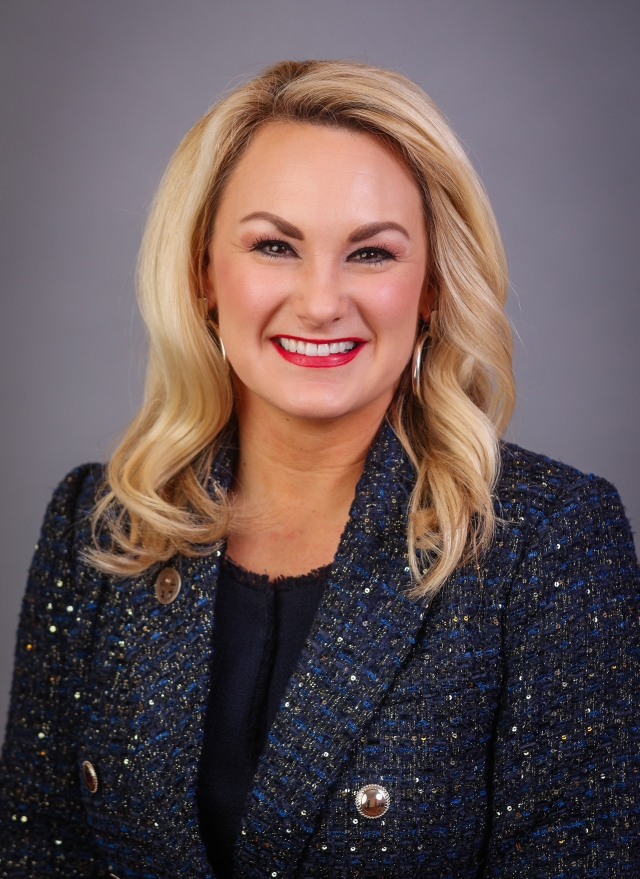
Rep. Melanie Miller
Sponsored bills
Maddy summaryThis bill is a state-level resolution from the Ohio House of Representatives that urges the U.S. Environmental Protection Agency to withdraw its proposed rules on greenhouse gas emissions from power plants. The measure asks Congress to pass legislation preventing these regulations from taking effect, citing concerns that they rely on unproven technologies and unrealistic timelines that could harm energy reliability and economic stability. By transmitting copies of the resolution to federal officials and the media, the Ohio delegation seeks to formally express its opposition to the EPA's regulatory authority in this area.
Maddy summaryThis bill requires hospitals in the state to publish a list of standard charges for services that patients can schedule in advance, known as shoppable services. Hospitals must make this list available in a machine-readable format and update it to include at least 400 services within two years, increasing to 500 services within four years. The legislation also restricts hospitals from selling or using personal data collected from their online price tools for targeted advertising. Additionally, the state health director is tasked with monitoring compliance and maintaining a public list of hospitals that fail to meet these new requirements.
Maddy summaryHB 378 expands the definition of a qualifying homestead to include surviving spouses of service members who were killed in the line of duty, allowing them to receive a full property tax exemption. The bill specifically defines "killed in the line of duty" to cover deaths from injuries sustained during service, including heart attacks or illnesses caused by service-related stress. To be eligible, the surviving spouse must occupy the home and acquire ownership after the service member's death, provided the deceased was not discharged under dishonorable conditions. This legislation aims to provide financial relief to families of fallen service members by reducing their real estate tax burdens.
Maddy summaryThis bill requires state agencies, political subdivisions, and nonresidential construction contractors to use the E-Verify system to confirm the identity and legal work eligibility of their employees. It applies to public contractors and subcontractors working on construction or maintenance projects, as well as private employers with 75 or more workers and nonresidential construction companies. While the law mandates verification for all new hires and assigned workers, it allows for a waiver if an employee's status was previously confirmed by the same employer. Contracts that do not include these verification provisions are considered void, and agencies found in violation face a fine of five thousand dollars per incident.
Maddy summaryHB 164 establishes a Foster-to-College Scholarship Program in Ohio to provide financial aid to students who entered foster care or noncertified kinship care after their thirteenth birthday. The bill also requires the Department of Education to hire a full-time school foster care liaison to help keep these students in their original schools or ensure a smooth transition to a new school when necessary. The scholarship covers the remaining cost of attendance at a college or university after subtracting all other federal, state, and private financial aid the student receives. Private colleges may choose not to participate in the program, and the funds are paid directly to the educational institution where the student is enrolled.
Maddy summaryThis bill formally recognizes the Ashland High School boys bowling team as the 2024 National Champions. It commends the team and their coach, James Brown, for their athletic success and sportsmanship, and directs the House Clerk to send an official copy of the resolution to the school. The measure serves as a tribute to the students and their coach rather than enacting new laws or policies.
Maddy summaryThis bill requires Ohio's state education board to update high school financial literacy and entrepreneurship standards to include specific concepts about free market capitalism. The new curriculum for grades nine through twelve must teach students that raw materials, labor, and capital are privately owned, that individuals control their own work and earnings, and that market prices help consumers and producers make informed decisions. It also mandates that these standards explain how wealth is created through profit-seeking transactions and how free markets drive entrepreneurship and innovation. Additionally, the legislation directs the state board to develop these academic standards independently rather than as part of a multi-state group and to include related political features like property rights and contract enforcement.
Maddy summaryThis bill is a commemorative resolution honoring the life and public service of Ronald Mottl, Sr., who recently passed away. It formally expresses the House of Representatives' condolences to his family and acknowledges his significant contributions as a politician, educator, and community leader in Ohio. The measure directs the Clerk of the House to send an official copy of the resolution to Mottl's family as a tribute to his legacy.
Maddy summaryThis bill creates the Adverse Childhood Experiences Study Commission to develop legislative strategies for addressing childhood trauma. The commission will be composed of experts from various fields, including social work, law enforcement, medicine, and education, alongside individuals with personal experience of adverse childhood experiences. Appointed members will meet quarterly to review information and produce an annual report with recommendations for the General Assembly. The commission is authorized to operate for four years, after which it will be dissolved.