

Maddy summaryThis resolution expresses the Ohio House of Representatives' condemnation of the People's Republic of China for its alleged role in the global drug trade, specifically regarding fentanyl smuggling. The measure cites claims that Chinese authorities tolerate money laundering and drug trafficking within their borders while failing to cooperate with U.S. investigations or apprehend key cartel leaders. It further asserts that the Chinese government provides financial incentives, such as tax rebates and special enterprise designations, to companies involved in producing and exporting fentanyl. Ultimately, the bill calls for the distribution of this resolution to federal officials and the media to highlight these accusations of destabilization.
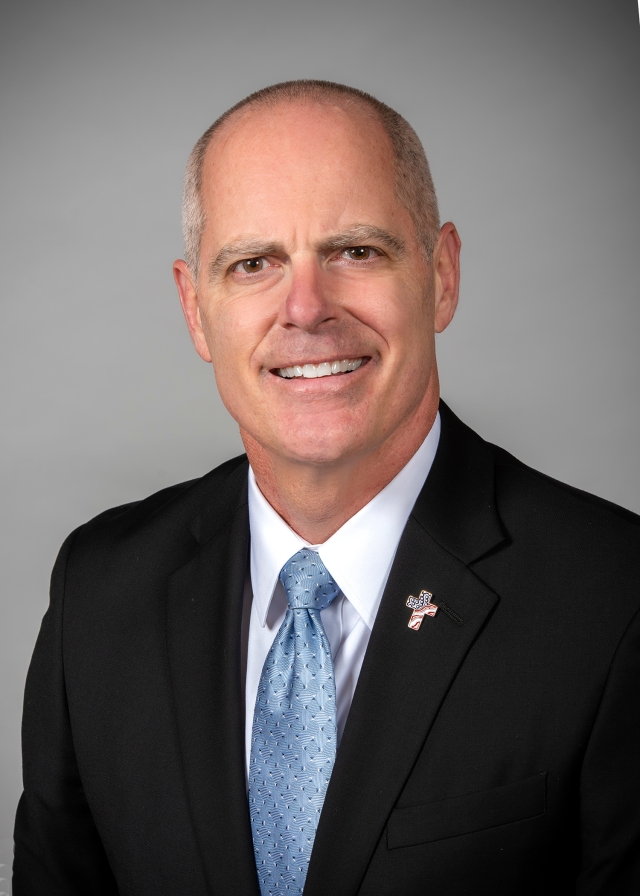
Rep. Adam Bird
Sponsored bills
Maddy summaryHB 480 allows property owners to request immediate sheriff assistance to remove unauthorized occupants from their residential homes. To use this process, the owner must first send a written notice demanding the person leave and must confirm that the individual is not a current or former tenant, family member, or property owner. The bill also prohibits the sale or use of fraudulent deeds and declares an emergency to expedite the law's implementation. This legislation directly affects homeowners and county sheriffs by creating a specific legal pathway for clearing out squatters who entered the property without permission.
Maddy summaryHB 308 introduces three main changes to state regulations. First, it updates oil and gas lease forms to require written agreements for surface land use and sets a one-eighth royalty rate for landowners. Second, the bill adjusts reimbursement limits for the broadband pole replacement and undergrounding program to ensure costs are covered efficiently. Finally, it expands the use of disposal fees from construction and demolition debris to fund health districts. These provisions directly affect state agencies, landowners, broadband providers, and waste management facilities.
Maddy summaryHB 319, known as the Conscientious Right to Refuse Act, prohibits discrimination against adults and emancipated minors who decline specific medical treatments, such as vaccines, biologics, or gene editing, based on religious or other conscientious beliefs. The law protects these individuals from facing negative consequences like job termination, denial of services, segregation, or financial penalties by employers, healthcare providers, government agencies, and educational institutions. If a person believes they have been discriminated against, the bill allows them to sue for money damages, court costs, and attorney fees, with the possibility of receiving triple damages if they win their case. While the legislation creates these protections, it explicitly states that it does not stop organizations from recommending, educating about, or providing access to the medical interventions in question.
Maddy summaryHB 688 designates September 20 as "Speaker Jo Ann Davidson Day" to honor Jo Ann Davidson, the first female speaker of the Ohio House of Representatives. This legislative measure officially recognizes her historic achievement and birth date within the state government. The bill does not alter existing laws or policies but serves as a commemorative designation to acknowledge her legacy.
Maddy summaryHB 89 strengthens the Ohio Board of Nursing's authority to discipline nurses and dialysis technicians who commit fraud, engage in substance abuse, or fail to meet safety standards. The bill allows the board to impose penalties such as license revocation, fines, or reprimands for specific misconduct, including assaulting patients, misusing drugs, or practicing while impaired by alcohol or mental health issues. It also prohibits advanced practice nurses from advertising or waiving patient copayments as an incentive to receive care. These changes aim to ensure public safety by providing clearer grounds for disciplinary action against healthcare professionals who violate ethical or legal obligations.
Maddy summaryHB 683 provides additional funding to soil and water districts and the Farm Financial Management Institute through the Department of Agriculture. The bill allocates specific operating appropriations for the 2024 and 2025 fiscal years to support these entities' ongoing work, including analysis of the upcoming federal farm bill. It also authorizes a $500,000 cash transfer from the Controlling Board Emergency Purposes/Contingencies Fund to the OSU Extension Fund. These financial resources are intended to supplement existing budgets and ensure continued operations for the affected agricultural programs.
Maddy summaryThis bill is a resolution honoring the memory of Barbara C. Pringle, a former Cleveland City Council member and long-serving Ohio state representative. It formally acknowledges her contributions to public service and directs the House Clerk to send a copy of the tribute to her family. The measure does not enact new laws or policies but serves as a ceremonial gesture to express sympathy and respect for her life and legacy.
Maddy summarySB 6 directs state retirement boards, the Bureau of Workers' Compensation, and state universities to invest their funds primarily to maximize financial returns for participants. The bill explicitly prohibits these entities from making investment decisions intended to influence social or environmental policies or corporate governance. While the legislation requires giving equal consideration to minority and women-owned businesses when selecting investments, it mandates that financial performance and safety remain the primary drivers of investment choices. Additionally, the law outlines specific procedures for purchasing, selling, and safeguarding assets, requiring annual publication of investment policies and compliance with standard financial reporting guidelines.
Maddy summaryThis bill expands eligibility for a state homeownership savings program to include active-duty members of the uniformed services. Under the new rules, these service members can open savings accounts to build funds for home down payments and closing costs, provided they apply after their permanent change of station orders. The legislation also requires state officials to issue an annual report detailing the program's participation numbers, total contributions, and financial performance.