

Passed Dec 18, 2024
1 co-sponsor
Total votes
1,087
all sessions
Attendance
88%
133 missed
Near the chamber average
With party
96%
of cast votes
Near the chamber average
Bipartisan score
2%
crosses aisle rarely
Near the chamber average
Sponsored
306
bills & resolutions
Higher than 81% of chamber peers
Committees
4
assignments
306 bills and resolutions
Sponsored bills
Total
306
Primary
139
Co-sponsor
167
This page
306
matching current filters
Urges enactment of Great Lakes Restoration Initiative Act of 2024
Maddy summaryThis Ohio House Concurrent Resolution urges the U.S. Congress to pass the Great Lakes Restoration Initiative Act of 2024, which would provide $500 million annually for five years to protect and restore the Great Lakes. The bill aims to address ongoing environmental challenges such as toxic algal blooms, invasive species, and contaminated sediments that threaten water quality, local industries, and wildlife habitats. By requesting federal funding, the resolution seeks to support collaborative efforts between the federal government, states, and local organizations to clean up pollution and restore ecosystems. The measure highlights the economic importance of the Great Lakes, noting that restoration investments generate significant economic activity for the region.
Passed Dec 18, 2024
1 co-sponsor
Condemn People's Republic of China for global drug trade role
Maddy summaryThis resolution expresses the Ohio House of Representatives' condemnation of the People's Republic of China for its alleged role in the global drug trade, specifically regarding fentanyl smuggling. The measure cites claims that Chinese authorities tolerate money laundering and drug trafficking within their borders while failing to cooperate with U.S. investigations or apprehend key cartel leaders. It further asserts that the Chinese government provides financial incentives, such as tax rebates and special enterprise designations, to companies involved in producing and exporting fentanyl. Ultimately, the bill calls for the distribution of this resolution to federal officials and the media to highlight these accusations of destabilization.
Passed Dec 18, 2024
1 co-sponsor
Regards occupational regulations
Maddy summaryHB 238 updates Ohio's occupational regulations by clarifying definitions for licenses, certifications, and personal qualifications required for various professions. The bill establishes a mandatory review cycle for state licensing boards, requiring them to expire after six years unless renewed by the legislature, which would automatically allow individuals to practice their professions without a license. It also redefines what constitutes an "agency" for government purposes and adjusts the membership of the Ohio Housing Finance Agency while removing certain suspended insurance laws. These changes aim to streamline state oversight and ensure periodic evaluation of regulatory bodies that control professional entry requirements.
Passed Dec 18, 2024
1 co-sponsor
Authorize enhanced homestead exemption for certain homeowners
Maddy summaryHB 274 expands property tax relief for homeowners in Ohio by creating a new enhanced homestead exemption for specific groups. The bill primarily affects disabled veterans, their surviving spouses, and the surviving spouses of public service officers killed in the line of duty, offering a tax reduction based on a $50,000 property value threshold. It also extends similar benefits to certain long-term homeowners, including those who are permanently disabled, sixty-five or older, or surviving spouses of disabled or elderly individuals who meet specific age and income criteria. The amount of tax reduction is calculated using a formula that considers the property's value, local assessment rates, and tax rates, with annual adjustments made by the tax commissioner to account for economic changes. This legislation aims to provide greater financial relief to these qualifying residents by reducing their real property taxes on their primary residences.
Passed Dec 17, 2024
1 co-sponsor
Modify income tax deductions for 529 plans and ABLE accounts
Maddy summaryThis bill modifies Ohio's state income tax rules to allow residents to deduct contributions made to 529 college savings plans and ABLE disability savings accounts. It sets a yearly deduction limit of $8,000 for married couples filing jointly or $4,000 for individual filers, with any unused amount carried forward to future years. The legislation also adjusts how refunds and non-qualified withdrawals are taxed and includes a mechanism to automatically update the annual contribution limits based on inflation.
Passed Dec 17, 2024
1 co-sponsor
Regards child emergency placement facilities, treatment solutions
Maddy summaryThis bill creates a streamlined licensing process for emergency placement facilities that provide short-term housing for children in temporary or permanent custody. It requires the state cabinet council to collaborate with various stakeholders to develop treatment and placement solutions specifically for children with developmental or intellectual challenges and high acuity behaviors. The legislation mandates that these facilities complete needs assessments within 72 hours and prohibits rejecting placements based on a child's behavior or treatment needs, while also preventing children from being placed in consecutive emergency facilities. Additionally, the cabinet council must report these solutions to the General Assembly within twelve months and provide annual updates thereafter.
Passed Dec 17, 2024
1 co-sponsor
Include energy generated by nuclear reaction as green energy
Maddy summaryHB 308 introduces three main changes to state regulations. First, it updates oil and gas lease forms to require written agreements for surface land use and sets a one-eighth royalty rate for landowners. Second, the bill adjusts reimbursement limits for the broadband pole replacement and undergrounding program to ensure costs are covered efficiently. Finally, it expands the use of disposal fees from construction and demolition debris to fund health districts. These provisions directly affect state agencies, landowners, broadband providers, and waste management facilities.
Passed Dec 11, 2024
1 co-sponsor
Enact Conscientious Right to Refuse Act
Maddy summaryHB 319, known as the Conscientious Right to Refuse Act, prohibits discrimination against adults and emancipated minors who decline specific medical treatments, such as vaccines, biologics, or gene editing, based on religious or other conscientious beliefs. The law protects these individuals from facing negative consequences like job termination, denial of services, segregation, or financial penalties by employers, healthcare providers, government agencies, and educational institutions. If a person believes they have been discriminated against, the bill allows them to sue for money damages, court costs, and attorney fees, with the possibility of receiving triple damages if they win their case. While the legislation creates these protections, it explicitly states that it does not stop organizations from recommending, educating about, or providing access to the medical interventions in question.
In committee Dec 11, 2024
1 co-sponsor
Prohibit activities re: garbage-fed swine, feral swine, wild boar
Maddy summaryHB 503 prohibits the feeding of garbage to swine, including feral pigs and wild boar, to address public health and environmental concerns. The bill also updates definitions within the Agricultural Commodity Handlers Law to clarify terms related to grain storage, handling, and marketing. Additionally, it authorizes the director of agriculture to charge fees for laboratory services and establishes a fund to support animal and consumer protection operations. These changes aim to regulate waste disposal practices for livestock and streamline the legal framework for agricultural commodity management.
Passed Dec 11, 2024
1 co-sponsor
Ask Maddy
·
AI policy assistant
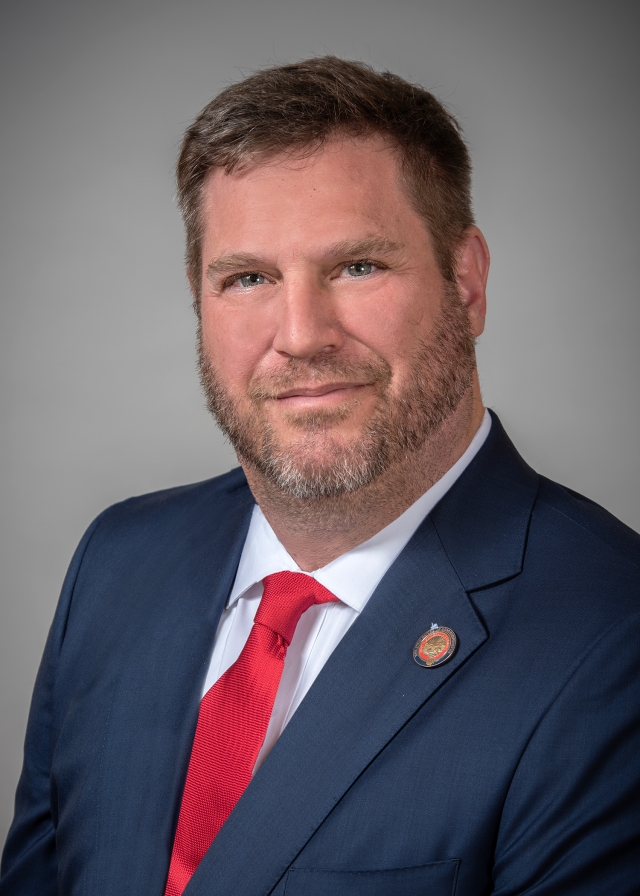
Ask Maddy about Brian Lorenz
Scope: ohio
Hi! I can help you understand Brian Lorenz's legislative record. What would you like to know?
Try one of these
i
Maddy answers using official bill text and legislative records. Always verify before sharing.
Sources cited inline