

Maddy summarySB 6 directs state retirement boards, the Bureau of Workers' Compensation, and state universities to invest their funds primarily to maximize financial returns for participants. The bill explicitly prohibits these entities from making investment decisions intended to influence social or environmental policies or corporate governance. While the legislation requires giving equal consideration to minority and women-owned businesses when selecting investments, it mandates that financial performance and safety remain the primary drivers of investment choices. Additionally, the law outlines specific procedures for purchasing, selling, and safeguarding assets, requiring annual publication of investment policies and compliance with standard financial reporting guidelines.
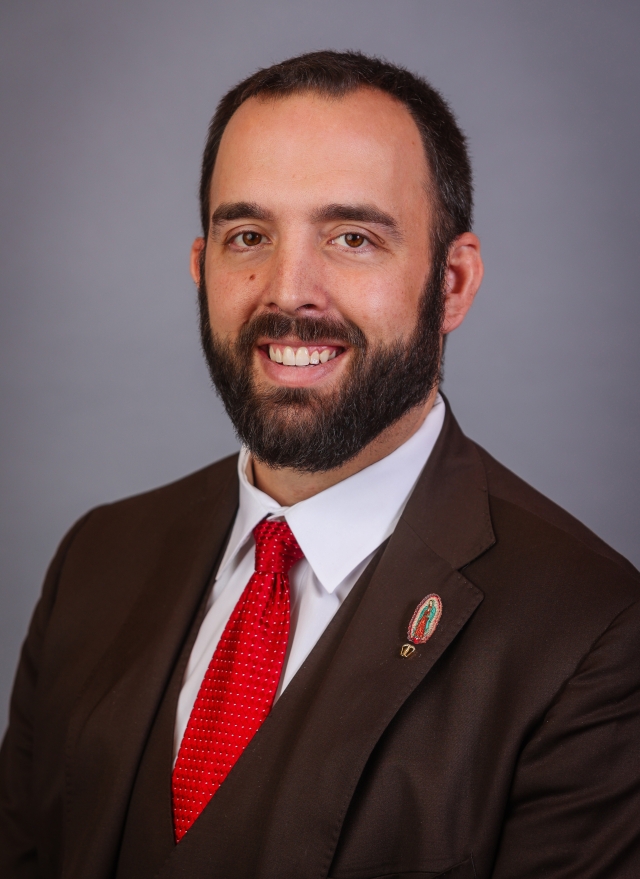
Rep. Adam Mathews
Sponsored bills
Maddy summaryThis bill amends state laws to clarify the authority of advanced practice registered nurses, specifically allowing them to provide medical certificates that justify the use of sick leave by public employees. It defines rape crisis programs and sexual assault for the purpose of creating a new trust fund to support victim services, while also updating sick leave policies for various public sector workers. The legislation ensures that unused sick leave can be carried over and transferred between agencies, and it permits appointing authorities to set alternative sick leave schedules under certain conditions. Additionally, the bill specifies that medical certification for sick leave may be provided by licensed physicians, certified nurse-midwives, clinical nurse specialists, or certified nurse practitioners.
Maddy summaryThis bill expands eligibility for a state homeownership savings program to include active-duty members of the uniformed services. Under the new rules, these service members can open savings accounts to build funds for home down payments and closing costs, provided they apply after their permanent change of station orders. The legislation also requires state officials to issue an annual report detailing the program's participation numbers, total contributions, and financial performance.
Maddy summaryThis bill requires the Ohio Department of Natural Resources to ask residents about their willingness to become organ donors when they apply for hunting or fishing licenses. It expands the ways people can register as donors by allowing them to indicate their choice on driver's licenses, vehicle registrations, or through specific forms and online links for hunting and fishing permits. The legislation also clarifies that a donor's choice remains valid even if their driver's license is revoked or suspended and provides legal protections for state officials who follow these new procedures.
Maddy summaryHB 184 amends state laws to clarify how charitable organizations, sales promotions, and solicitation professionals are defined and regulated. The bill expands the definition of a charitable organization to include groups that hold themselves out as serving public safety or other benevolent purposes, even if their contributions are not tax-deductible. It also updates definitions for terms like "professional solicitor" and "fund-raising counsel" to better distinguish between paid agents and volunteers or in-house staff. By refining these legal categories, the legislation aims to provide clearer rules for how charities and their partners operate when asking for donations or conducting fundraising events.
Maddy summaryThis bill establishes a formal process for public-use airports in Ohio to sell aircraft that have been abandoned on their premises. An aircraft is considered abandoned if it has remained on the airport for at least ninety consecutive days without the owner paying any associated fees. The legislation outlines specific steps for airports to identify owners, notify them of accrued costs, and eventually sell the aircraft if those costs are not paid within thirty days. Additionally, the bill clarifies the rights of service providers to place liens on aircraft for unpaid labor, storage, or materials, while ensuring these liens do not hinder the sale of truly abandoned planes.
Maddy summaryThis bill designates October 9th as Rutherford B. Hayes Day to honor the 19th U.S. President. The legislation requires state agencies and officials to recognize this specific date, likely through proclamations or official acknowledgments. By establishing this commemorative day, the bill aims to increase public awareness of Hayes's historical contributions and legacy.
Maddy summaryThis bill creates the Ohio Ireland Trade Commission to study and promote trade, investment, and business exchanges between Ohio and Ireland. The commission will be made up of nine members appointed by the governor, legislative leaders, and the governor with Senate approval, including representatives from higher education, the chamber of commerce, and Irish American communities. These unpaid members will meet throughout the state, elect a chair, and submit annual reports to state officials on their findings and recommendations. The commission is also authorized to raise its own funds through donations and grants to cover its administrative costs and carry out its mission.
Maddy summaryThis bill defines the legal framework for health care sharing ministries by establishing specific criteria for what constitutes a charitable organization and a charitable purpose. It outlines strict requirements for these ministries, including the need for annual independent audits, clear disclaimers stating they are not insurance, and limits on who can participate based on shared ethical or religious beliefs. The legislation also clarifies rules regarding charitable sales promotions and fundraising practices to ensure transparency in how these organizations operate. Ultimately, the act aims to provide a structured definition for these groups while distinguishing them from traditional insurance companies.
Maddy summaryThis bill is a non-binding resolution from the Ohio House of Representatives that urges federal agencies to implement policies in a way that supports innovation and product access. It highlights the importance of the Bayh-Dole Act, which allows private companies to license government-funded research for commercialization, and argues that this system should not be undermined by broad interpretations of "march-in rights." The text asserts that protecting intellectual property is essential for economic growth and that any government actions regarding product access must not discourage private investment in research. Ultimately, the resolution calls for collaboration between state and federal officials to ensure regulations foster a conducive environment for technological development without compromising the incentives for innovation.