

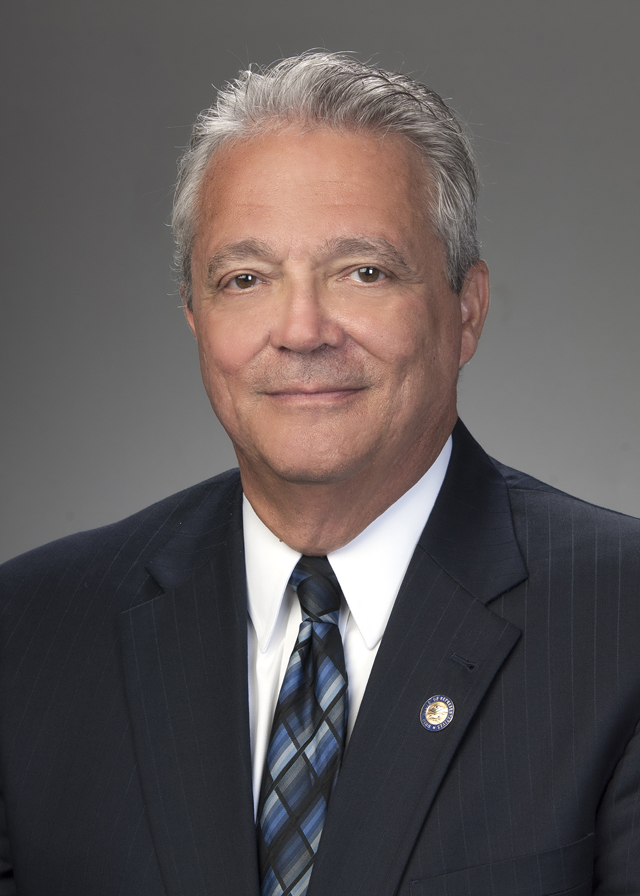
Maddy summaryThis bill is a commemorative resolution honoring the memory of Jerry W. Krupinski, a former coal miner, insurance professional, and long-serving Ohio state representative. It formally expresses the House of Representatives' sympathy to his family and acknowledges his contributions to public service and community organizations. The resolution directs the Clerk to send an official copy of the tribute to Krupinski's family, serving as a formal record of respect rather than enacting new policy.
Sponsored bills
Maddy summaryThis bill proposes adding a new section to the Ohio Constitution to allow the state to issue up to $2.5 billion in general obligation bonds for public infrastructure projects. The funds would be used to build or improve roads, bridges, water and wastewater systems, and waste disposal facilities for cities, counties, and townships. If approved by voters, the state could borrow money over ten years to finance these projects, with the full faith and credit of the state pledged to repay the debt. The legislation also specifies that the borrowed money must be used strictly for infrastructure and that the bonds would be exempt from state taxes.
Maddy summaryThis Ohio House Concurrent Resolution urges the U.S. Congress to pass the Great Lakes Restoration Initiative Act of 2024, which would provide $500 million annually for five years to protect and restore the Great Lakes. The bill aims to address ongoing environmental challenges such as toxic algal blooms, invasive species, and contaminated sediments that threaten water quality, local industries, and wildlife habitats. By requesting federal funding, the resolution seeks to support collaborative efforts between the federal government, states, and local organizations to clean up pollution and restore ecosystems. The measure highlights the economic importance of the Great Lakes, noting that restoration investments generate significant economic activity for the region.
Maddy summaryHB 274 expands property tax relief for homeowners in Ohio by creating a new enhanced homestead exemption for specific groups. The bill primarily affects disabled veterans, their surviving spouses, and the surviving spouses of public service officers killed in the line of duty, offering a tax reduction based on a $50,000 property value threshold. It also extends similar benefits to certain long-term homeowners, including those who are permanently disabled, sixty-five or older, or surviving spouses of disabled or elderly individuals who meet specific age and income criteria. The amount of tax reduction is calculated using a formula that considers the property's value, local assessment rates, and tax rates, with annual adjustments made by the tax commissioner to account for economic changes. This legislation aims to provide greater financial relief to these qualifying residents by reducing their real property taxes on their primary residences.
Maddy summaryThis bill formally recognizes the Ironton High School football team as the 2024 Division V State Champions. It praises the players and their coaches for their athletic success and sportsmanship during the season. The resolution directs the House Clerk to send an official copy of the commendation to the team.
Maddy summaryThis bill designates the month of March as "Triple Negative Breast Cancer Awareness Month" to highlight this specific type of breast cancer. The primary effect is to officially recognize the month for public awareness campaigns and educational efforts related to the disease. It does not change laws, allocate funding, or mandate specific actions for government agencies or individuals. The legislation serves as a symbolic designation rather than a policy with enforceable requirements.
Maddy summaryThis bill establishes a formal process for first responders, EMTs, and paramedics to petition the state board for the inclusion of new topics in their training and continuing education programs. It also updates regulations for medication aides working in nursing homes and residential care facilities by clarifying which prescription medications they can administer under nurse supervision. Specifically, the law allows aides to give oral, topical, and certain other medications, including Schedule II controlled substances and insulin, while prohibiting them from performing injections other than insulin, calculating dosages, or splitting pills. Additionally, the bill sets rules requiring the board to base training program durations on calendar days and to restrict clinical practice in facilities facing real and present dangers until safety issues are resolved.
Maddy summaryHB 382 requires retail pharmacies and mail-order providers to offer prescription drug readers to customers who are blind or visually impaired. These devices audibly read the label information on medication containers, including warnings, side effects, and drug interactions. The law mandates that pharmacists inform eligible patients about this service before selling a drug and provide the reader for the duration of the prescription. However, the requirement does not apply to institutional pharmacies, government-run facilities, or when a health professional personally furnishes the medication. Additionally, the bill repeals a previous section regarding Medicaid managed care organizations.
Maddy summaryHB 688 designates September 20 as "Speaker Jo Ann Davidson Day" to honor Jo Ann Davidson, the first female speaker of the Ohio House of Representatives. This legislative measure officially recognizes her historic achievement and birth date within the state government. The bill does not alter existing laws or policies but serves as a commemorative designation to acknowledge her legacy.
Maddy summaryHB 469 establishes the Ohio River Commission of Ohio as an independent state agency within the Department of Development to advance economic growth, marine cargo terminal operations, and tourism along the Ohio River and its tributaries. The commission is composed of state directors, public representatives, and industry experts appointed by the governor and legislative leaders, with specific rules governing their terms and voting procedures. Once formed, the commission will develop a master plan for river infrastructure, coordinate with various government and private entities, collect economic data, and seek federal funding to support projects that promote commerce and job creation in the region.