

Maddy summaryThis bill is a commemorative resolution honoring the life and public service of Ronald Mottl, Sr., who recently passed away. It formally expresses the House of Representatives' condolences to his family and acknowledges his significant contributions as a politician, educator, and community leader in Ohio. The measure directs the Clerk of the House to send an official copy of the resolution to Mottl's family as a tribute to his legacy.
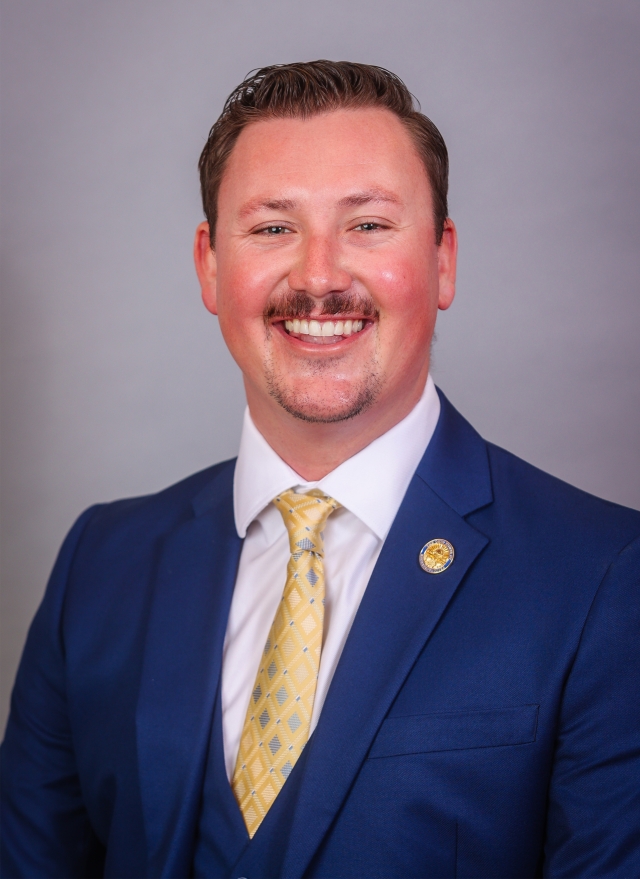
Rep. Thomas Hall
Sponsored bills
Maddy summaryHB 623 mandates that all Ohio high school districts offer at least one computer science course to students. The bill updates graduation requirements by increasing the number of required science units and allowing advanced computer science to count as one unit of mathematics, provided students sign a waiver acknowledging potential impacts on college admissions. Additionally, the legislation requires that elective courses include at least one unit from technology or computer science, while also introducing new financial literacy and world history requirements. These changes apply to students entering ninth grade on or after July 1, 2024, and affect both public and chartered nonpublic high schools.
Maddy summaryHB 617 prohibits individuals from being forced to wear masks or other facial coverings in specific public settings, including businesses, schools, government facilities, and courts. The law defines these settings broadly to cover places like restaurants, stores, hospitals, and transportation hubs, while explicitly excluding private residences. If someone believes they have been wrongly required to wear a mask, they can sue for money damages and legal fees if they prove the violation occurred.
Maddy summaryThis bill prohibits foreign nationals from directly or indirectly funding political campaigns, ballot issues, or election-related communications within the state. It also bars state political entities from accepting or using money from foreign nationals for these purposes and makes it illegal for anyone to knowingly help facilitate such transactions. Violations of these rules carry criminal penalties, including fines and potential jail time, with the attorney general responsible for investigating and prosecuting cases.
Maddy summaryThis bill amends election laws to ensure that state ballot questions are numbered consecutively based on the sequence from the previous election, resetting to number one once the count reaches 500. It also establishes a specific order for grouping local issues on ballots, such as county and municipal questions, and requires that the percentage of votes needed to pass each measure be clearly printed. Additionally, the legislation mandates that full text for ballot proposals be posted at polling places if a condensed version appears on the ballot itself. These changes aim to standardize how voters see and number ballot measures while ensuring transparency about voting requirements.
Maddy summaryHB 305 amends several Ohio Revised Code sections to update definitions and restrict how public funds can be used by local governments and legal aid organizations. The bill clarifies what constitutes a "political subdivision" and prohibits these entities from using taxpayer money to publish content that supports political candidates, promotes illegal activities, or engages in electioneering. Additionally, it limits legal aid funds to specific services for indigent clients and bars their use in criminal or fee-generating cases. The legislation also introduces new rules for public depositories, requiring them to notify governing boards if they are involved in federal regulatory corrective actions.
Maddy summaryHB 271 changes how ballot questions are numbered and organized on election ballots to ensure they follow a consistent sequence based on previous elections. The bill requires that state-level questions always appear at the top of the ballot, followed by county, municipal, township, and school district questions in a rotating order that shifts down one step each year. Additionally, it mandates that each question be numbered consecutively, starting with "1" for the top question, while resetting the count back to "1" once a state question reaches the number 500. This legislation also clarifies formatting rules, such as prohibiting bold text for property tax proposals and allowing condensed text summaries with full versions posted at polling places.
Maddy summaryHB 347 simplifies the process for farmers in Ohio to prove that certain vehicles and trailers are used for agricultural purposes, thereby exempting them from sales tax. Instead of relying on a generic exemption certificate, eligible farmers can verify their status by submitting copies of their federal Schedule F tax returns for the three most recent years to the tax commissioner. Once the commissioner issues an identification number based on these documents, farmers can present this number to vendors to automatically qualify for the tax exemption without needing additional proof. The bill also clarifies that vendors are generally relieved of tax liability if they accept a valid exemption certificate, except in cases involving fraud or specific misuse of the exemption. This change aims to reduce administrative burdens for agricultural businesses while maintaining oversight to prevent improper tax avoidance.
Maddy summaryHB 519 restores the Clean Ohio Fund and places its administration under the Department of Development and the newly re-established Clean Ohio Council. The bill defines key terms related to brownfield cleanup, such as "property," "cleanup or remediation," and "institutional property," to guide how the fund is used. It creates a nine-member council with representatives from counties, municipalities, businesses, environmental groups, and the public to oversee the fund's operations. This council will meet regularly to review eligible projects and manage the distribution of resources for cleaning up contaminated sites.
Maddy summaryHB 424 modifies the state's sales and use tax laws to clarify how delivery network services are taxed. The bill updates the legal definition of a "sale" to explicitly include various modern services such as electronic data processing, satellite broadcasting, and specific types of transportation. These changes aim to ensure that businesses providing these services are subject to the same tax rules as those selling physical goods. The legislation applies to a wide range of entities, including corporations, partnerships, and individuals, without changing the overall tax rate.