

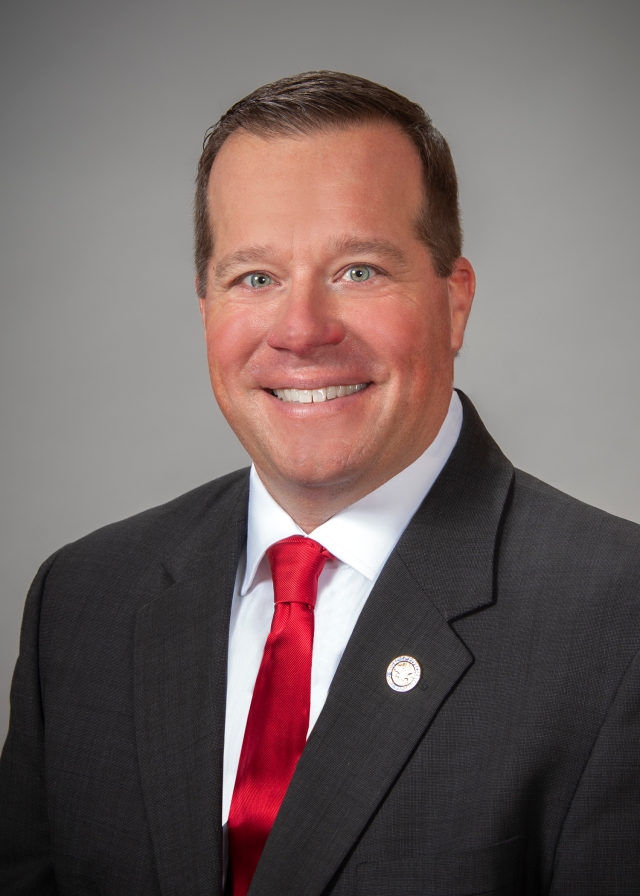
Maddy summaryThis bill formally honors Richard Dell'Aquila for his distinguished service as a member of the Ohio House of Representatives. It recognizes his background as an attorney, small business owner, and former local official in Seven Hills, highlighting his legislative work and committee contributions. The resolution expresses appreciation for his leadership and directs the House Clerk to send an official copy of the commendation to him.
Sponsored bills
Maddy summaryThis bill formally recognizes Jodi Whitted for her distinguished service as a member of the Ohio House of Representatives. It designates her as an esteemed representative and directs the House Clerk to send an official copy of this resolution to her. The measure serves as a commemorative gesture to honor her legislative career and contributions to the state.
Maddy summaryThis bill formally recognizes Richard D. Brown for his exemplary service as a member of the Ohio House of Representatives. It honors his long tenure, legal background, and leadership on various committees such as Veterans Affairs and Criminal Justice. The resolution commends his dedication to his constituents and directs the House Clerk to send an official copy of the document to him.
Maddy summaryThis bill formally honors Casey Weinstein, a former member of the Ohio House of Representatives, for his service to the state and his constituents in Summit County. The resolution recognizes his background as a United States Air Force Academy graduate and his work on various committees, including those focused on veterans' affairs and technology. It expresses the legislative body's appreciation for his dedication and directs the House Clerk to send an official copy of the commendation to him.
Maddy summaryThis bill formally recognizes Jena Powell for her service as a member of the Ohio House of Representatives. It directs the Clerk of the House to send an official copy of the resolution to her as a gesture of appreciation. The measure does not change any laws or policies but serves as a commemorative acknowledgment of her legislative work and leadership in Miami and Darke Counties.
Maddy summaryThis bill formally recognizes Elliot Forhan for his distinguished service as a member of the Ohio House of Representatives. It designates him as an esteemed representative and directs the House Clerk to send an official copy of the resolution to him. The measure serves as a commemorative gesture honoring his legislative work and community leadership rather than enacting new laws or policies.
Maddy summaryThis bill formally recognizes Mike Loychik for his distinguished service as a member of the Ohio House of Representatives. It honors his background as a U.S. Air Force veteran, business owner, and community leader who served constituents in Trumbull, Ashtabula, and Knox counties. The resolution commends his work on various committees and his leadership roles, including co-chairing the Sportsmen's Caucus for Ohio. Finally, it directs the House Clerk to send an official copy of this commendation to Loychik.
Maddy summaryThis bill prohibits state agencies and local government units from using public money to buy U.S. or Ohio flags that were not manufactured in the United States. It directly affects government entities such as county offices, townships, and municipal corporations by restricting their purchasing choices for these specific flags. The law requires that any flag acquired with taxpayer funds must be produced domestically, ensuring that the purchase supports U.S. manufacturing.
Maddy summaryHB 685 allows Ohio taxpayers to claim a state income tax deduction specifically for overtime wages. This provision directly affects employees who earn extra pay for working beyond their standard hours and are subject to state income tax. The bill modifies the state tax code to treat these overtime earnings similarly to how they are handled for federal tax purposes, ensuring they can be deducted from taxable income. By aligning the treatment of overtime wages with federal standards, the legislation aims to reduce the state tax burden on workers receiving such compensation.
Maddy summaryHB 669, known as the Warehouse Worker Protection Act, regulates how employers at warehouse distribution centers in the state use performance quotas to measure employee productivity. The bill applies to large employers, specifically those with 100 or more workers at a single facility or 500 or more across multiple sites, requiring them to provide clear written descriptions of any quotas and potential consequences for non-compliance in plain language. Key provisions mandate that employers count time spent on safety tasks, restroom breaks, and meal breaks as productive work time, while also prohibiting quotas that prevent employees from taking legal breaks or rank workers against one another. Additionally, the act requires employers to keep detailed records of performance data for at least three years and make these records available to employees upon request.