

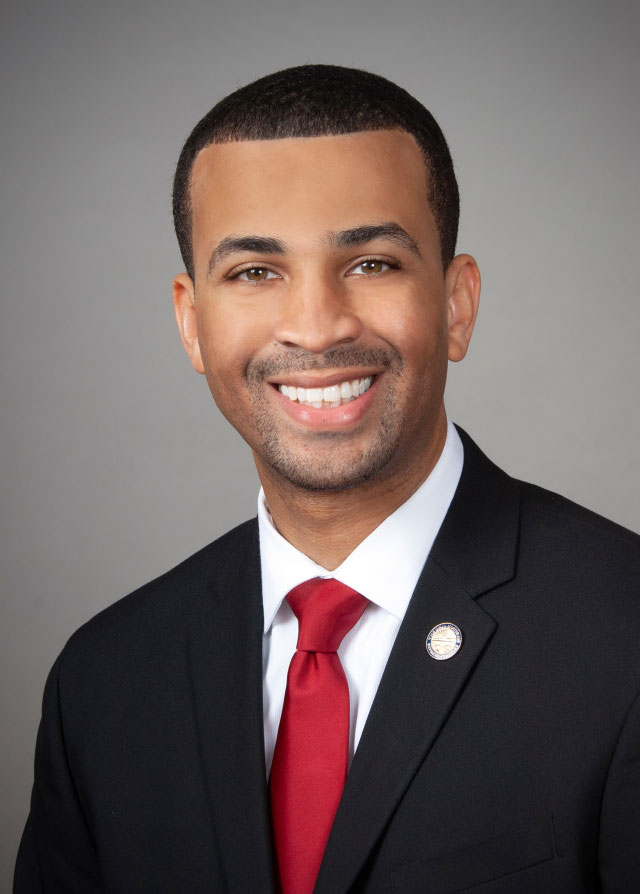
Maddy summaryHB 2 amends state laws to allow the Ohio Department of Transportation to provide loans, grants, and credit support to local governments for specific infrastructure projects. These projects include building or improving roads, bridges, water systems, and waste disposal facilities that benefit communities. The bill requires that any financial assistance be approved by local committees and stay within the district's allocated budget from the state capital improvements fund. By defining terms like "capital improvement" and "credit enhancement," the legislation clarifies how state funds can be used to help local subdivisions finance public works.
Sponsored bills
Maddy summaryThis bill requires hospitals in the state to publish a list of standard charges for services that patients can schedule in advance, known as shoppable services. Hospitals must make this list available in a machine-readable format and update it to include at least 400 services within two years, increasing to 500 services within four years. The legislation also restricts hospitals from selling or using personal data collected from their online price tools for targeted advertising. Additionally, the state health director is tasked with monitoring compliance and maintaining a public list of hospitals that fail to meet these new requirements.
Maddy summaryThis bill enacts the Creating a Respectful and Open World for Natural Hair (CROWN) Act to prohibit public schools from discriminating against individuals based on hair texture and protective hairstyles. The legislation directly affects students, educators, and school administrators by establishing clear legal protections against hair-based discrimination within the public education system. Key provisions require schools to adopt policies that ensure equal treatment regardless of hair type, thereby addressing a specific form of bias that can impact student participation and well-being. By codifying these protections into state law, the bill aims to create a more inclusive environment for all students in public schools.
Maddy summaryHB 633 requires the Department of Health to create informational materials about type 1 diabetes for parents and guardians of elementary school students. Schools must provide these materials to families when a student enrolls, and the Department of Education must make approved contracts available online. The bill also establishes detailed rules for community schools, including requirements for contracts, financial audits, teacher qualifications, and adherence to state curriculum standards.
Maddy summaryHB 380 designates specific highways and bridges across multiple Ohio counties with memorial names to honor individuals who served in law enforcement, the military, or firefighting. The bill authorizes the state director of transportation to install official markers along these roads and bridges to display the new names. Directly affected parties include the general public traveling on these routes and the families of the honored individuals, while the Ohio Department of Transportation is responsible for implementing the signage. This legislation does not alter traffic laws, funding, or road maintenance responsibilities but serves primarily as a commemorative measure.
Maddy summaryHB 164 establishes a Foster-to-College Scholarship Program in Ohio to provide financial aid to students who entered foster care or noncertified kinship care after their thirteenth birthday. The bill also requires the Department of Education to hire a full-time school foster care liaison to help keep these students in their original schools or ensure a smooth transition to a new school when necessary. The scholarship covers the remaining cost of attendance at a college or university after subtracting all other federal, state, and private financial aid the student receives. Private colleges may choose not to participate in the program, and the funds are paid directly to the educational institution where the student is enrolled.
Maddy summaryThis bill is a resolution that formally recognizes the Flying Pig Marathon in Cincinnati as the 2024 Best Marathon in America, an award given by USA Today. It directly affects the marathon organizers, volunteers, and participants by offering official commendation from the Ohio House of Representatives. The text highlights the event's positive economic impact on the region and its support for over 300 charities, noting the strong community spirit behind the race. No new laws or funding are created; the measure simply celebrates the marathon's achievements and directs the Clerk to send a copy of the resolution to the event organizers.
Maddy summaryThis Ohio House resolution honors the Sigma Omega Chapter of Alpha Kappa Alpha Sorority, Incorporated on its 100th anniversary. The bill formally recognizes the chapter's century of community service and leadership in the Greater Cincinnati area. It directs the House Clerk to send an official copy of the resolution to the sorority chapter as a tribute.
Maddy summaryHB 302 creates a specialty license plate in Ohio featuring the name of Jesup W. Scott High School. Money collected from drivers who purchase this plate will be placed into a state fund and distributed to various organizations. These funds are designated for specific purposes such as cancer research, educational scholarships, and support services for individuals with specific health conditions. The bill also directs portions of the revenue to universities outside Ohio to provide scholarships for Ohio residents attending those schools.
Maddy summarySB 106 amends state laws to establish specific prison sentence ranges for individuals convicted of various felony offenses. The bill requires courts to impose definite minimum prison terms for first, second, and third-degree felonies, while also setting specific sentence lengths for fourth and fifth-degree crimes. Additionally, it mandates longer prison terms when a felony is committed with a firearm, particularly if the weapon is automatic or if the offender has a prior criminal record involving guns. This legislation directly affects judges, prosecutors, and defendants by standardizing sentencing guidelines to ensure more consistent punishment for violent and weapon-related crimes.