

Maddy summaryHB 1155 creates a new "certificate of collector's title" for owners of reconstructed, rebuilt, antique, or vintage street rods, collector vehicles, or special interest motor vehicles in North Dakota. This certificate allows owners to legally reconstruct, rebuild, or sell these vehicles without requiring a safety inspection, but it prohibits driving them on public roads, streets, or highways (violating this is a class A misdemeanor). Owners must pay a $10 fee and provide proof of ownership, while the state may deny the certificate for false statements, unpaid taxes, or if the vehicle is stolen or under lien. The law directly affects classic car owners and collectors seeking to legally modify or sell their vehicles without standard inspection requirements.
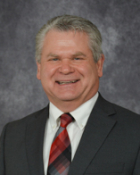
Sen. Jeff Barta
Sponsored bills
Maddy summaryHB 1246 amends North Dakota law to clarify who can handle coroner duties when a coroner is unavailable in a county. It specifies that in such cases, the sheriff, state highway patrol, or a special agent from the Bureau of Criminal Investigation must perform coroner duties. The bill requires these officials to contact the nearest coroner or deputy coroner from an adjacent county for death investigations, and if distance or weather prevents this, they must instead request the state forensic examiner or their designee to certify the cause of death. This change directly affects county law enforcement and state forensic services in areas without a resident coroner.
Maddy summaryHB 1420 amends North Dakota's library funding code to clarify that state aid grants for public libraries exclude those distributed under Chapter 54-24.2. This change directly affects public libraries receiving state funding by specifying which grant programs are included in the state aid distribution. The key provision updates Section 54-24.4-05 to explicitly approve state-funded grants for libraries, while maintaining the existing exclusion for Chapter 54-24.2 grants. The bill was enacted after receiving final approval from the Governor on March 24, 2025.
Maddy summaryHB 1132 allows North Dakota public and nonpublic schools to serve whole, two percent, and flavored pasteurized milk through bulk milk dispensers. This law overrides previous restrictions in school nutrition codes (chapters 4.1-05, 4.1-25, 4.1-26, 19-02.1, and 23-09) that previously limited milk options. School districts or approved nonpublic schools can now establish policies permitting these milk types in cafeterias. The bill directly affects school nutrition programs and student meal choices in North Dakota. It became law after the Governor signed it on March 21, 2025.
Maddy summaryHB 1267 amends North Dakota's optometry licensure laws to clarify the scope of practice for optometrists. It explicitly defines "optometric services" to include prescribing certain eye-related medications (like diagnostic dyes and topical treatments) while prohibiting laser therapy and surgery except for removing superficial foreign bodies. The bill also establishes requirements for telemedicine providers ("distant site providers") to hold an active state license and defines key terms like "diagnosis and treatment" to ensure consistency. These changes directly affect optometrists, their practices, and the state licensing board, updating administrative rules and fee structures for licensure.
Maddy summarySB 2163 raises the reporting threshold for contractors in North Dakota from $25,000 to $50,000 per project. It requires contractors completing projects over $50,000 in the previous year to submit detailed project listings, insurance certificates, and proof of paid payroll taxes when renewing their licenses. The bill directly affects licensed contractors performing large-scale projects within the state, shifting reporting obligations to fewer businesses. Key provisions include mandatory project documentation, insurance verification, and tax compliance checks during license renewal. This change simplifies reporting for smaller contractors while maintaining oversight for larger projects.
Maddy summarySB 2223 creates North Dakota's adoption of the Dietitian Licensure Compact, enabling licensed dietitians from participating states to practice across state lines without obtaining separate licenses in each state. This directly affects licensed dietitians seeking to work in multiple states and healthcare facilities serving patients in those states. The key mechanism establishes a "compact privilege" that functions like a license in other member states, while requiring uniform education and examination standards and allowing states to share disciplinary information. The compact aims to increase patient access to dietetic services, reduce administrative burdens for professionals and states, and maintain each state's authority to regulate practice and protect public health and safety.
Maddy summarySB 2310 adjusts fee requirements and minimum judgment thresholds for garnishment proceedings in North Dakota. It sets a $25-$40 fee for service on state entities (like the Office of Management and Budget) and requires plaintiffs to pay this fee when serving garnishee summons. The bill also prohibits judgments under $25-$40 against garnishees, requiring their discharge if the underlying judgment is below this amount. These changes directly affect creditors, debtors, and state agencies involved in garnishment cases.
Relating to information required in applications for professional employer services licensure, confidential records maintained by the secretary of state, notification provided to and fees charged by a notary public, notification provided to the registrant of a trade name, and fees charged by the secretary of state; and to provide a penalty.
Relating to designating the bridge on United States highway 81 as the Specialist 4 David LaTraille Vietnam bridge; to provide a continuing appropriation; and to declare an emergency.