

Relating to placing the name of a candidate on the primary election ballot; and to repeal sections 16.1‑11‑05.1, 16.1‑11‑09, and 16.1‑11‑36 of the North Dakota Century Code, relating to party organization endorsements, certificates of endorsement, and the minimum vote required at a primary election for nomination.
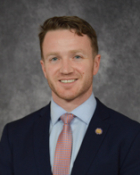
Sen. Sean Cleary
Sponsored bills
Maddy summaryHB 1245 amends North Dakota's election offense laws to clarify and strengthen penalties for various voting and petition-related violations. It specifically prohibits paying individuals based on the number of signatures collected for election petitions (like initiatives or referendums), while allowing standard salaries not tied to signature counts. The bill also defines new offenses, such as signing petitions with false names, submitting petitions with fraudulent signatures, and obstructing voters at polling places. Violations can result in fines, misdemeanor charges, or felony convictions, with organizations facing business license revocation. This directly affects voters, election officials, petition circulators, and political organizations involved in ballot measure campaigns.
Relating to providing breakfast and lunch to all students of participating entities, including school districts, nonpublic schools, and tribal schools, at no cost to the student.
Maddy summaryHB 1463 requires that district political organizations in North Dakota hold their endorsing caucuses and official committee meetings within the geographic boundaries of their legislative district, as defined by law. The bill specifies that if a district overlaps multiple incorporated cities, meetings must be held within that city's boundaries. It does not change election rules or candidate selection but sets procedural location requirements for internal party meetings. This is a procedural bill focused solely on meeting locations, not policy outcomes.
Maddy summarySB 2389 would direct North Dakota's legislative management to study the state's child care infrastructure during the 2025-26 interim. The study would examine child care availability, affordability, public funding (including reimbursement rates and grant programs), and licensing processes across all counties. It aims to identify strengths, challenges, and policy improvements to inform future legislation. The bill failed to pass in February 2025, so no study has been conducted.
Maddy summaryHB 1370 clarifies the scope of administrative hearings for drivers who refuse roadside breath or oral fluid screening tests. It specifies that hearings can only review whether law enforcement had reasonable grounds to suspect impairment, whether the driver was arrested, and whether they refused the test. This affects drivers facing license revocation for refusing screening tests and ensures hearings focus strictly on these procedural issues. The bill updates existing North Dakota law (sections 39-20-05 and 39-20-14) without changing penalties for refusal.
Maddy summarySB 2316 proposed creating four regional service areas in North Dakota to provide long-term care for patients requiring ventilator support or psychiatric services. The bill would have required the state department to contract with providers in each region or pay for out-of-state care if local providers weren't available, while allowing collaboration with neighboring states. Facilities serving these patients could receive additional funding if they documented prior out-of-state care for the same patients. The bill specifically targeted patients with complex medical or psychiatric needs requiring ongoing specialized care. It failed to pass in the North Dakota legislature in February 2025.
Maddy summarySB 2166 would require North Dakota's Tax Commissioner to create a public website portal providing property tax information for all parcels across the state. The portal must include interactive data on tax collections by local taxing districts (updated annually), contact details for elected officials associated with each parcel, and educational tools to help residents understand property taxes. County auditors would submit annual property tax data and official contact information to the portal, and the Tax Commissioner would report on its progress and usage every two years. The bill allocates $5 million in one-time funding for development, directly affecting all North Dakota residents who pay property taxes and local governments that collect them.
Relating to posttraumatic stress disorder duration limits; to amend and reenact subsection 11 of section 65‑01‑02 of the North Dakota Century Code, relating to workers' compensation coverage for posttraumatic stress disorder; to provide for application; and to provide an expiration date.
Maddy summaryHB 1171 creates a scholarship program for dependents of North Dakota law enforcement family members, directly affecting eligible students whose parents or guardians are full-time law enforcement officers (including correctional officers, firefighters, EMS providers, or peace officers) with at least three years of service. The program covers 50% of tuition costs (minus other aid) at state higher education institutions, administered by the State Board of Higher Education. It appropriates $5 million from the general fund for the 2025-2027 biennium to fund these scholarships. The bill defines eligibility through tax dependency exemptions and enrollment at state-controlled colleges or universities.