

Maddy summaryHB 1563 is a procedural bill that establishes a legislative study on tribal land taxation in North Dakota. It directs the state's legislative management to analyze issues related to taxing land owned by enrolled tribal members living within tribal reservations, including federal law, court decisions, state property tax exemptions for Native Americans, and tribal sovereignty conflicts. The study, to be completed during the 2025-26 interim, will examine how state and tribal tax authority interact and report findings with policy recommendations to the 70th Legislative Assembly. This bill does not change current tax laws but creates a formal process to review existing policies affecting tribal members and reservations.
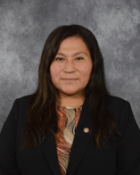
Rep. Lisa Finley-DeVille
Sponsored bills
Maddy summaryHB 1252 creates a dedicated tribal health care coordination fund in North Dakota's state treasury, providing ongoing state funding to tribal governments for public health services. Funds are distributed based on each tribe's federal care coordination funding, with strict requirements: tribes must use funds for core public health services (limiting capital construction to 50% until 2027, then 35%), submit annual reports, and undergo biennial independent audits. The state department of health withholds funds for missing reports or improper use, and can restore distributions once compliance is verified. This bill directly affects North Dakota's tribal nations by establishing formalized, accountable funding for health programs aligned with federal public health priorities.
Maddy summaryHB 1471 requires dental benefit plans in North Dakota to offer payment methods other than credit cards to dentists, preventing plans from requiring credit card payments only. It mandates that plans notify dentists about any fees for specific payment methods, explain available options, and provide clear instructions for selecting fee-free alternatives. The bill also prohibits charging transmission fees for electronic payments unless the dentist consents, and restricts plans from sharing credit card company profits to cover claim payments. This directly affects dental benefit plans, their vendors, and health maintenance organizations when paying dentists in North Dakota.
Maddy summaryHB 1569 requires North Dakota public school districts to provide sex trafficking awareness and prevention instruction to all students at least once before graduating high school, starting in the 2027-28 school year. The bill mandates that curriculum must cover victim demographics, accurate definitions of trafficking, reporting systems, risk identification, and recognizing grooming signs, while including medically and legally accurate information. School districts must use curriculum approved by the Superintendent of Public Instruction, and the instruction may be integrated into existing courses starting in grade seven. The bill directly affects all K-12 students and school districts in North Dakota through mandatory curriculum implementation.
Maddy summaryHB 1611 requires North Dakota's legislative management to conduct a study during the 2025-26 interim on environmental and public health risks from oil and chemical spills on state highways within the Fort Berthold Reservation. The study must include input from the Three Affiliated Tribes, the Department of Environmental Quality, and the Department of Health and Human Services. It mandates that the legislative management report findings, recommendations, and any needed legislation to the next legislative assembly. The bill directly affects tribal communities and state agencies managing highway safety and environmental risks on reservation lands. (Note: The bill failed to pass in February 2025, but the summary describes its intended purpose.)
Maddy summaryHB 1536 allocates $1.5 million to North Dakota's Department of Public Instruction to develop and implement a K-12 Native American history curriculum across all public schools. The funding is divided: $600,000 for curriculum development with tribal collaboration, $300,000 for teacher training, $500,000 for educational materials, and $100,000 for oversight. It requires a tribal advisory committee and mandates equitable resource distribution, especially for rural and underfunded schools. The bill also requires a 2026 progress report to the legislature on implementation and effectiveness.
Maddy summaryHB 1495 amends North Dakota law to require state and local government employers (including agencies, departments, and political subdivisions) to grant unpaid leave to employees serving as legislators during legislative sessions or committee meetings. The bill ensures that employees returning from this leave retain their original position, seniority, pay, and benefits, and prohibits employers from terminating or discriminating against employees due to their legislative service or candidacy. It directly affects legislative members who are employed by government entities, protecting their jobs while they serve in the legislature.
Maddy summaryHB 1618 would have provided $1,387,256 in state funds to North Dakota's Department of Public Instruction to administer infrastructure grants for tribal elementary and secondary schools during the 2025-2027 biennium. To receive a grant, tribal schools would have needed to contribute $346,814 in matching funds for their projects. The bill failed to pass the legislature on February 10, 2025, with 4 votes in favor and 86 against.
Relating to establishing a grant program for the education of nonbeneficiary students attending tribally controlled schools; and to amend and reenact section 54‑40.2‑02 of the North Dakota Century Code, relating to authorization for public agencies and tribes to enter an agreement.
Maddy summaryHB 1521 would exempt enrolled members of federally recognized North Dakota tribes residing on tribal reservations from the state's motor vehicle excise tax. To qualify, individuals must provide proof of tribal enrollment and live within reservation boundaries (primary residence on reservation is required). The exemption applies retroactively to vehicle purchases after June 30, 2023, and the bill declares an emergency. This change directly affects tribal members living on reservations by removing a state tax on their vehicles.