

Relating to the certification and sale of assistance animals; to amend and reenact section 25‑13‑01.1 of the North Dakota Century Code, relating to definitions associated with assistance animals; and to provide a penalty.
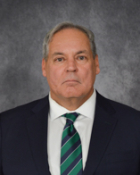
Rep. Jim Jonas
Sponsored bills
Maddy summaryHB 1179 would require North Dakota's public institutions of higher education to provide faculty members with at least a 12-month appointment 24 days of paid time off annually. It mandates institutions to track accrued time off, sets a limit of 30 days to carry over into the next year, and requires payment for unused time upon termination (capped at 54 days total). Institutions failing to implement this by August 1, 2025, would need to grant 54 days of paid time off to faculty by January 1, 2026. The bill directly affects faculty at all public colleges and universities governed by the state board of higher education.
Relating to a legacy fund school construction assistance loan fund; to amend and reenact section 21‑10‑11, relating to the legacy and budget stabilization fund advisory board; and to provide a continuing appropriation.
Maddy summaryHB 1604 creates a new state program to fund K-12 school construction in North Dakota, directly affecting school districts seeking state assistance for new buildings. To qualify, districts must meet specific criteria, including demonstrating renovation costs exceed 60% of new construction costs, having a failed referendum for construction/renovation within a set timeframe, and securing their share of funding. The bill establishes tiered state funding rates (from 5% to 95% of costs) based on a district’s property tax valuation ("mill value"), with a $600 million appropriation allocated for the 2025-2027 biennium. It also requires districts to use state-appointed architectural firms meeting strict in-state criteria and mandates plans for long-term building maintenance. The program expires on July 1, 2035.
Maddy summaryHB 1494 amends North Dakota law to change how school districts calculate their "weighted average daily membership" for state funding. It assigns different multipliers to various student groups, such as 1.00 for extended programs, 0.60 for summer programs, and specific weights for English language learners based on proficiency levels. This directly affects all public school districts in North Dakota by altering the formula used to determine their state education funding. The bill also includes provisions for small rural districts with low enrollment and special education support. The changes would take effect July 1, 2025, if enacted.
Relating to providing breakfast and lunch to all students of participating entities, including school districts, nonpublic schools, and tribal schools, at no cost to the student.
Maddy summaryHB 1449 would require North Dakota school districts to provide one full-time school counselor for every 300 students in grades 7-12 (already in effect) and expand this to include grades K-6 starting in the 2022-23 school year. The bill allows up to one-third of the required counselor positions to be filled by certified career advisors, defined as individuals with specific credentials from the Department of Career and Technical Education. School districts would need to document recruitment efforts, explore alternatives like shared services or virtual counseling if positions aren't filled, and provide this documentation upon request. The bill directly affects all public school districts in North Dakota and their students in grades K-12.
Maddy summaryHB 1172 would require a student's home school district to pay fees for distance education courses if the student's regular school doesn't offer the course during the semester or at a time that fits the student's preferred schedule. This directly affects students enrolled in distance education through North Dakota's Center for Distance Education and their home school districts. The bill specifies that districts must cover these fees instead of charging the student or their parent/guardian when course availability conflicts with the student's schedule. The policy change aims to reduce financial barriers for students seeking specific courses not available at their home school.
Maddy summaryHB 1256 would allocate $75,000 from North Dakota's general fund as one-time funding for the Parks and Recreation Department to provide grants for walking trail expansion projects. The bill specifically targets rural communities experiencing significant population growth during the 2025-2027 biennium. It directs the department to award grants for trail projects that improve recreational access in these growing areas. This is a procedural funding bill with no other substantive policy changes.
Maddy summaryHB 1370 clarifies the scope of administrative hearings for drivers who refuse roadside breath or oral fluid screening tests. It specifies that hearings can only review whether law enforcement had reasonable grounds to suspect impairment, whether the driver was arrested, and whether they refused the test. This affects drivers facing license revocation for refusing screening tests and ensures hearings focus strictly on these procedural issues. The bill updates existing North Dakota law (sections 39-20-05 and 39-20-14) without changing penalties for refusal.