

Maddy summaryHB 895 creates North Carolina's Emergency Citizen Pilot Training Program, which establishes certification standards for volunteer pilots to assist in disaster response. The program, administered by the Division of Emergency Management, will train pilots on safe emergency operations (including flight paths, communication, and coordination with state/federal teams), require a $500 fee per participant, and maintain a registry of certified pilots who complete continuing training to maintain active status. It directly affects volunteer pilots who qualify, granting them certification to participate in disaster efforts and providing new leave rights from civilian jobs during emergencies. The bill also expands the definition of "emergency management worker" to include certified pilots and requires the program to be operational by January 1, 2027.
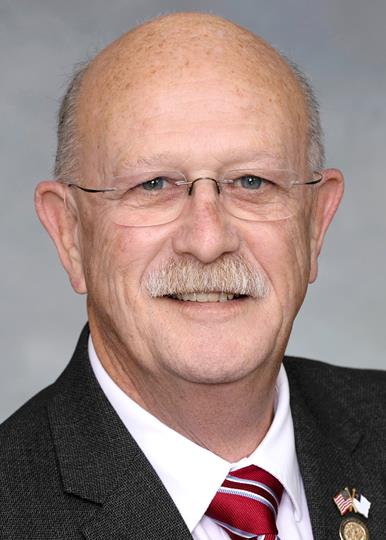
Rep. Bill Ward
Sponsored bills
Maddy summaryHB 893 limits how much North Carolina's Chiropractic Board can charge chiropractors for disciplinary actions, capping costs at $1,000 for settled cases and $3,000 for cases with a full hearing. It requires the Board to provide itemized cost breakdowns and refund any overcharges. The bill also mandates that the Board keep detailed, accurate meeting minutes, including summaries of public comments and vote records. These changes directly affect chiropractors facing disciplinary proceedings under the Board's jurisdiction.
Maddy summaryThis bill requires public schools and charter schools in North Carolina to allow students from nonpublic schools to enroll part-time for access to specific courses, programs, or services. The law mandates that local school boards create policies for this enrollment and make them available on their websites, while charter schools must also post relevant information online. Schools will receive state funding for part-time students, with full per-pupil funding for those attending one-third or more of instructional time and half funding for those attending less. The legislation also clarifies that part-time nonpublic school students will not count toward a charter school's enrollment growth metrics.
Maddy summaryHB 916 strengthens North Carolina's Do Not Call and Do Not Text Registry by requiring telemarketers to remove registered numbers from their contact lists within 30 business days when a resident requests no further calls, reducing the previous timeframe from 60 days. It directly affects North Carolina residents who have registered their phone numbers and telemarketers operating in the state, including partner companies. Key provisions include clarifying that "telephone solicitation" covers text messages and automated calls, and holding companies jointly liable if they accept sales leads generated by illegal telemarketing calls. The bill updates state law to align with federal telemarketing rules and enforce stricter compliance.
Maddy summaryHB 957 creates a study committee to examine infrastructure challenges at North Carolina's HBCUs and MSIs, including building conditions, environmental risks, and maintenance needs. It establishes a $5 million Completion Assistance Program to provide up to $1,000 annually per student at six UNC HBCUs (Elizabeth City State, NC A&T, UNC Asheville, UNC Greensboro, UNC Pembroke, and Winston-Salem State) for tuition/fee balances, targeting students with Pell Grants who need financial aid to graduate on time. The bill also allocates specific infrastructure funds, including $5.1 million for Winston-Salem State's Hauser Hall renovations and $8 million for emergency steam repairs. These provisions directly affect students and campus facilities at the six designated institutions through financial aid and physical infrastructure support.
Maddy summaryHB 967 clarifies that voting places during voting hours are explicitly included as "public buildings" under North Carolina's disorderly conduct law (G.S. 14-132). This means actions like making loud disturbances, vandalism, or creating nuisances at polling locations during voting hours would now be covered by the misdemeanor statute. The bill directly affects voters, election workers, and anyone engaging in conduct near polling sites during official voting hours. It expands existing disorderly conduct protections to specifically cover voting places, effective October 1, 2025.
Maddy summaryHB 966, the College Cost Reduction Act, prohibits all University of North Carolina (UNC) schools from requiring students to pay extra for mandatory course software (Learning Management Systems or LMS). It directly affects UNC students by banning any requirement for paid LMS access beyond existing, approved student fees. The bill mandates the UNC Board of Governors to create a policy ensuring professors or courses cannot force students to pay for LMS services - only free or fee-covered options may be required. The rule takes effect for the 2025-2026 academic year.
Maddy summaryHB 1006 proposes amending North Carolina's state constitution to require that all legislative bills address only one subject, with exceptions for general appropriations bills, tax bills, and technical corrections. If approved by voters in the 2026 election, this change would require lawmakers to draft bills with a single, clearly defined topic in their titles. The amendment must be ratified by a majority of voters in the November 2026 general election before taking effect. This is a procedural change affecting how bills are structured, not the content of legislation itself.
Maddy summaryHB 1000 establishes legal restrictions on gender transition care for minors in North Carolina while creating pathways for detransition. It prohibits medical professionals from performing surgical gender transitions, prescribing puberty blockers or cross-sex hormones, or conducting detransition procedures on minors without parental consent (with detransition procedures specifically permitted under parental consent). The bill imposes penalties including license revocation for violations and mandates civil liability for medical providers who provide transition care to minors, requiring them to cover harms like physical, psychological, or emotional injuries. It also requires gender clinics to report detailed statistics on transition procedures to the state health department. This bill directly affects minors seeking gender-affirming care, their parents/guardians, and medical providers operating gender clinics in North Carolina.
Maddy summaryHB 1002, the Rate Payer Protection Act, prohibits North Carolina utilities from passing grid and energy costs specifically tied to large data centers (100+ megawatt demand) to electricity ratepayers. Instead, it creates a 14-member Special Commission to plan data center infrastructure, reviewing grid capacity, recommending locations based on factors like fiber and water access, and advising on energy expansion needs. The Commission must report findings to state leaders by June 2027 and expires on that date. This directly affects ratepayers (who avoid these costs) and utilities (which must exclude data center-related expenses from rate calculations).