

Maddy summaryHB 218 requires the North Carolina Division of Motor Vehicles (DMV) to include a request for emergency contact information on applications for drivers' licenses, learners' permits, and identification cards. This applies to both new applications and renewal applications. Providing this emergency contact information will be optional for the applicant. The act is set to become effective on October 1, 2026.
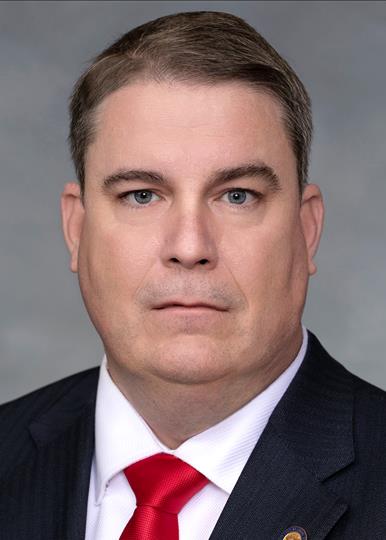
Rep. Brenden Jones
Sponsored bills
Maddy summaryHB 889 requires North Carolina's Department of Natural and Cultural Resources to negotiate an agreement with Fair Bluff town by March 2026 to manage Lumber River State Park's River Walk, adjacent park, and parking areas as a single unit. It directs the department to use Fair Bluff's existing Lumber River Visitors Center as the park's headquarters, clarifying that no new admission fees are required except for special events or private rentals. The agreement must define management responsibilities for shared spaces, outline how user fees (for events only) will be handled, and address asset transfers between the town and state. This bill does not create new fees or regulations but reorganizes park management structure and location.
Maddy summaryHB 991 establishes North Carolina's Disaster Mortuary Operational Response Team (DMORT) within the Division of Emergency Management. The team, composed of licensed funeral directors, medical examiners, forensic specialists, and other trained professionals, will respond to disasters by identifying victims, managing remains, coordinating with families, and supporting local mortuaries during mass fatality incidents. It requires the Division to develop a response plan integrated into the state’s Emergency Operations Plan, fund training and equipment, and coordinate with agencies like the Board of Funeral Service. The bill takes effect October 1, 2025, creating a standardized state-level system for handling mortuary needs after disasters.
Maddy summaryHB 354 requires courts in North Carolina to block filings by individuals declared legally incompetent by a court unless submitted through their guardian or attorney. It mandates courts to strike non-compliant filings and issue "gatekeeper orders" to prevent unauthorized submissions. The bill also creates a centralized database for courts to quickly identify individuals with such court declarations. This applies to all civil cases filed or pending after December 1, 2025, directly affecting people declared legally incompetent and their legal representatives.
Maddy summaryHB 843 requires North Carolina's Department of Natural and Cultural Resources to create a formal agreement with the Town of Lake Waccamaw for repairing a dam at Lake Waccamaw State Park. The agreement must guarantee the town access to the dam site for planning and performing repairs, detail the repair scope and timeline, and specify that the state department will resume dam maintenance after repairs are complete. The bill mandates this agreement be finalized by September 1, 2025, and submitted to legislative committees. This directly affects the Town of Lake Waccamaw (as the entity requesting repairs) and the state department (responsible for park management and dam oversight).
Maddy summaryHB 780 appropriates $2 million to expand the All Pro Dad program in North Carolina through Family First, Inc., funding school-based chapters, father-child engagement events, and parenting resources. It also creates the "Responsible Fatherhood NC" program under the Department of Health and Human Services, requiring a nonprofit manager to run a statewide media campaign, provide father-focused resources, and promote existing fatherhood initiatives. The bill directs grants to community organizations addressing fathers' needs - such as employment, child support, and parenting skills - with priority given to areas facing high unemployment, incarceration, or single-parent households. The program directly supports North Carolina fathers and their children, aiming to improve family well-being through increased paternal involvement.
Maddy summaryHB 295 requires the North Carolina Department of Transportation (DOT) to install permanent property corner markers after acquiring land for transportation projects. It directly affects property owners whose land is used for DOT projects, ensuring clear boundary identification. The bill mandates DOT to survey and place durable markers (like metal stakes) along acquired property lines after project completion, using coordinates tied to North Carolina's State Plane Coordinate system. This ensures accurate, long-term documentation of property boundaries for future reference.
Maddy summaryHB 355 directs North Carolina's Legislative Research Commission (LRC) to study challenges facing rural fire departments, focusing on volunteer recruitment, funding, equipment needs, interdepartmental cooperation, firefighter well-being, and public education. The LRC must examine specific issues like financial incentives for volunteers, equitable resource distribution, mutual aid agreements, and community fire safety programs. It requires regional public hearings and a 90-day comment period before submitting interim and final reports to the 2025 and 2027 General Assemblies. This bill does not change current law but sets up a review process to inform future legislative action.
Maddy summaryHB 469, the "Restoring Rivalries Act," mandates that UNC Chapel Hill and NC State University (the two largest UNC system institutions) regularly compete against each other in football, basketball, baseball, and softball. Specifically, the bill requires each school to play at least one home or away game annually against the other in football and basketball (low-game count sports), and a series of at least three home or away games annually in baseball and softball (high-game count sports). This requirement applies starting with the 2026-2027 academic year and aims to preserve historic athletic rivalries within North Carolina.
Maddy summaryHB 47, the Disaster Recovery Act of 2025 - Part I, allocates $524 million from the Helene Fund to support recovery efforts in North Carolina counties impacted by Hurricane Helene. The bill directs funds to specific programs including home reconstruction ($120 million), agricultural crop loss assistance ($200 million), road and bridge repairs ($100 million), small business infrastructure grants ($55 million), debris removal ($20 million), fire department equipment ($10 million), and tourism promotion ($4 million). These resources directly assist residents, farmers, local governments, and businesses in designated hurricane-affected counties by addressing immediate rebuilding needs and supporting economic recovery. The bill requires programs to align with federal disaster recovery guidelines to maximize potential federal reimbursement, with reporting requirements for certain initiatives.