

Maddy summaryHB 811 requires North Carolina property assessors to send written notices to property owners within 30 days of a property revaluation. These notices must include the current and prior appraised values, the percentage change, appeal instructions, and tax rates from the previous year. The bill also mandates that budget officers publish an estimate of the revenue-neutral tax rate on government websites by May 15 each year a revaluation occurs, updating it by July 15 after the budget is adopted. This transparency measure applies to all counties conducting revaluations effective on or after January 1, 2025, directly affecting property owners and local government budget processes.
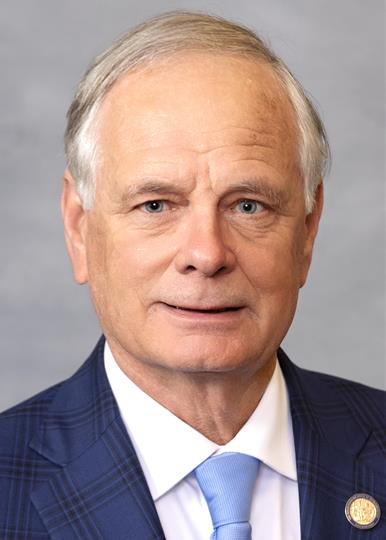
Rep. Steve Tyson
Sponsored bills
Maddy summaryHB 506, the 2025 State Investment Modernization Act, reorganizes North Carolina's existing investment laws by restructuring Chapter 147 of the General Statutes into five new parts. It creates the North Carolina Investment Authority as an independent agency within the State Treasurer's Department to manage state investment programs, including retirement funds. The bill primarily affects state financial management operations by clarifying the authority's structure, independence from other state departments, and fiduciary responsibilities for funds like teachers' and state employees' retirement systems. This is a procedural reorganization of legal frameworks, not a policy change altering how investments are managed or funded.
Maddy summaryHB 577 creates a Towing and Recovery Commission within the North Carolina State Highway Patrol to resolve disputes over fees charged by towing services to law enforcement. It requires towing businesses to submit hourly rates to the commission for approval and establishes new permit requirements, including background checks (no felony convictions in the past 5-10 years), insurance, training, and proof of a compliant storage facility. The bill directly affects towing companies, truckers using the State Highway Patrol rotation system, and law enforcement agencies that contract for towing services. Key provisions include the commission’s authority to set reasonable fees, disqualify noncompliant tow services, and oversee permit applications with specific eligibility criteria.
Maddy summaryHouse Bill 597 designates the osprey (Pandion haliaetus) as the official state raptor of North Carolina. This bill amends Chapter 145 of the General Statutes to formally adopt the osprey as a state symbol.
Maddy summaryThis bill, HB 519, revises laws regarding when minors can consent to medical treatment and parental access to their children's medical records. It restricts the medical services a minor can consent to on their own to primarily pregnancy-related care, removing their ability to consent for venereal diseases, substance abuse, or emotional disturbance treatment. The bill also requires written parental consent for minors to receive vaccines authorized for emergency use but not yet fully FDA approved. Additionally, it grants parents the right to access all their minor child's medical records, including those for care the minor could consent to, with exceptions for suspected abuse or neglect, court orders, or active law enforcement investigations.
Maddy summaryThis bill authorizes local governments to borrow money through "grant anticipation notes" to accelerate local transportation projects already identified for funding under the State Transportation Improvement Program (STIP). To utilize this, a local government must enter into an expedited project agreement with the Department of Transportation (DOT), outlining project details, costs, funding, and a repayment plan. These notes are special obligations, meaning they are repaid solely from the anticipated STIP funding, and the local government's general taxing power is not pledged. The DOT must ensure that any STIP changes do not delay the repayment of these notes, and both the DOT and the Department of the Treasurer are directed to establish rules for their implementation.
Maddy summaryHB 782, titled "Civic Club Registration Plate Clarification," amends North Carolina law concerning special registration plates for civic organizations. The bill clarifies that a civic organization itself can obtain a special registration plate for a vehicle it owns, in addition to individual members. This applies to nationally recognized civic clubs, like Kiwanis or Rotary, whose member clubs in the state are tax-exempt. The bill maintains the requirement that at least 300 applications are needed for a specific civic club plate to be issued.
Maddy summaryHB 581, the Career Pathways Transparency Act, requires the State Education Assistance Authority to create a "Know Before You Go" website. This website will provide students and parents with information on projected employment needs, associated salary ranges, and relevant college majors. It will also detail specific outcome data for public and private institutions of higher education and vocational schools, including tuition, student loan debt, completion rates, and post-graduation employment and salary information. Local school boards will be mandated to provide this "Know Before You Go" information to high school sophomores to help them make informed decisions about their postsecondary education and career paths. A grant program will be established to assist local boards in implementing these programs.
Maddy summaryHB 598, titled "Live Event Ticketing Protections and Reforms," aims to create consumer protections for individuals purchasing tickets for live entertainment events, particularly in the secondary market. The bill requires ticket issuers, resellers, and secondary ticket exchanges to clearly display the total ticket price, including all mandatory fees, from the initial listing and prohibits price increases during a single ticketing session. It prevents primary ticket issuers from restricting a purchaser's ability to resell tickets on their chosen platform or from setting minimum/maximum resale prices. Additionally, secondary ticket exchanges would be prohibited from using website addresses that are similar to the name of an event, performer, or venue.
Maddy summaryHB 765, titled "Save the American Dream Act," introduces new requirements for fiscal notes concerning housing affordability at both state and local levels. The bill mandates that the state's Fiscal Research Division prepare a five-year fiscal note for any proposed state legislation that could impact the cost of constructing, purchasing, owning, or selling a single-family residence. Similarly, it requires county and city governments to prepare a fiscal note for local ordinances that could affect these same costs. These local notes must be made public at least five days before the ordinance is introduced.