

Maddy summaryHB 135 establishes labeling requirements for "manufactured-protein food products," which include items made from cell cultures, insects, or plants that resemble traditional meat or poultry. The bill mandates that if these products use identifying meat or poultry terms, their labels must also prominently display a "qualifying term" like "cell-cultured" or "plant-based" in a specific font size and location to prevent misbranding. Additionally, the bill aims to prohibit public educational institutions from purchasing certain food products and proposes an environmental investment assessment on specific animal-derived and analogous food products.
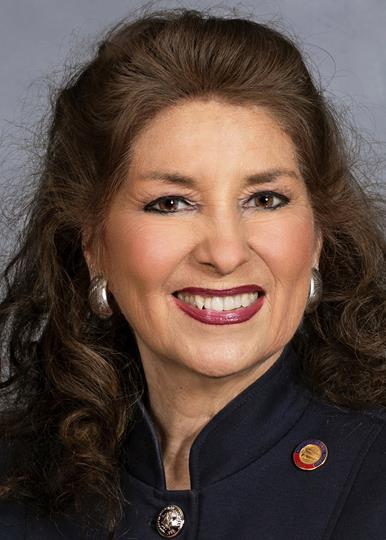
Rep. Donna White
Sponsored bills
Maddy summaryHB 329 encourages nonpublic schools in North Carolina, including private church schools and other qualified nonpublic schools, to adopt policies that prohibit the use of tobacco and hemp products on their school grounds. The bill amends existing state statutes to add this encouragement. It suggests that these schools use the current requirements for public schools as guidance when developing their own policies. This legislation aims to promote smoke-free and hemp-free environments within nonpublic educational settings.
Maddy summaryThis bill designates "The Andy Griffith Show" as the official television show of the State of North Carolina. This symbolic act recognizes the cultural impact of the show and its connection to the state.
Maddy summaryHouse Bill 743 (HB 743) allows direct support professionals to permanently reside in specific licensed group homes where they provide services to clients. The bill directs the Department of Health and Human Services (DHSR) to adopt rules necessary to implement this change for facilities licensed under 10A NCAC 27G .5601(c)(3). DHSR is also required to report its progress on these changes to the Joint Legislative Oversight Committee on Health and Human Services by September 30, 2025. This legislation aims to establish a framework for live-in support within these residential settings.
Maddy summaryHouse Bill 650, titled "No Interchange Fees on Sales Tax or Tips," prohibits payment card networks, issuer banks, and acquirer banks from charging interchange fees on the sales tax or gratuity portions of electronic payment transactions. This directly affects merchants by reducing the processing fees they pay on these specific amounts. Merchants must provide the tax or gratuity data during the transaction authorization or settlement process, or submit documentation later to receive a credit for any fees charged. The bill also includes measures to prevent entities from adjusting other fees to circumvent this prohibition. Violations can result in injunctive relief, civil penalties, and refunds to affected merchants.
Maddy summaryHB 824 aims to expand access to treatment for opioid use disorder and overdose for individuals covered by health benefit plans. It requires health insurers to cover specific healthcare services provided by pharmacists, such as testing and medication administration, if those services are within a pharmacist's scope of practice. The bill also mandates coverage for all FDA-approved prescription drugs for opioid disorder and overdose, prohibiting prior authorization for these medications. Additionally, it updates state laws to ensure mental health benefits in health plans are no less favorable than physical health benefits, aligning with federal requirements.
Maddy summaryHB 634 updates North Carolina laws to enhance parity in health insurance coverage for mental health and addiction recovery. It requires all health benefit plans to provide benefits for mental health conditions that are no less favorable than those for physical illnesses, including applying the same financial limits. A key provision mandates that medical necessity determinations for substance use disorders must rely solely on the most recent American Society of Addiction Medicine criteria. The bill also requires the State Health Plan for Teachers and State Employees to comply with these new utilization review standards and updates terminology from "chemical dependency" to "substance use disorder" in relevant statutes.
Maddy summaryHouse Bill 363 allows regional public transportation authorities to operate buspool services further than ten miles beyond their usual service area. This bill amends G.S. 160A-610(20), removing the previous mileage restriction specifically for buspool services. The change enables these authorities to extend buspool routes into more distant communities, potentially affecting a broader range of commuters.
Maddy summaryHB 949, known as the School Protection Act, proposes to allow specific armed security guards to carry firearms on nonpublic educational property in North Carolina. The bill amends existing law to create an exemption for sworn law enforcement officers who are hired as armed security guards by nonpublic schools and are acting in their official duties on school premises. This includes officers certified under state law enforcement chapters, company police officers, and campus police officers. If enacted, this change would become effective on December 1, 2025.
Maddy summaryHB 985 increases the criminal penalty for assaulting a school employee or volunteer in North Carolina. It reclassifies such assaults from a Class A1 misdemeanor to a Class I felony when the incident occurs while the individual is performing their duties or as a result of their duties. The bill broadly defines "school employee or volunteer" to include staff, independent contractors, and adult volunteers involved in school activities. It also protects school personnel from civil or criminal liability for taking reasonable actions to end student fights. Finally, the bill updates supervisor reporting requirements for assaults and prohibits intimidating employees from reporting these incidents.