

Maddy summaryThis bill allows patients with life-threatening or severely debilitating conditions in North Carolina to access custom-made investigational drugs, biological products, or devices that are not yet approved by the federal government. To qualify, a patient must have a doctor confirm that standard FDA-approved treatments are unlikely to help and must provide written informed consent acknowledging the risks and potential costs. The law requires that the patient or their guardian understands they are personally responsible for any expenses related to the treatment unless a separate contract states otherwise. Additionally, the bill clarifies that using these individualized treatments may temporarily remove a patient's eligibility for hospice care, though that eligibility can be restored if the treatment stops.
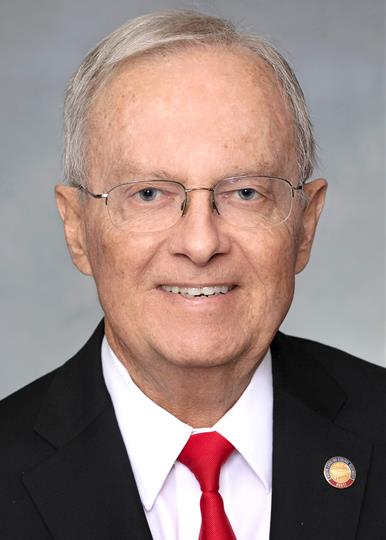
Rep. Frank Iler
Sponsored bills
Maddy summaryHB 984 creates a new legal process in North Carolina that allows property owners to request law enforcement agencies to quickly remove people who are occupying their private residential homes without permission. To use this process, an owner must file a sworn complaint stating that the occupants are not tenants, have no legal right to the property, and have been told to leave, while also confirming there is no ongoing lawsuit between the parties. If a police department or sheriff's office verifies the complaint, they are required to remove the unauthorized individuals within 48 hours and may arrest them for trespassing or other offenses. The bill also establishes that property owners must pay for police time if they request officers to stay on site to help change locks or secure the property, and it provides a way for removed individuals to sue for damages if the removal was done incorrectly.
Maddy summaryThis bill amends the state constitution to eliminate the literacy test requirement for voting. By removing this specific provision, the legislation ensures that all eligible citizens can vote regardless of their reading or writing abilities. The change directly affects voters who previously might have been disenfranchised by this barrier. It does not alter other voting qualifications or the overall structure of the election process.
Maddy summaryThis bill designates Jockey's Ridge in Nags Head as a unique coastal geological area of environmental concern. It establishes specific rules for development within the site, requiring permits for sand removal projects that exceed ten cubic yards per year. Any sand removed under these permits must be returned to designated areas within the Jockey's Ridge State Park. Additionally, the legislation prohibits development activities that would significantly block the natural movement of sand, with limited exceptions for essential infrastructure and maintenance.
Maddy summaryThis bill introduces several changes to North Carolina's transportation laws, primarily affecting the Department of Transportation and the Division of Motor Vehicles. It shifts the appointment power of the Commissioner of Motor Vehicles from the Secretary of Transportation to the Governor, requiring Senate approval. The legislation also allows the Department of Transportation to use various flexible contracting methods for federal electric vehicle infrastructure projects without counting them against existing spending limits. Additionally, it mandates an independent evaluation of the Division of Motor Vehicles' IT modernization efforts and sets a timeline for selecting a vendor to manage the new cloud-based system. Finally, the bill creates a new Rail Transportation Corridor Authority and makes adjustments to laws governing the North Carolina Railroad.
Maddy summaryThis North Carolina bill establishes a legal mechanism to hold manufacturers of per- and polyfluoroalkyl substances (PFAS) financially responsible for cleaning up contaminated drinking water. It defines "responsible parties" as companies that produce PFAS chemicals and orders them to pay for the actual costs public water systems incur to remove or fix contamination that exceeds safety limits. If a manufacturer refuses to pay, the state can take legal action in court to enforce the order, and the bill allows water systems to lower future customer rates if they recover these costs. The legislation also creates a special fund with initial funding to support implementation and requires the state to report annually on how these funds and enforcement orders are used.