Issue · Budget & Taxes

Budget & Taxes (Property Tax)

Every budget & taxes bill, vote, and legislator stance in North Carolina, automatically classified by Maddy, our AI policy reader.

Total bills
42
2025-2026 Session
Top supporter
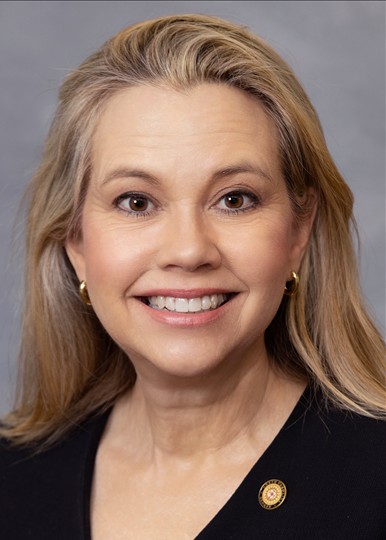
Caleb Theodros
67% support rate
Top opponent
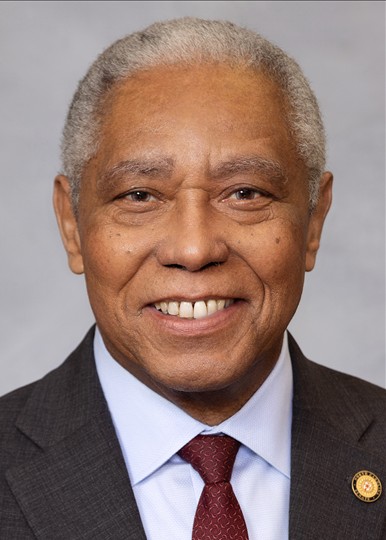
Dan Blue
0% support rate
Ranked legislators
10
5 support · 5 oppose
Key legislators

Who's moving property tax in North Carolina

Legislators moving property tax in North Carolina
Legislator Party Stance Support rate Votes
Caleb Theodros
Caleb Theodros Senate · District 41
D
Support
67% 3
DeAndrea Salvador
DeAndrea Salvador Senate · District 39
D
Support
67% 3
Gale Adcock
Gale Adcock Senate · District 16
D
Support
67% 3
Gladys Robinson
Gladys Robinson Senate · District 28
D
Support
67% 3
Jonah Garson
Jonah Garson Senate · District 23
D
Support
67% 3
Dan Blue
Dan Blue Senate · District 14
D
Strong −
0% 3
Amy Galey
Amy Galey Senate · District 25
R
Oppose
33% 3
Benton Sawrey
Benton Sawrey Senate · District 10
R
Oppose
33% 3
Bill Rabon
Bill Rabon Senate · District 8
R
Oppose
33% 3
Bob Brinson
Bob Brinson Senate · District 3
R
Oppose
33% 3
Showing 21–30 of 42 bills

All budget & taxes bills

in committee · North Carolina · Senate Feb 26, 2025

SB 159: Elderly Prop. Tax Appreciation Exclusion.

SB 159 creates a property tax relief program for North Carolina seniors aged 65+ who own and occupy their primary residence for at least five consecutive years. It allows qualifying owners to defer taxes on increases in their home's appraised value above the "qualifying value" (the value when first applying for relief), freezing tax increases on appreciation. The deferral ends if the owner sells the home, dies (unless inherited by a spouse or co-owner who continues living there), or stops using it as a primary residence. This program applies to taxes for 2026 and beyond, with applications accepted through June 1 each year.
Sub-Topics Property Tax
in committee · North Carolina · Senate Feb 27, 2025

SB 178: Assessment of Self-Storage Facilities.

SB 178 modifies how self-storage facilities are taxed in North Carolina by changing the property assessment standard. It excludes "business intangible value" (such as future profits or brand value) from the taxable assessment, requiring counties to base taxes only on the land and depreciated improvements. This directly affects self-storage facility owners, as their property taxes will now be calculated differently starting in 2026. The bill updates existing tax law to align with a specific definition of self-storage facilities from state code.
Sub-Topics Property Tax
in committee · North Carolina · Senate Mar 6, 2025

SB 230: Expand Homestead Exclusion Inc. Elig. Limit.

SB 230 increases the income limit for North Carolina's Elderly or Disabled Property Tax Homestead Exclusion from $25,000 to $48,000 for taxable years beginning July 1, 2025, and adjusts this limit annually based on Social Security cost-of-living adjustments. It directly affects elderly or disabled homeowners whose property tax bills are reduced under this exclusion, expanding eligibility to those with higher incomes. The bill establishes that the Department of Revenue must annually calculate and notify counties of the updated income limit, rounded to the nearest $100, starting July 1, 2025. This change aims to better align the exclusion with inflation and support more low-to-moderate income senior or disabled homeowners.
Sub-Topics Property Tax
in committee · North Carolina · Senate Mar 5, 2025

SB 228: Disabled Veterans Tax Relief Bill.

SB 228 modifies North Carolina's property tax exclusion for disabled veterans, replacing a flat $45,000 exemption with a percentage-based system tied to the veteran's VA disability rating. It directly affects veterans with a 50% or higher service-connected disability rating (or surviving spouses if the veteran died from a service-connected condition), who own their primary residence. Under the bill, the tax exclusion equals the veteran's disability percentage multiplied by their home's appraised value (e.g., a 70% disabled veteran would get 70% of their home's value excluded). Eligibility requires VA certification of the disability rating as of January 1 prior to the tax year, and the change takes effect for taxes due in 2025.
in committee · North Carolina · House Mar 6, 2025

HB 299: Increase Disabled Veteran Property Tax Benefit.

HB 299 increases the property tax exemption for disabled veterans in North Carolina from $45,000 to $54,000 of a home's appraised value. It directly affects qualifying disabled veterans who own and occupy their primary residence, allowing them to exclude a larger portion of their home's value from property taxes. The bill amends Section 105-277.1C of state law to reflect this higher exclusion limit, while maintaining that recipients cannot claim other property tax relief. This change takes effect for property taxes due on or after July 1, 2025.
in committee · North Carolina · House Mar 11, 2025

HB 341: Disabled Veterans Tax Relief Bill.

HB 341 increases property tax relief for disabled veterans in North Carolina by expanding the homestead exclusion on their primary residence. The bill sets exclusion amounts based on disability rating: $100,000 for 70%+ disability, $75,000 for 50-69%, $50,000 for 30-49%, and $25,000 for 10-29%. Surviving spouses qualify for the greater of the veteran’s exclusion amount or $45,000, provided the veteran’s death resulted from a service-connected condition. This policy directly affects qualifying disabled veterans and their surviving spouses who own and occupy their primary residence, effective for taxes due in 2025.
in committee · North Carolina · House Mar 19, 2025

HB 436: Counties/Semiannual Assessments.

HB 436 allows North Carolina counties to let property owners pay property assessments in semiannual or annual installments instead of one lump sum. Counties can choose between two payment schedules: either tied to annual property tax due dates or starting 60 days after assessment confirmation, with up to 10 semiannual or 20 annual payments allowed. This directly affects property owners in counties that adopt the option, providing more flexible payment timing. The bill amends existing law to give counties this authority and applies to assessments confirmed after it becomes law.
Sub-Topics Property Tax
in committee · North Carolina · Senate Mar 20, 2025

SB 343: Secure Home, Secure Future Act.

SB 343, the "Secure Home, Secure Future Act," creates a new property tax relief program for qualifying North Carolina homeowners. It allows owners who have lived in and owned their primary residence for 15 consecutive years to cap annual property tax increases at 2% of the prior year’s tax amount (or the prior year’s tax, whichever is higher), deferring the difference as a lien on the property. To qualify, owners must be North Carolina residents, occupy the home as their permanent residence, and notify tax assessors of property improvements. The relief ends if the owner sells the home (unless transferred to a spouse/co-owner who continues living there), dies (if passed to a spouse/co-owner), or stops using it as a primary residence.
Sub-Topics Property Tax
in committee · North Carolina · House Mar 12, 2025

HB 100: Expand Religious Property Tax Exemption.

HB 100 expands North Carolina's property tax exemption for religious organizations by allowing them to temporarily exempt newly acquired undeveloped land adjacent to their currently tax-exempt property. The bill permits this exemption for up to five years if the religious organization certifies it will use the land exclusively for religious purposes or develop it for that purpose within that timeframe. The land cannot exceed twice the size of the organization's existing contiguous exempt property. If the certification requirements aren't met within five years, the land loses its exemption and becomes taxable. The law takes effect for taxes due on or after July 1, 2026.
introduced · North Carolina · Senate Mar 25, 2025

SB 615: Property Tax Rate Transparency Act.

SB 615, the Property Tax Rate Transparency Act, requires local governments in North Carolina to hold a vote on whether to use a revenue-neutral tax rate during years when they conduct a general property reappraisal. This affects counties, cities, and other local governments that reappraise property values. The bill mandates that governing boards vote on adopting a tax rate calculated to maintain the same total tax revenue as the previous year (after accounting for new property values), rather than automatically adjusting rates based on reappraised values. If approved by a majority, the local government must use this revenue-neutral rate in its budget; otherwise, it follows standard tax levy procedures. This changes how local tax rates are set during reappraisal cycles, making the rate decision subject to a formal vote.
Sub-Topics Property Tax Revenue
Showing 21 to 30 of 42 bills
Previous 1 2 3 4 5 Next