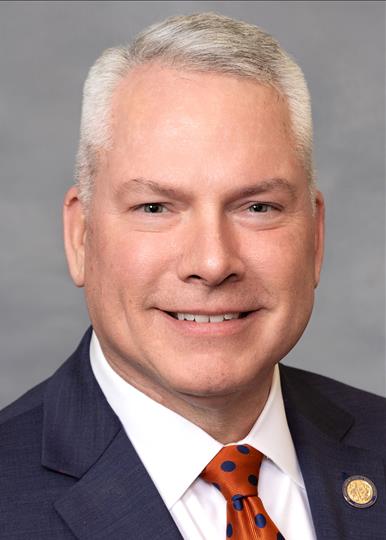
SB 177 expands North Carolina's Medicaid Healthcare Access and Stabilization Program (HASP) to include qualifying freestanding psychiatric hospitals, allowing them to receive increased reimbursements for services. The bill creates a new assessment (a fee) on these hospitals, calculated as a percentage of their hospital costs, to fund the program. To implement this, the state must seek federal approval from CMS to include psychiatric hospitals in HASP. This change directly affects all Medicare-certified, state-licensed freestanding psychiatric hospitals in North Carolina, requiring them to pay the new assessment while gaining eligibility for enhanced Medicaid payments.
This bill restricts the City of Rocky Mount from using money earned by its electric utility to fund general city expenses beyond specific operational needs. It mandates that revenue from electric rates must primarily cover the costs of running the power system, paying off related debts, and keeping rates low for customers. The only exception allows the city to transfer a limited amount of surplus funds to other municipal accounts, capped at the greater of 3% of the system's assets or 5% of its annual revenue. Effective July 1, 2026, these rules apply exclusively to Rocky Mount, preventing the transfer of electric utility profits to the city's general fund for unrelated purposes.
HB 169 ends Haywood County's ability to collect an occupancy tax (typically on short-term lodging like hotels) by repealing the legal authority for this tax. It directly affects Haywood County, its Tourism Development Authority, and businesses subject to the tax. The bill requires the Tourism Development Authority to spend any remaining funds within six months for tourism purposes, after which the Authority must dissolve. The repeal takes effect on July 1, 2025.
SB 821 removes a specific property at 86 Magellan Drive from the official boundaries of the Town of Waynesville. The bill ensures that any unpaid taxes or special assessments on this land before the change remain valid and can still be collected. Starting July 1, 2026, the property will no longer be subject to municipal taxes imposed by the town.
This bill removes a specific 18.93-acre parcel of land from the official boundaries of the City of Washington in Beaufort County, North Carolina. The property is defined by a detailed survey with precise coordinates and distances, and the change will take effect on June 30, 2026. Once the bill becomes law, the land will no longer be subject to municipal taxes imposed for taxable years beginning on or after July 1, 2026, although any outstanding tax liens from before that date will remain valid.
SB 846 removes two specific parcels of land from the official boundaries of the Town of Red Oak in North Carolina. The bill ensures that property owners within these parcels will no longer pay municipal taxes for the taxable year beginning July 1, 2026, and any future years. Additionally, the legislation clarifies that any outstanding tax liens or special assessments from before the effective date remain valid and can still be collected or enforced.
The bill title "Defund Planned Parenthood and Cost Transparency" does not match the actual content of HB 192, which is focused on education funding. This bill raises teacher salaries for the 2025-2026 school year using a new salary schedule (e.g., $5,000 for 0 years experience, $6,823 for 25+ years) and reinstates education-based supplements for advanced degrees ($126-$253 monthly). It appropriates $1.597 billion for salary increases and $8 million for supplements, while directing the North Carolina Collaboratory to study a student-based funding system by February 2026. The bill directly affects public school teachers, instructional support staff, and school psychologists. The title appears to be incorrect based on the provided bill text.
HB 402 requires North Carolina state agencies to assess the financial impact of proposed permanent rules. If a rule would cost affected individuals or businesses $20 million or more over five years, it must be approved by the General Assembly before taking effect. For rules with a $1 million or more annual cost impact, agencies must prepare a fiscal note for review by the Office of State Budget and Management. The bill also mandates a two-thirds vote by agency boards to adopt rules exceeding the $1 million cost threshold. This directly affects state agencies creating regulations and the businesses or residents who would bear the costs of those rules.
SB 24 requires that any new state health insurance mandate must be paired with the repeal of an existing mandate and include funding to cover the new cost. It directly affects North Carolina employers (especially small businesses) and taxpayers by targeting mandates that increase insurance premiums and state health plan expenses. Key provisions mandate that new health benefit requirements (like coverage for specific treatments or drugs) must include both a repeal of an equivalent existing mandate and recurring state funding for the new cost. The bill applies to all health insurance plans, including the State Health Plan for Teachers and State Employees, and takes effect 30 days after enactment.