

Maddy summaryThis bill creates a New York State program to forgive student loans for mental health nurses who commit to working in underserved areas. It directly affects nurses who graduated from approved New York colleges, have outstanding student debt, and work as registered nurses, nurse practitioners, or clinical nurse specialists in state-licensed mental health settings. To qualify, applicants must commit to practicing for the award duration in a Health Resources and Services Administration-defined "rural" area or in state psychiatric hospitals, addiction centers, behavioral health clinics, or county mental health programs. Eligibility is competitive, with priority for economically disadvantaged applicants, and funding is limited to available appropriations.
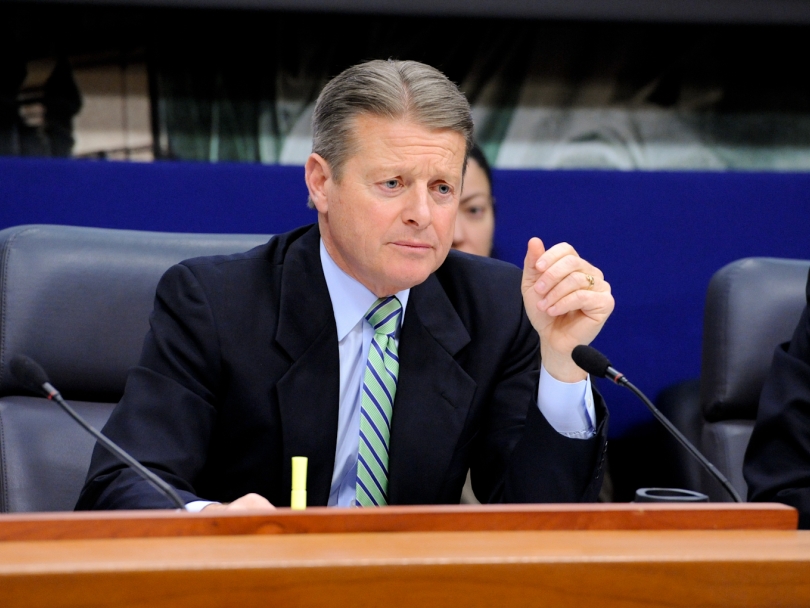
Sen. Patrick Gallivan
Sponsored bills
Makes a proclamation extending a local state of emergency issued by the chief executive subject to the approval of the local governing body of the applicable county, city, town or village; provides that all orders issued by a local board of health shall be effective for a period of five days; requires approval by the applicable local governing body for each extension thereof.
Prohibits the establishment or enforcement of regulations on the percentage of zero-emission vehicles in manufacturers' sales fleets of medium-duty and heavy-duty vehicles until the availability of charging infrastructure, and the cost and availability of zero-emission medium-duty and heavy-duty vehicles makes the sale of such vehicles more practicable.
Maddy summaryThis bill (S 237) allows government entities to publish certain required public notices online instead of in print newspapers. It permits online news publications that provide daily general interest news to a specific geographic area and have operated continuously for at least one year. The online publication must meet all legal requirements for the notice, except the requirement to use a newspaper. This change applies immediately to all notices that currently require newspaper publication under state law.
Maddy summaryThis bill (S 392) amends New York's penal law to specifically include "intentional expectoration of saliva" as a form of aggravated harassment against facility employees. It directly affects incarcerated individuals who intentionally spit at staff members in correctional facilities, parole offices, mental health facilities, or probation departments. The key change adds saliva to the list of prohibited substances (along with blood, urine, etc.) that can constitute harassment when thrown, tossed, or expelled toward employees. This expands existing protections for staff by clarifying that spitting is now explicitly covered under the aggravated harassment statute.
Maddy summaryS 853 creates a New York State tax credit called "NY MADE" for manufacturers producing medical equipment or personal protective equipment (PPE) within New York. The credit equals 20% of the wholesale value of qualifying equipment produced above the 2025 average for existing manufacturers, or 30% for new manufacturers starting production after the bill's enactment. It applies to taxable years beginning January 1, 2026, and is designed to support in-state manufacturing of healthcare-related equipment. The bill specifically defines "medical equipment" as devices used for treating illness or injury, excluding general-purpose items.
Maddy summaryS 1413 creates two new criminal offenses: "harassment of a law enforcement officer or family member in the first degree" (a felony) and "in the second degree" (a misdemeanor). First-degree harassment covers threatening communications (via phone, email, or other means) intended to cause fear for an officer's or family member's safety or property. Second-degree harassment includes physical contact, following in public, or repeated conduct that alarms officers or their families. The law directly affects anyone who targets law enforcement officers or their household members with these specific actions, with penalties ranging from a misdemeanor to a felony.
Authorizes the imposition of bail for certain felony offenses involving the manufacture, sale, distribution, or possession with intent to sell synthetic opioids.
Establishes a first permanent payroll employee tax credit which allows a business to receive a tax credit for the three years following the employment of such business' first permanent payroll employee where such credit equals a portion of the amount it costs to employ such permanent payroll employee.
Prohibits unsolicited telemarketing sales calls during a declared state of emergency or disaster emergency where the declaration or proclamation of emergency includes a finding that unsolicited telemarketing sales calls would impair actions taken to limit, control, or mitigate the emergency; explains the basis of such finding; provides that such prohibition may not extend for a period of more than two weeks, subject to renewal for additional two-week periods by further findings of necessity made at the end of each two-week period.