Maddy summaryThis is a ceremonial resolution (not a binding bill) requesting Governor Hochul to designate January 25-31, 2026, as "Physician Anesthesiologists Week" in New York. It does not create new laws or affect any specific group, but honors anesthesiologists' historical contributions to medical innovations like the Apgar Score and regional anesthesia. The resolution cites their role in advancing patient safety, pain management, and critical care. It was formally adopted by the Senate and will be sent to the Governor for consideration.
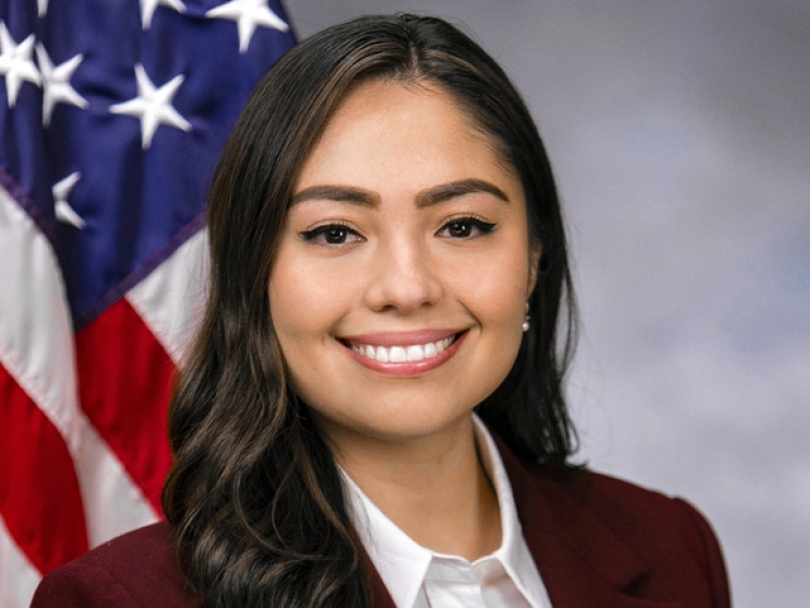
Sen. Kristen Gonzalez
Sponsored bills
Maddy summaryThis is a symbolic resolution (Senate Resolution 1516) passed by the legislature to commemorate the 18th anniversary of Kosovo's independence on February 17, 2026. It formally acknowledges Kosovo's independence from Serbia (declared in 2008) and celebrates its progress in democratic governance, while recognizing the contributions of Kosovar communities in New York. The resolution has no legal effect and does not create new policies or affect any individuals or groups. It serves solely as a ceremonial expression of support for Kosovo's independence and its partnership with the United States.
Maddy summaryThis is a ceremonial Senate resolution congratulating Jolie Chichak, a Shenendehowa High School student, on winning the 2025 NYSPHSAA Girls Tennis Singles State Championship. It formally recognizes her athletic achievement (including her first Section 2 singles title and school's first state singles championship) and academic record (96.33 GPA). The resolution has no policy impact - it solely offers symbolic recognition to Chichak and her coaches/school staff. It does not create legal obligations or alter any laws.
Maddy summaryThis is a procedural Senate resolution (not a bill), requesting Governor Hochul to declare July 1, 2026, as "Canada Day" in New York State. It memorializes the strong economic, cultural, and trade ties between New York and Canada, including $17 billion in annual exports and over 1,300 Canadian businesses operating in the state. The resolution has no binding effect; it simply asks the Governor to issue a ceremonial proclamation recognizing these connections. The legislature adopted it on February 3, 2026, and will send it to the Governor and Canada's New York Consul General.
Maddy summaryThis bill (S 160) proposes a constitutional amendment to grant voting rights to people incarcerated in state correctional facilities. It would amend the state constitution to explicitly include "any incarcerated person" among citizens entitled to vote in all elections, provided they are 18+ and meet standard residency requirements (30 days in the county, city, or village before an election). The amendment would directly affect incarcerated individuals by restoring their voting eligibility, aligning with existing constitutional provisions for other citizens. The bill requires a constitutional amendment process, including legislative approval and a public referendum after the next general election.
Maddy summaryThis bill requires all non-exempt emergency vehicles in New York City to use signal devices that produce an alternating high and low, two-toned sound (instead of single-tone sirens), while also limiting maximum sound levels to under 90 decibels at 50 feet. It directly affects police, fire, and ambulance vehicles not responding to medical emergencies, mandating they meet these sound standards. Vehicles must undergo annual testing and certification to confirm compliance, with exemptions for medical emergency responses and specific city departments. The law aims to reduce noise pollution while maintaining emergency vehicle safety and effectiveness.
Maddy summaryThis bill prohibits evictions from residential properties in New York State during periods of "inclement winter weather," defined as temperatures at or below 32°F (including wind chill), typically occurring from November through April. It directly affects all residential tenants in New York, with the legislature noting evictions disproportionately impact Black and Latinx households. The law amends real property law to block eviction proceedings during these cold-weather periods, citing health risks like increased mortality and homelessness linked to winter displacement. The ban aims to protect public health and safety by preventing homelessness during conditions that exacerbate exposure-related health crises.
Eliminates certain court surcharges and fees and probation and parole surcharges and fees; eliminates the requirement that a parolee or releasee receiving a merit termination of sentence be financially able to comply with an order of restitution; eliminates the requirement that a person receiving a discharge of sentence be financially able to comply with an order of restitution and the payment of certain surcharges or fees (Part A); mandates that courts engage in an individualized assessment of a person's financial ability to pay a fine prior to imposing a fine (Part B); eliminates the availability of incarceration as a remedy for a failure to pay a fine, surcharge, or fee, lifts and vacates existing warrants issued solely on a person's failure to timely pay a fine, surcharge or fee and ends existing sentences of incarceration based on such failure (Part C); vacates existing unsatisfied civil judgments based on a person's failure to timely pay a surcharge, or fee (Part D); prohibits the collection of a fine, restitution or reparation from the funds of an incarcerated person; prohibits the payment of court fines, mandatory surcharges, certain fees, restitution, reparation or forfeitures from the earnings of prisoners (Part E); vacates existing unpaid surcharges, DNA databank fees, crime victim assistance fees, sexual offender registration fees, supplemental sex offender victim fees, or probation or parole supervision fees; repeals certain provisions of law relating to restrictions on remitting such fees (Part F).

Relates to granting certain individuals youthful offender status; adds a new category of individuals eligible for young adult offender status; provides for process and sentencing requirements related to such statuses.
Maddy summaryThis bill repeals New York's criminal fortune telling statute (Penal Law § 165.35), which previously prohibited fortune telling as a criminal offense. It directly removes the legal prohibition itself, eliminating the specific law that could have been used to penalize such activities. The bill contains no new provisions or mechanisms - it solely deletes the existing statute from the penal code. This is a procedural repeal with no direct impact on current individuals or practices, as it only removes the outdated legal framework.