

Establishes the civil rights restoration act; amends provisions regarding firearm licenses and destruction of firearms; exempts certain individuals from providing photographs in order to obtain a firearm license; expands the definition of immediate family.
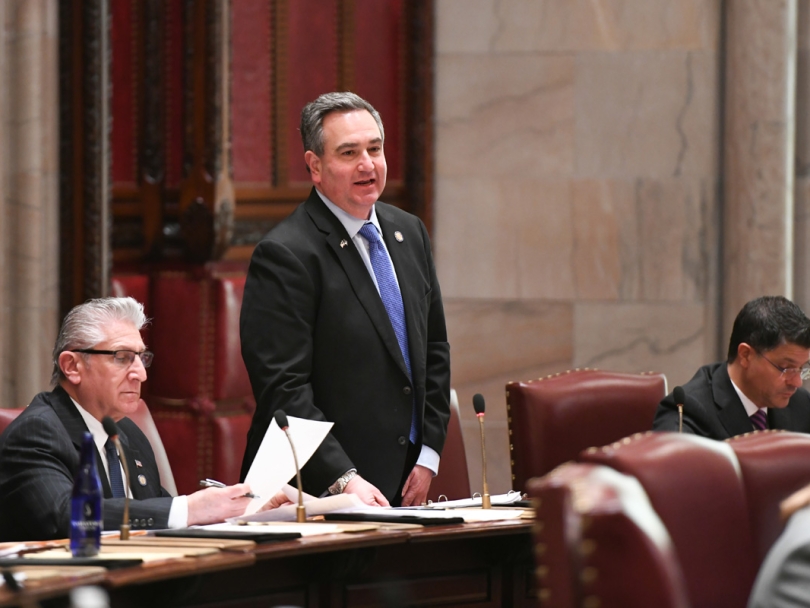
Sen. George Borrello
Sponsored bills
Enacts the "learning for work act"; establishes the youth apprenticeship program and the enhanced regents professional diploma; appropriates moneys therefor.
Maddy summaryThis bill allows New York schools to use state or local funds to purchase reduced fat or whole "New York milk" (defined as milk produced, transported, and processed within New York State) for consumption at school. It directly affects public school boards and New York dairy farmers by creating a market for locally sourced milk options. Key provisions include requiring schools to use only New York milk meeting specific fat content standards and giving the state attorney general authority to recover funds withheld due to federal policies. The bill expires if federal rules change to permit whole/reduced fat milk in schools or if updated dietary guidelines allow it, with a report required after two years on implementation.
Enacts the "New York Business Emergency Relief Act"; directs the governor to use unallocated settlement funds reserved in the economic uncertainties, and any further settlement money received by the state or state surplus funds to pay the debt to the federal unemployment insurance trust fund.
Maddy summaryThis bill prohibits village boards from changing rules regarding volunteer fire company members, except for one specific exception. It directly affects volunteer firefighters by preserving their current legal status under village law. The change is procedural, preventing local governments from altering these regulations through ordinary local laws. (Note: As a procedural bill, the summary is concise per guidelines.)
Provides that the New York state health care quality and cost containment commission shall: evaluate each mandated benefit; investigate current practices of health plans with regard to the mandated benefit; investigate the potential premium impact of repealing and/or modifying the mandated benefits on all segments of the insurance market; hold at least two public hearings; submit a report to the legislature; makes related provisions.
Maddy summaryBill S 5579 increases the amount of money public retirement system retirees can earn while holding a position of public service. The bill raises the annual earnings limitation for these retirees from the current $35,000 (effective through 2025) to $65,000. This new earning limit will apply starting in the year 2026 and thereafter. The change directly affects retirees who wish to work in public service without impacting their retirement benefits.
Provides a tax credit for utility bill payments made in taxable years 2025 and 2026 based on the difference of the average monthly utility bill payment in the year in which the credit is claimed and the average monthly utility bill payment in the preceding three taxable years; establishes a moratorium on certain utility bill surcharges until April 1, 2026; provides for the repeal of such moratorium upon expiration thereof.
Enacts the interstate medical licensure compact; provides a streamlined process that allows physicians to become licensed in multiple participating states, thereby enhancing the portability of a medical license and ensuring the safety of patients.
Maddy summaryThis bill establishes a 24-hour, toll-free animal abuse hotline that the New York Attorney General must create. It directly affects the public (who can report abuse), animal protection organizations (who may administer the hotline), and state/local agencies (who receive immediate reports). The key mechanism requires the hotline to instantly forward all abuse allegations to relevant agencies or animal protection groups via phone and electronic transmission. The hotline must be publicly advertised, and the law takes effect 180 days after enactment.