Grants peace officer status to certain security officers employed by Highland Hospital; provides such peace officers are not authorized to carry, possess, repair or dispose of a firearm.
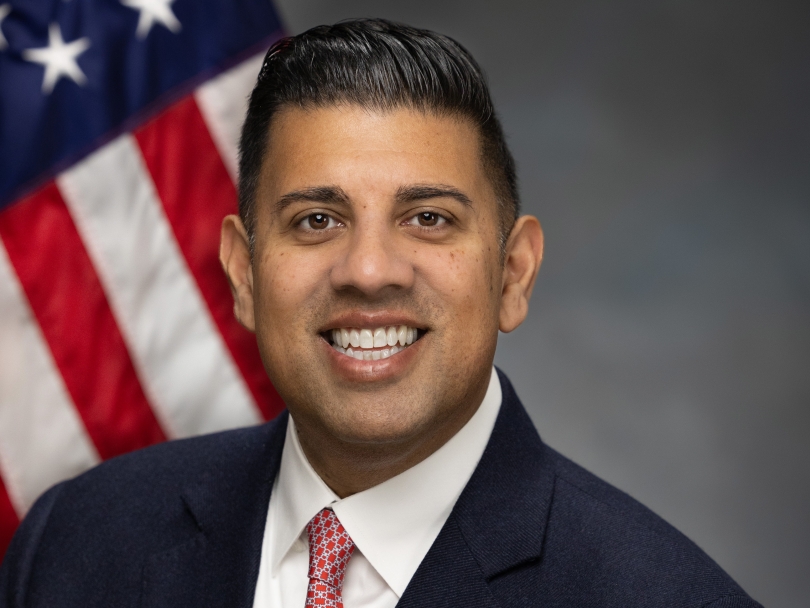
Sen. Jeremy Cooney
Sponsored bills
Enacts "Francesco's law" which establishes violations for the failure to safely store rifles, shotguns, and firearms in the presence of a minor or a prohibited person; requires the office of gun violence prevention to collect and analyze statistical and other information and data with respect to injuries or deaths of minors resulting from failure to safely store a firearm, rifle, or shotgun.
Maddy summaryS 9226 updates New York's vehicle window tint regulations by lowering the minimum light transmittance requirement from 70% to 50% for side windows (forward of or adjacent to the driver's seat) and rear windows on most vehicles, making darker tint legally permissible. The front windshield must still allow at least 70% light transmittance (except for the top six inches), and rear windows may use darker tint if the vehicle has properly adjusted side mirrors. The bill adds a 7% tolerance for testing window tint and requires safety inspections to check compliance with these new standards. This directly affects drivers who tint windows, law enforcement officers, and vehicle inspectors.
Maddy summaryThis bill amends New York's insurance law to clarify and expand the definition of "service contract" to explicitly cover repairs or replacements for accidental damage from handling and power surges. It directly affects consumers purchasing service plans for electronics, appliances, and vehicles, as well as businesses selling these contracts. Key provisions include adding specific coverage for tire repairs due to road hazards, windshield chip repairs (but not full replacements), paintless dent repair, and vehicle key replacement, while limiting indemnity payments to the original purchase price. The bill ensures these services are legally categorized as "service contracts," providing clearer consumer protections and industry standards.

Requires that companies contracting with the state do not contribute to tropical forest degradation or deforestation directly or through their supply chains.
Enacts the "cannabis supply chain integrity and anti-inversion act"; prohibits any act or omission involving illicit cannabis; provides penalties for such cannabis inversion.
Maddy summaryThis bill requires most large employer-sponsored health insurance plans in New York to cover acupuncture services when prescribed by a qualified healthcare provider. Specifically, it mandates that plans covering physician office services or major medical coverage must include acupuncture treatment (as defined by law) without denying coverage based on the provider's scope of practice. Plans may still apply standard cost-sharing rules like deductibles, co-pays, or benefit limits for these services. The law directly affects health insurers and employers offering large group health plans, effective 90 days after enactment.
Prohibits insurers from reducing disability benefits due to the actual or anticipated receipt of social security disability benefits unless certain conditions are met.
Maddy summarySenate Bill 2113 allows Medicaid accountable care organizations (ACOs) comprised of private physician practices to purchase group health insurance for their members and employees. The bill amends insurance law to create a new category for these specific ACO policies, requiring the organizations to be established for purposes other than just obtaining insurance and to have been active for at least two years. These policies must cover a minimum of 100 individuals at the time of issue and can be funded by the ACO, members, or both. It also exempts qualifying ACO policies from certain small group rating rules, enabling them to access experience-rated health insurance.
Maddy summaryS 3249 expands driver education options in New York by adding licensed state driving schools to the list of approved providers, alongside high schools and colleges. It directly affects minors seeking driver's licenses (Class D/M) by allowing them to complete approved courses at these driving schools, with specific provisions for two religious schools (Yeshiva of Staten Island and Hebrew Academy of Nassau County) to offer courses at non-traditional locations. Key provisions require classroom training by state-approved instructors, permit school districts to contract with driving schools for behind-the-wheel training, and allow students in approved courses to operate vehicles under instructor supervision during training. The bill mandates certification of course completion by the commissioner and updates licensing requirements for minors.