

Maddy summaryThis bill would impose a new tax on New York State residents with $1 billion or more in net assets (total wealth minus debts), calculated as if they sold all assets at market value on December 31, 2024. Taxpayers would pay the resulting tax over 10 years with an annual interest-like fee, or in full for the 2025 tax year. It includes credits for taxes paid to other states on assets accumulated before New York residency, and excludes certain assets like gifts made within five years. The tax applies only to New York residents meeting the $1 billion threshold, with the first payment due for the 2025 tax year. The bill is currently pending in the Budget and Revenue committee.
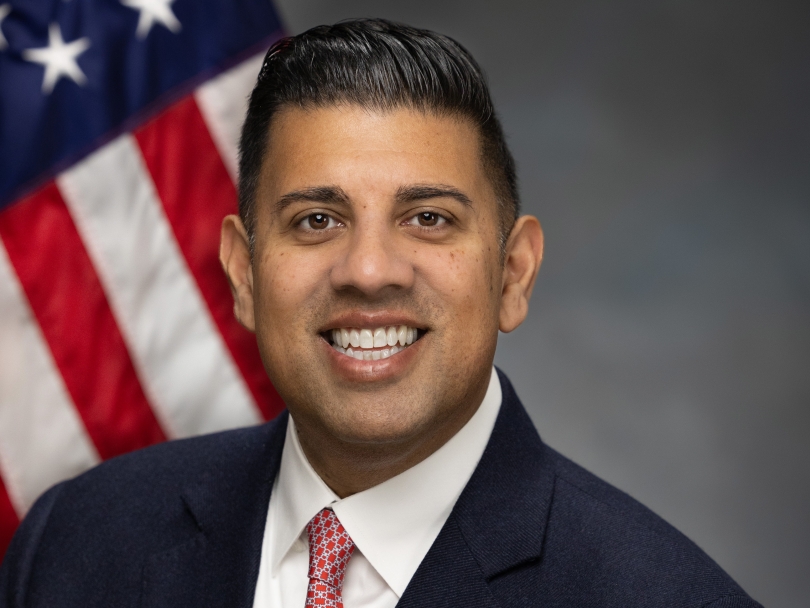
Sen. Jeremy Cooney
Sponsored bills
Requires high schools in grades nine through twelve to provide a course in financial literacy; requires students to complete such course as a condition of graduation.
Creates statewide emergency and crisis response council to work in conjunction with the commissioners of mental health and addiction services to jointly approve emergency and crisis services plans submitted by local governments, and provide supports regarding the operation and financing of high-quality emergency and crisis services provided to persons experiencing a mental health, alcohol use, or substance use crisis.
Provides for the revocation of licenses to sell cigarettes, tobacco products, alcohol and lottery tickets for the possession or sale of illicit cannabis in violation of the cannabis law.
Maddy summaryS 4147, the "Ghostbuster Act," strengthens enforcement of license plate and vehicle identification number (VIN) requirements in New York. It mandates detailed violation notices including plate type, expiration date, and VIN, and allows officers to remove vehicles or attach mechanical devices (like boots) if plates are obscured, unreadable, or falsified. The bill directly affects drivers who cover plates, use fake VINs, or fail to maintain readable registration. Penalties include increased costs for vehicle removal/storage and registration suspension after three plate/VIN violations within five years. The law amends existing traffic code provisions to improve documentation and enforcement of plate compliance.
Authorizes municipalities to establish a history, arts, and culture levy to support history, arts, and culture; exempts such levy from the real property tax levy limit.
Establishes the New York state aid and incentives for municipalities redesign task force for municipalities formula and allocations; an analysis of available alternatives to the current aid and incentives for municipalities formula and allocations, including models from other states; provides that such analysis of available alternatives shall not include the allocation of funds to any municipality which is not currently receiving aid and incentives for municipalities funding; and recommendations concerning such alternatives to the formula used to determine future aid and incentives to municipalities funding allocations.
Maddy summaryS 2331 removes buprenorphine from the legal definitions of "controlled substance" and "narcotic preparation" under New York's penal law. This change means possessing buprenorphine (a medication used to treat opioid use disorder) will no longer be treated as a criminal offense under these specific provisions. The bill amends two sections of the penal law to exclude buprenorphine from lists that previously carried criminal penalties for possession. It will take effect on November 1, 2025.
Establishes the reentry assistance program; provides for eligible incarcerated individuals to receive a monthly stipend upon release from a state correctional facility; makes an appropriation of $25,000,000.
Maddy summaryThis bill prohibits the sale of most cannabinoid hemp products that contain less than 15 parts cannabidiol (CBD) for every 1 part THC. It directly affects businesses selling hemp-derived products, with exceptions for flower and topical products. The law requires that products marketed primarily with CBD must maintain a minimum 15:1 CBD-to-THC ratio, or if CBD isn't the main focus, the combined non-THC cannabinoids must still meet a 15:1 ratio relative to THC. The rule applies immediately upon enactment.