

Requires the disclosure of tariff cost estimates in automobile sales by affixing such to the car window in a clear, conspicuous, and easily understandable manner; provides such requirement can be satisfied by including it on the Monroney label.
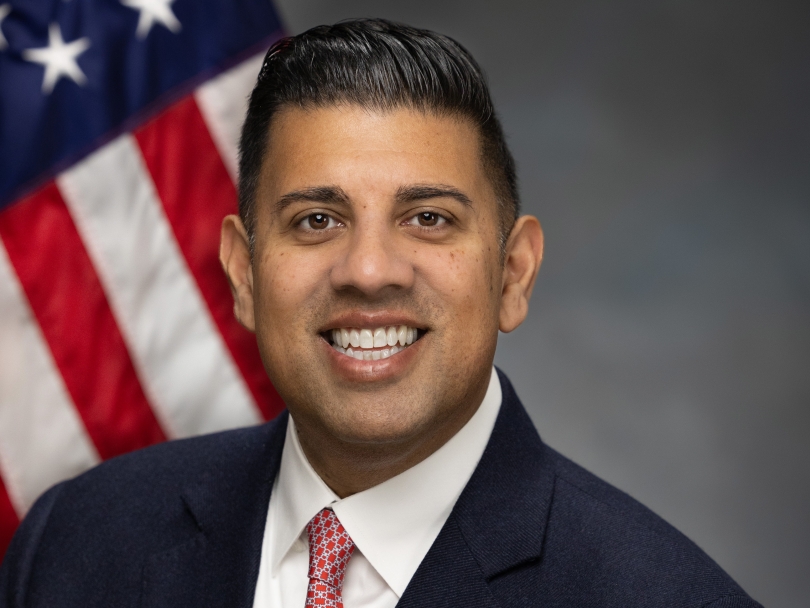
Sen. Jeremy Cooney
Sponsored bills
Maddy summaryBill S 1189 establishes new licensure requirements for entities providing fiscal intermediary services for personal assistance programs. Beginning April 1, 2027, these fiscal intermediaries must obtain a license from the commissioner, a process that includes an application fee and an assessment of their character, competence, and compliance. The bill also broadens the definition of fiscal intermediaries, modifies their annual reporting obligations, and creates a confidential state registry for personal assistants that these intermediaries must maintain. This legislation directly affects fiscal intermediaries, personal assistants, and consumers utilizing these services.
Permits a school food authority to attribute moneys spent on purchases of food products from New York state farmers, growers, producers or processors made for its school breakfast program to the thirty percent of costs for school breakfast, snack and lunch service programs.
Maddy summaryThis bill establishes a new progressive income tax structure for high earners in New York, replacing current tax brackets. It directly affects New York residents with significant taxable income, particularly those earning above $17,000 annually for single filers (with higher thresholds for married couples). The key mechanism uses tiered tax rates that increase as income rises - starting at 4% for lower incomes and reaching up to 24% for earnings over $20 million. The bill amends existing tax law to implement these rates, which apply to taxable years beginning in 2023 through 2027 and will be adjusted for 2028 onward.
Establishes a license to sell liquor at retail for consumption on premises in a cigar lounge; defines "cigar lounge"; requires cigar lounges to provide written notification warning employees of the dangers of exposure to tobacco smoke.
Establishes a school ventilation and energy efficiency assessment, repair and verification program to require each school to: obtain an HVAC Assessment Report performed by qualified testing personnel documenting the functionality of the existing system or lack thereof, and obtain a report from a mechanical engineer identifying any upgrades, replacements or other measures recommended to improve the functionality, health and safety and/or energy efficiency of the HVAC system; adjust, and, if necessary, repair existing building HVAC systems, and install or replace HVAC systems, if necessary, to ensure proper and efficient operation, as well as compliance with health and safety standards; obtain an HVAC Verification Report performed by qualified testing personnel documenting any upgrades, replacements, installations or any other work performed on the HVAC system functions as designed and/or in compliance with health and safety standards; install CO2 sensors in classrooms, assembly areas, kitchen or cafeteria areas or building office spaces to provide ongoing verification that proper ventilation is maintained during operation; makes related provisions.
Directs the commissioner of health to contract with an independent entity to conduct a comprehensive assessment of the existing methodology used to determine payment for early intervention screenings, evaluations, services and service coordination; directs recommendations on reimbursement methodology as well as needs under the program.
Establishes new targets for offshore wind electricity generation; includes the requirements that there is at least 15 gigawatts of offshore wind electricity generation by 2040, at least 18 gigawatts of offshore wind electricity generation by 2045 and at least 20 gigawatts of offshore wind electricity generation by 2050.
Relates to an increase in punishment for certain actions against on-duty auxiliary police officers such as criminally negligent homicide, assault or menacing of such officer.
Enacts the "faith-based affordable housing act" for development on residential land; defines terms; provides that each village, town, and city shall allow the construction and occupation of residential buildings on any covered site up to the specified densities; provides that all residential buildings constructed pursuant to this section in a town, village, or city with fewer than one million inhabitants shall set aside twenty percent of the residential floor area for households earning an average of eighty percent of area median income; outlines the densities for New York city; makes related provisions.