

Establishes a task force to conduct a comprehensive study on the presence of educator diversity in the state, state actions taken to promote educator diversity, and how the state can encourage new initiatives to enhance and promote educator diversity in New York; provides for the repeal of such provisions upon the expiration thereof.
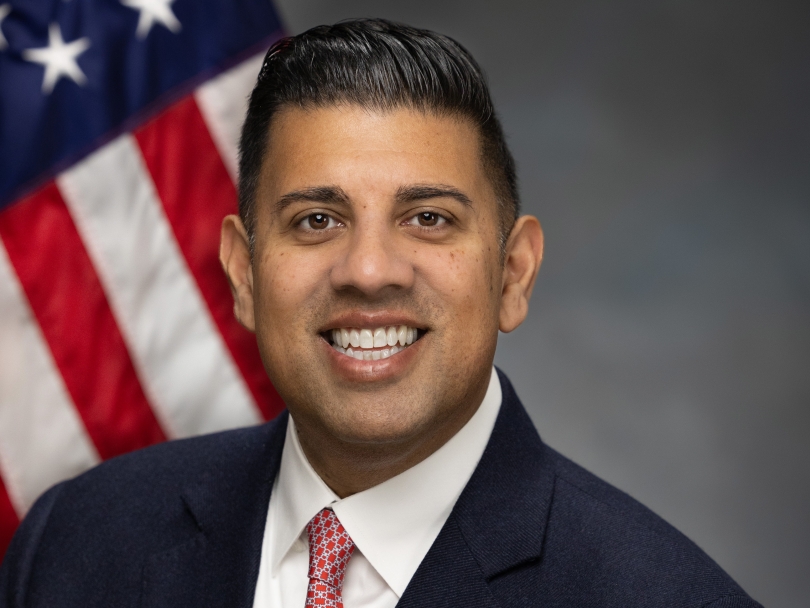
Sen. Jeremy Cooney
Sponsored bills
Maddy summaryThis Senate Resolution (J 1535) requests Governor Kathy Hochul to officially proclaim February 2026 as Black History Month in New York State. It does not create new law but asks the Governor to issue a formal state recognition. The resolution cites historical contributions of Black Americans across civil rights, culture, science, and innovation as context for the observance. The Senate adopted the resolution on February 4, 2026, sending it to the Governor for action.
Maddy summaryThis is a ceremonial resolution (not a binding bill) requesting Governor Hochul to designate January 25-31, 2026, as "Physician Anesthesiologists Week" in New York. It does not create new laws or affect any specific group, but honors anesthesiologists' historical contributions to medical innovations like the Apgar Score and regional anesthesia. The resolution cites their role in advancing patient safety, pain management, and critical care. It was formally adopted by the Senate and will be sent to the Governor for consideration.
Maddy summaryThis is a symbolic resolution (Senate Resolution 1516) passed by the legislature to commemorate the 18th anniversary of Kosovo's independence on February 17, 2026. It formally acknowledges Kosovo's independence from Serbia (declared in 2008) and celebrates its progress in democratic governance, while recognizing the contributions of Kosovar communities in New York. The resolution has no legal effect and does not create new policies or affect any individuals or groups. It serves solely as a ceremonial expression of support for Kosovo's independence and its partnership with the United States.
Maddy summaryThis resolution honors Deborah Hughes for her 18-year service as President and CEO of the National Susan B. Anthony Museum & House in Rochester, New York, recognizing her leadership in stabilizing the museum's budget, growing its endowment, and advancing a major campus expansion project. The resolution specifically highlights her work navigating challenges like the pandemic and her focus on presenting Susan B. Anthony's legacy with historical nuance. Passed by the New York State Senate, it serves as a formal expression of appreciation for her contributions to cultural preservation and community leadership.
Maddy summaryThis is a ceremonial Senate resolution congratulating Jolie Chichak, a Shenendehowa High School student, on winning the 2025 NYSPHSAA Girls Tennis Singles State Championship. It formally recognizes her athletic achievement (including her first Section 2 singles title and school's first state singles championship) and academic record (96.33 GPA). The resolution has no policy impact - it solely offers symbolic recognition to Chichak and her coaches/school staff. It does not create legal obligations or alter any laws.
Relates to program eligibility for plans comparable to Medicare part D; provides for analysis of health plans by the department of health to determine whether such health plans meet or exceed the Medicare part D standard; requires the department of health, in consultation with the department of financial services, to notify prescription drug insurers of the provisions of this act.
Enacts the "licensed funeral arranger act" under which a "licensed funeral arranger" license allows a funeral arranger to perform all acts permitted to a funeral director except embalming or any preservation of the body of a deceased person requiring embalming; creates a registration process under which registered transporters facilitate the removal and transportation of the bodies of deceased persons.
Maddy summaryS 8817 requires insurers and health care plans to notify providers about potential fees before using payment methods like virtual credit cards that charge providers, offer a fee-free alternative, and get provider consent within 30 days. If providers don't choose within that timeframe, insurers must use the fee-free method. The bill also prohibits charging fees for payment transmission unless providers explicitly consent to the fee-charged method. This directly affects health care providers receiving payments from insurers by ensuring transparency about payment fees and giving them control over payment method choices.
Aligns state and local procurement laws with federal law prohibiting the procurement of certain technology and electronic parts or products which are determined to pose a risk to state and national security; relates to the authority of the office of information technology services to issue certain guidance relating thereto.