

Maddy summaryThis bill offers a one-time exemption from vehicle registration fees for new clean fuel vehicles and those meeting specific clean vehicle standards. To qualify, a vehicle must be a four-wheeled car that runs on electricity, either from a battery or a hydrogen fuel cell, or it must meet federal super-ultra-low emission standards while achieving at least 1.5 times the average fuel efficiency for its weight class. The financial relief applies only to the first year of registration and is set to run from January 1, 2025, through January 1, 2029.
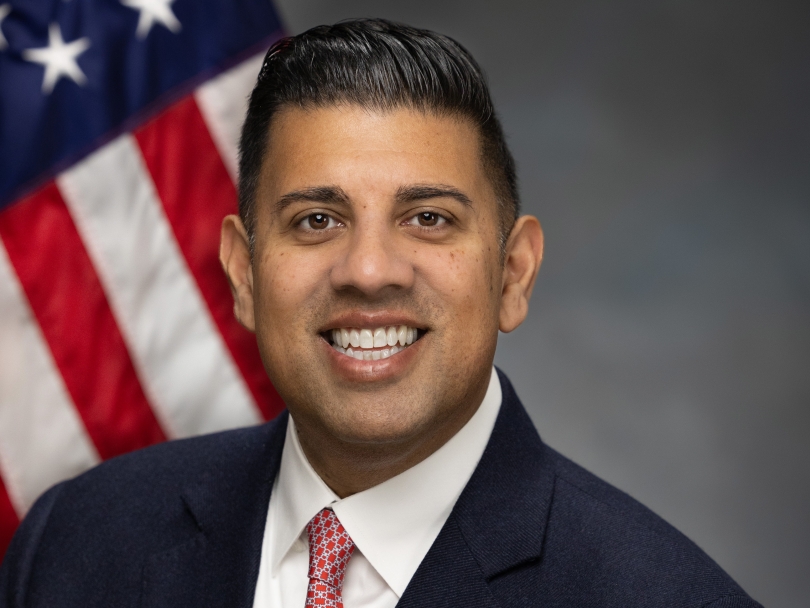
Sen. Jeremy Cooney
Sponsored bills
Maddy summaryThis bill modifies state liability laws regarding damage caused by potholes or defects on state highways. It generally establishes that the state is responsible for paying damages to individuals injured or whose property is damaged by these road defects, provided the state had notice of the problem. However, the legislation includes a specific exemption for roads maintained by the state during the months of May through November, unless the state has received notice of the defect. Additionally, the bill clarifies that the state is not liable for defects in bridges over which it has no control and defines its responsibility within incorporated villages based on the portion of the road it maintains.
Requires the deactivation of transportation network company drivers upon a substantiated report of a covered incident; relates to additional safety requirements for vehicles engaged in the transportation of passengers; requires companies that provide digital networks for prearranged transportation services to provide a system of interactive electronic match verification for passengers; establishes the crimes of impersonation of a transportation network company driver in the first and second degrees.
Maddy summaryThis bill creates a new state program to offer grants and low-interest loans to small businesses facing financial losses from declared emergencies. Administered by industrial development agencies, the program targets businesses with 50 or fewer employees that were operational before the disaster and suffered damage, inventory loss, or revenue decline. To qualify, applicants must demonstrate prior financial viability and submit a plan for how they will use the funds, with each business limited to receiving up to $25,000 in total assistance. Agencies are required to establish uniform criteria for selecting recipients and coordinate efforts to prevent duplicate funding from multiple sources. The legislation also mandates that agencies track loan performance and report the data annually, while exempting any deferred interest from state taxes.
Relates to cannabinoid hemp and hemp extract; defines terms; provides that any orally consumed product in the form of a beverage and containing cannabinoids derived only from hemp, including cannabinoid hemp or hemp extract, with .5 milligrams or greater of total THC per container may not be sold to individuals under twenty-one years of age.
Maddy summaryThis bill directs the state Department of Transportation to create a program that places memorial markers at the sites of fatal vehicle crashes on state highways. The program allows immediate family members and authorized friends of the deceased to request these markers, which the department will design, install, and maintain within its available budget. While the markers are intended to honor the victims and promote highway safety awareness, the department retains the authority to remove them for construction or maintenance needs. The legislation also clarifies that the program can include state thruways and takes effect on April 1st of the year following its passage.
Requires the commissioner of motor vehicles to install notification of the thirty-foot requirement on every stop sign; ensures that the required distance established by the law will be posted on any stop sign to forewarn motorists upon approaching a stop sign.
Maddy summaryThis bill expands the legal definition of authorized emergency vehicles to include vehicles owned or operated by the American Red Cross. Under the new provisions, these vehicles must be clearly marked as Red Cross vehicles, but their operators are explicitly excluded from the special traffic privileges, such as driving against traffic or ignoring red lights, that are granted to other emergency responders. The change ensures that Red Cross vehicles are recognized within the vehicle and traffic law while maintaining the distinction that they do not have the same right-of-way exemptions as police, fire, or ambulance units.
Maddy summaryThis bill exempts the City of New York from specific insurance requirements for certain public construction projects. It directly affects contracts related to electrical power facilities, rail and bus infrastructure, bridges, tunnels, and tolling systems managed by the Metropolitan Transportation Authority. By amending the state insurance law, the legislation allows these municipal projects to proceed without adhering to the standard insurance mandates that apply to other contractors. The changes take effect immediately upon passage.
Permits the retention of electronic dealer records provided that such records can be accessed and provided to a requestor during reasonable business hours.