

Maddy summaryThis bill amends New York State laws to allow employees of licensed charitable organizations to operate games of chance, such as raffles. It clarifies that only bona fide members or employees of these organizations, along with their affiliated auxiliaries, may manage or run these games, while prohibiting anyone else from receiving payment for such work. The legislation also mandates that game equipment must be owned or leased by the organization and requires staff to certify they have no criminal record. Additionally, it restricts expenses related to game operations to specific necessary costs like supplies, prizes, and security, and prevents the transfer of raffle tickets between different authorized organizations.
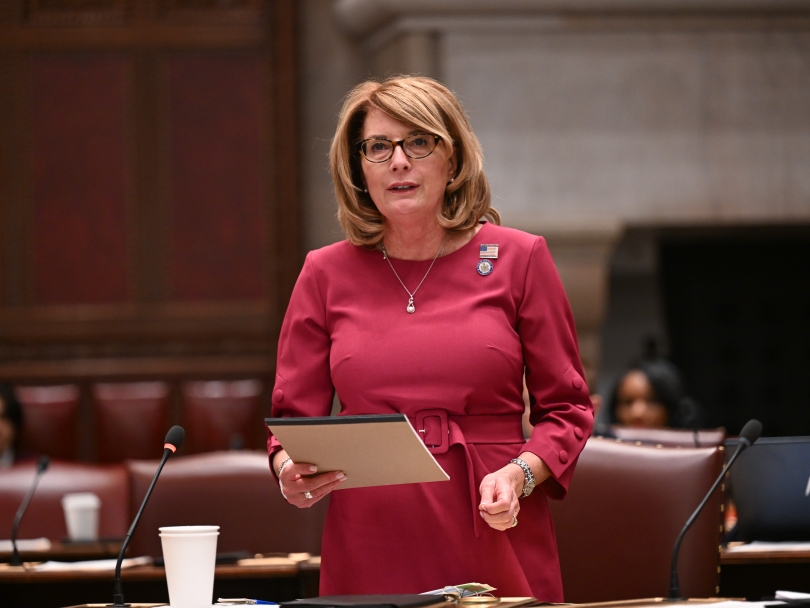
Sen. Pam Helming
Sponsored bills
Maddy summaryThis bill allows registered pharmacy technicians to work in any pharmacy under the direct supervision of a licensed pharmacist. It clarifies that technicians can assist with tasks like preparing and dispensing drugs only when those tasks do not require professional judgment, which must always be reserved for the pharmacist. The law requires the pharmacy to ensure technicians have received proper training before they begin assisting and defines supervision as the pharmacist staying in the immediate area to authorize and evaluate the technician's work.
Relates to the proper form of exhibits for submission; provides every exhibit shall be clearly identified, but no specific method of labeling shall be required.
Provides that a board of education or a board of cooperative educational services shall have the authority to award contracts for school food services on the basis of certain scoring criteria.
Includes contacts via text, email, private message, direct message or other electronic communication in the definition of the offense of aggravated harassment in the second degree.
Maddy summaryThis bill establishes a new licensing framework for vision impairment specialists in New York State, directly affecting professionals who provide specialized services to individuals with visual disabilities. It creates a dedicated state board composed of licensed specialists, medical doctors, public representatives, and blind community members to oversee the profession and set standards. The legislation defines two specific roles, orientation and mobility specialists and vision rehabilitation therapists, outlining their duties such as training clients in safe movement, independent living skills, and the use of adaptive devices. By requiring formal licensure and creating a regulatory board, the bill aims to standardize training requirements and ensure consistent quality of care for visually impaired persons.
Maddy summaryThis bill creates a new program to help people with intellectual and developmental disabilities find and keep stable housing in New York State. It requires the state to develop a training curriculum for housing navigators and establish a task force made up of government officials and community experts to oversee the program's implementation. The navigators will assist individuals in creating personalized housing plans, applying for financial aid, and transitioning between living situations while ensuring they have access to necessary support services. Additionally, the legislation authorizes the health commissioner to seek federal waivers to fund these services and mandates that future state plans include updates on the program's progress and effectiveness.
Safeguards cash accounts for people with developmental disabilities in a facility under the control of the commissioner of mental health, the commissioner of the office for people with developmental disabilities and the commissioner of alcoholism and substance abuse services.
Defines the practice of certified registered nurse anesthetist; requires collaboration with a licensed physician qualified to determine the need for anesthesia services; requires licensing; defines qualifications.
Prohibits public employers from diminishing health insurance benefits provided to retirees and their dependents or the contributions such employer makes for such health insurance coverage below the level of such benefits or contributions made on behalf of such retirees and dependents by the public employer as of December 31, 2021.