

Exempts certain property from the prohibition of alcohol sales within a certain distance from a church for a certain premises located in the county of Ontario.
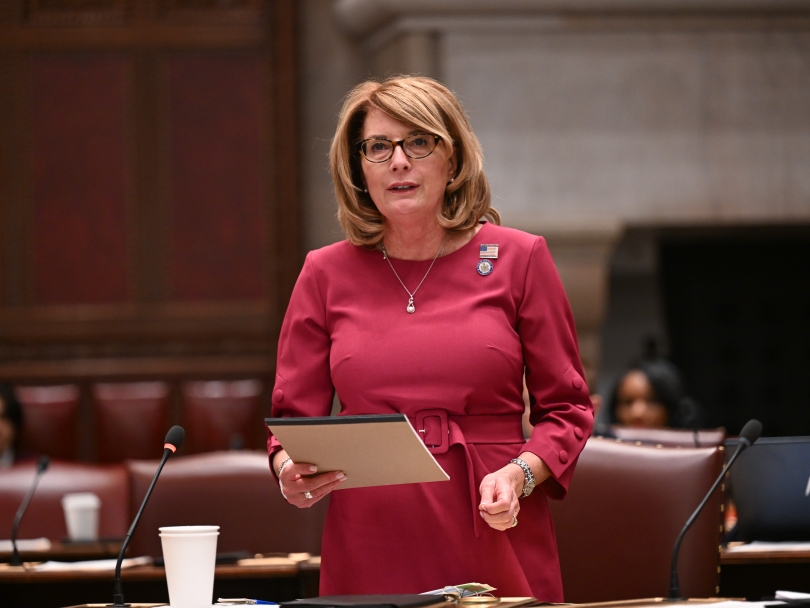
Sen. Pam Helming
Sponsored bills
Maddy summaryThis bill extends Ontario County's authority to impose additional sales and use taxes until 2027. It authorizes two specific rate increases: a one-eighth of one percent (0.125%) additional tax for most of the period, and a higher three-eighths of one percent (0.375%) additional tax for a later portion of the period. These increases build on the county's existing 3% sales tax rate. The policy directly affects Ontario County residents and businesses by allowing the county to collect these additional tax revenues for local services.
Maddy summaryThis bill (S 848) authorizes Livingston County to impose an additional 1% sales tax on top of existing rates, effective June 2023 through November 2027. It directly affects residents and businesses in Livingston County who pay sales tax on goods and services. The key provision requires all revenue from this additional tax to first cover the county's Medicaid expenses, with any remaining funds then deposited into the county's general fund for other purposes. The tax must be collected separately from other county taxes and managed in a dedicated special fund.
Maddy summaryS 1078 extends Livingston County's authority to impose an additional mortgage recording tax until December 1, 2027. This bill directly affects property buyers and sellers in Livingston County, as the tax applies to mortgage recording transactions within the county. The key mechanism changes the expiration date in existing law from December 1, 2025, to December 1, 2027. The bill was enacted into law (SIGNED CHAP.257) on August 7, 2025, and is now in effect.
Maddy summaryThis bill extends Wayne County's existing 1% additional sales tax (on top of the standard 3% rate) through 2027. It directly affects residents and businesses in Wayne County who pay sales tax on goods and services. The key provision modifies tax law to extend the tax period from December 1, 2025, to November 30, 2027. The bill was signed into law as Chapter 253 on August 7, 2025.
Maddy summaryThis is a ceremonial resolution (not a bill) requesting Governor Hochul to designate May 20, 2026, as "Court Clerks Day" in New York. It honors the more than 1,500 court clerks statewide who manage court records, process legal documents, maintain case files, and support judicial operations. The resolution has no legal effect - it only asks the Governor to issue a symbolic proclamation recognizing their role in upholding the court system. It directly affects court clerks by formally acknowledging their contributions to the judiciary.
Maddy summaryThis bill (S 1515) changes how local governments in New York calculate property tax levies by removing costs for emergency medical services (EMS) from the tax levy cap. It directly affects cities, towns, and counties that provide EMS, allowing them to fund these services without counting those expenses toward their annual property tax limit. The key provision adds a new exemption (subparagraph v) to the tax levy calculation, explicitly excluding EMS expenditures from the cap. This is a technical adjustment to the tax formula, not a new funding source or policy shift for EMS services themselves.
Provides parity to durable medical equipment providers by requiring Medicaid managed care organizations to reimburse such providers at no less than one hundred percent of the medical assistance durable medical equipment and complex rehabilitation technology fee schedule for the same service or item.
Maddy summarySenate Resolution J 1252 is a ceremonial resolution memorializing Governor Hochul to formally recognize June 2025 as LGBTQIA+ Pride Month in New York State. It does not create new laws or policies; instead, it requests the Governor issue a symbolic proclamation to honor the community's history and ongoing advocacy. The resolution cites key LGBTQIA+ milestones, including the Stonewall uprising and New York's marriage equality law, to frame the recognition. This is a procedural resolution with no direct effect on residents or policy implementation.
Authorizes localities to provide for an additional real property tax exemption for senior citizens who meet the income eligibility limits and other criteria to the extent of sixty-five percent of the assessed valuation of such real property.