

Maddy summaryThis bill creates a new criminal offense called "vehicular homicide" for drivers who cause another person's death through reckless conduct showing extreme disregard for human life. It directly affects drivers whose actions - like severe speeding or ignoring traffic signals - result in fatalities, even if they didn’t intend to cause death. The law classifies vehicular homicide as a class B felony, the same penalty as second-degree murder in New York, making it a serious criminal charge. This change would replace or add to existing laws for deaths caused by negligent or reckless driving.
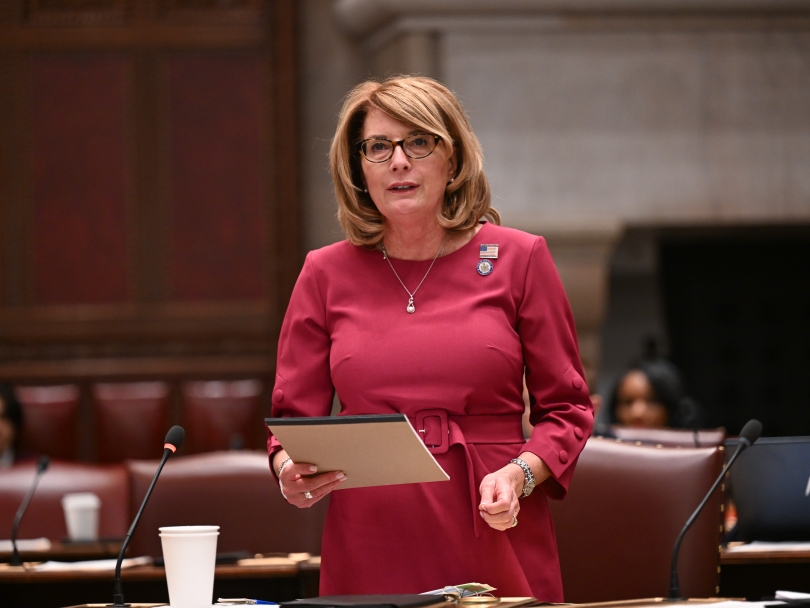
Sen. Pam Helming
Sponsored bills
Requires the public service commission to determine the cost to ratepayers of rules and regulations issued to comply with the New York state climate leadership and community protection act.
Relates to coverage for applied behavior analysis and for developmental, individual-differences, relationship-based treatment of autism spectrum disorder.
Maddy summaryS 5097 increases the penalty for robbing property from a bank or certain financial institutions (like credit unions, savings banks, or similar entities) by classifying it as a class C felony. The bill amends New York's Penal Law to specifically define this type of robbery and set the new penalty level, replacing less severe charges. This change directly affects individuals convicted of such robberies, subjecting them to harsher sentencing than before. The law does not alter the definition of robbery generally but elevates penalties for crimes targeting financial institutions.
Provides for a credit against personal income tax for volunteer firefighters who complete qualifications to become a training instructor; provides that such credit shall be equal to the sum of five hundred dollars or the total amount of the tax owed by the taxpayer if less than five hundred dollars, whichever is lower.
Establishes a tax credit for rent paid on the personal residence of certain taxpayers who lease the taxpayer's primary residence during the taxable year and who pay rent with respect to such residence in excess of thirty percent of such taxpayer's gross income for such taxable year.
Establishes the child victims act fund which provides grant awards in reimbursement to public school districts and voluntary foster care agencies located within the state who have been named as defendants in certain child sexual abuse legal cases and in which it can be demonstrated by the public school district or voluntary foster care agency that no insurance policy for the covered period can be located after a good-faith effort to do so has been made, there was a monetary judgment issued or settlement agreement with regard to such action and where it can be demonstrated by the public school district or voluntary foster care agency that payment in full of such judgment or settlement would put a substantial burden on the district's or agency's ability to execute its mission and negatively impact its existing student population.
Maddy summaryThis bill extends the deadline for certain organizations to provide fiscal intermediary services - such as managing payments for home care programs - from April 1, 2025, to July 1, 2025. It requires subcontractors working with the statewide fiscal intermediary to register with the state department within 30 days of being selected. The change directly affects entities currently offering these services, ensuring they can continue operating under the new timeline while meeting registration requirements. The law takes effect immediately but applies retroactively from April 1, 2025.
Enacts "Kirby and Quigley's Law"; expands the definition of aggravated cruelty to animals to include harm to a companion animal during the commission of a felony.
Maddy summaryS 2714 creates a five-member Metropolitan Transportation Authority (MTA) Control Board to address the MTA's fiscal crisis. The board, appointed by the governor with input from legislative leaders, must approve all major MTA projects and financing before the authority can commit funds or incur debt. Key provisions require the board to verify sufficient funding commitments - such as revenue projections or collateral - before approving projects, and to coordinate with the state comptroller within a seven-day review window. This bill directly affects the MTA's ability to fund infrastructure projects, aiming to ensure long-term fiscal stability and protect taxpayers from unsustainable costs.