Regulates automated decision-making by government agencies; requires agencies to conduct impact assessments; requires disclosure of automated decision-making tools utilized by governmental agencies.
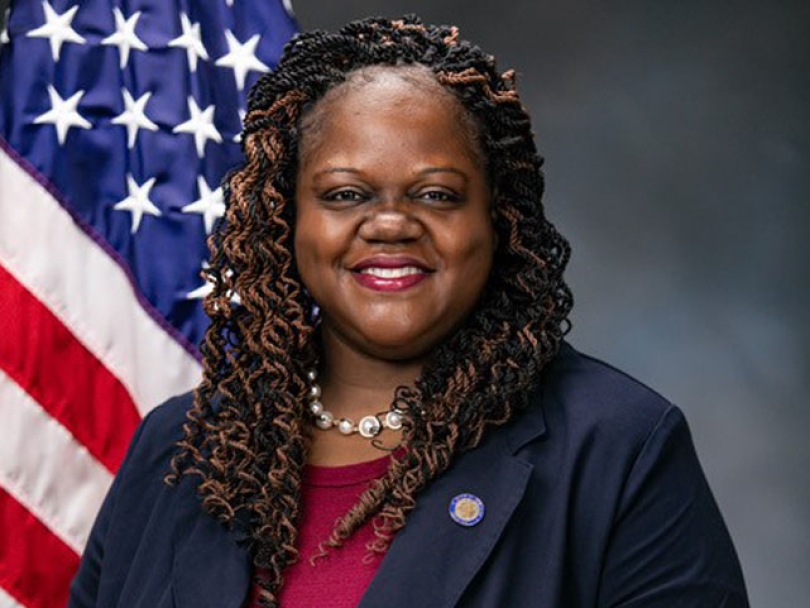
Sen. Lea Webb
Sponsored bills
Maddy summaryThis bill exempts certain food sales from sales tax when students at eligible schools use non-cash payment methods like approved donation programs or food points. It applies to K-12 school cafeterias and college/university dining facilities operated by exempt organizations or state-approved institutions. The tax exclusion covers non-alcoholic food and drink purchased through these programs but does not apply to cash transactions or alcohol. The change takes effect 90 days after enactment for qualifying sales.
Maddy summaryS 6997 requires utility companies and contractors to electronically submit detailed information about pole attachments (including equipment ownership, work dates, and contractors) to a central database. It creates a public complaint system for safety issues like unsafe attachments or violations of industry standards, with inspectors required to investigate within two weeks. Violations can result in fines up to $50,000 for repeat offenses, and the commission must publish semiannual lists of repeat violators. The bill also adds new disclosure requirements for contractors working in public rights-of-way when applying for permits.
Maddy summaryThis bill expands New York's veterans tuition award program to allow qualified veterans to transfer unused benefits to their spouse, child, or survivor. It defines "qualified veteran" as someone who would qualify for the award if they met enrollment requirements, and specifies who counts as an "eligible immediate family" member. Veterans can transfer all or part of their unused award, with transfers limited to children under 26 who meet service requirements (e.g., veteran served 10+ years unless discharged due to death or specific conditions). The bill caps annual transfers at 100 and requires veterans to designate beneficiaries via a form before the program's effective date in 2026.
Maddy summaryS 1548 bans specific harmful chemicals from menstrual products sold in New York State. It prohibits manufacturers from intentionally adding substances like lead, mercury, formaldehyde, triclosan, and PFAS (a class of chemicals including Teflon-like compounds) to products such as tampons, pads, and menstrual cups. The bill takes immediate effect for all intentionally added restricted substances, with a 2029 deadline for setting science-based limits on any remaining traces of these chemicals. This directly affects all companies producing or selling menstrual products in New York, requiring them to reformulate products to remove these substances.

Requires that a billing statement delivered to the customer by an energy services company include a side-by-side comparison showing both the price charged by the energy service company for commodity and delivery service during the prior billing period, and the price the customer would have paid had they taken commodity and delivery service from their local utility corporation or municipality; requires an energy service company to provide each of its customers with an annual statement comparing the price charged by the energy service company for commodity and delivery services and other energy-related value-added products over the prior twelve-month period with the price such customer would have paid had they taken commodity and delivery service from their local utility corporation or municipality.
Requires public notice and public engagement when a general hospital seeks to close entirely or a unit that provides maternity, mental health or substance use care.
Directs counties, in coordination with their regional emergency medical services councils, to develop and maintain comprehensive county emergency medical system plans that provide for coordinated emergency medical systems within such counties.
Relates to rechargeable battery recycling; adds a battery used as the principal electric power source for an electric scooter or bicycle with electric assist to the definition of "rechargeable battery"; provides that a battery manufacturer may not sell, offer for sale, or distribute rechargeable batteries in the state unless the battery manufacturer is implementing or participating under an approved plan; allows a city with a population of one million or more to enforce through its own agencies.
Requires a caller making a report of suspected child abuse or maltreatment to the central register to leave their name and contact information; prohibits the office of children and family services from releasing information identifying a person who made such a report.