

Establishes energy efficiency measures by the public service commission and NYSERDA including requiring utilities to hire and train employees who are from priority populations or living in areas designated as environmental justice communities.
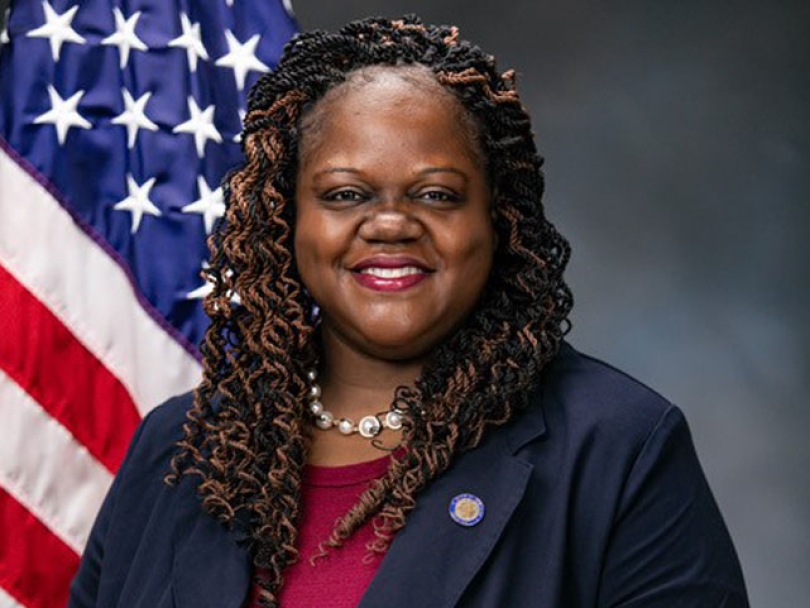
Sen. Lea Webb
Sponsored bills
Maddy summaryThis bill amends reporting requirements for New York's Division of Minority and Women's Business Development. It mandates that the division issue an annual report summarizing each state agency's progress on contracting with minority and women-owned businesses, including participation rates, spending data, waiver requests, and violation determinations. The report must include specific metrics like agency-specific participation rates, total certified business numbers, contract values by category (e.g., construction, services), and demographic breakdowns. The report will be shared with state officials and made publicly available online. This procedural change updates existing law to standardize and expand transparency around state contracting efforts.
Maddy summaryThis bill would impose a new tax on New York State residents with $1 billion or more in net assets (total wealth minus debts), calculated as if they sold all assets at market value on December 31, 2024. Taxpayers would pay the resulting tax over 10 years with an annual interest-like fee, or in full for the 2025 tax year. It includes credits for taxes paid to other states on assets accumulated before New York residency, and excludes certain assets like gifts made within five years. The tax applies only to New York residents meeting the $1 billion threshold, with the first payment due for the 2025 tax year. The bill is currently pending in the Budget and Revenue committee.
Requires contractors receiving public funds to pay amounts owed to small businesses and minority-owned business enterprises within 10 days of receipt of an undisputed invoice generated by a small business, minority-owned business enterprise or vendor management service and managed service provider on behalf of the small business or minority-owned business enterprise.
Prohibits health insurers, health care plans and HMOs from requiring prior authorization for anti-retroviral medication used to treat and prevent HIV infection.
Creates statewide emergency and crisis response council to work in conjunction with the commissioners of mental health and addiction services to jointly approve emergency and crisis services plans submitted by local governments, and provide supports regarding the operation and financing of high-quality emergency and crisis services provided to persons experiencing a mental health, alcohol use, or substance use crisis.
Requires that every newspaper, magazine or other publication printed or electronically published in this state, which contains the use of generative artificial intelligence or other information communication technology, shall identify that certain parts of such newspaper, magazine, or publication were composed through the use of artificial intelligence or other information communication technology.
Provides for increased participation in state contracts and subcontracts by certified minority and women-owned business enterprises; relates to certain performance and payment bond requirements.
Requires every franchisor, including its affiliates and subsidiaries to properly fulfill any warranty agreement and/or franchisor's service contract and to compensate each of its franchised motor vehicle dealers for warranty parts and labor, including but not limited to all warranty repairs, extended service contract repairs, extended warranty repairs, campaigns, service bulletins, policy repairs, component part warranties, factory compensated repairs, recalls, diagnostics, parts and other voluntary stop-sell repairs, and any other franchisor compensated repairs; relates to reimbursement to a motor vehicle dealer from a motor vehicle franchisor.
Maddy summaryThis bill creates a new enforcement mechanism allowing certain workers, whistleblowers, or labor organizations to file public lawsuits on behalf of New York's labor department to address violations of specific labor laws. It enables private parties to initiate enforcement actions for issues like unpaid wages or misclassification (covered under Articles 5, 6, 9, 19, 19-A, 19-B, and 25-A), with civil penalties collected going to the state treasury. The law aims to supplement limited public enforcement resources by empowering workers and organizations to act as "private attorneys general" while protecting whistleblowers from retaliation. It explicitly excludes government agencies as targets and applies only to violations covered by designated labor law sections.