

Maddy summaryThis bill establishes a program offering standardized health insurance contracts to qualifying small dental employers and small employers meeting specific criteria. It defines "qualifying small dental employers" as those with up to 50 employees, including at least one dentist providing 10+ monthly Medicaid-covered visits and two licensed dental hygienists. Employers must certify annually they meet requirements (e.g., ≤50 employees, no prior group coverage, 30% of employees earning ≤$30,000 adjusted annually) and insurers must provide uniform benefit packages without changes. The program aims to make affordable coverage available year-round, with preference for employers serving lower-wage workers or higher Medicaid patient volumes.
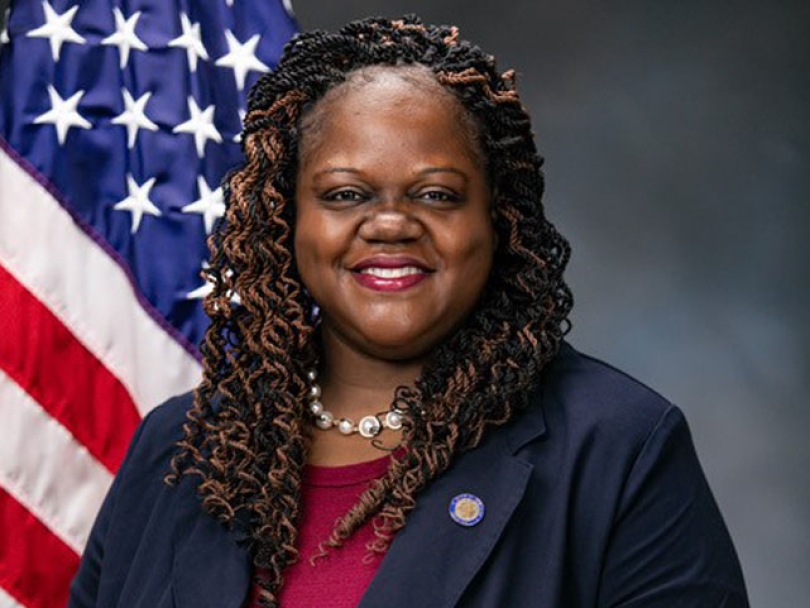
Sen. Lea Webb
Sponsored bills
Maddy summarySenate Bill S 856 reorganizes the State Commission of Correction by expanding its membership from three to nine individuals. The bill diversifies the appointment process, allowing the Governor, Speaker of the Assembly, Temporary President of the Senate, and the Correctional Association to each appoint members. It also mandates that the commission include members with specific professional backgrounds, such as formerly incarcerated individuals, health professionals, and attorneys. Additionally, the bill establishes a ten-year term limit for commissioners and alters the process for designating the chairperson and removing members.
Maddy summaryThis bill makes permanent disability benefits for volunteer firefighters who develop heart or coronary artery conditions related to their service. It removes an expiration date (previously set for June 30, 2025) from existing provisions in the volunteer firefighters' benefit law. The change directly affects volunteer firefighters who become disabled due to heart disease or coronary artery issues while serving, ensuring they continue to qualify for these benefits without time limits.
Names an office for people with developmental disabilities facility located in the borough of Manhattan the "Willie Mae 'Goody' Goodman Community Facility".
Maddy summaryThis bill restricts health care employers from requiring nurses or health care workers (excluding doctors, residents, and security staff) to work more than their regularly scheduled hours, except in specific emergencies or during ongoing surgical procedures. It defines "regularly scheduled work hours" to include pre-scheduled on-call time and shift report communication, and prohibits using on-call time as a substitute for mandatory overtime. Exceptions include health care disasters, official emergency declarations, unanticipated staffing emergencies, or procedures requiring continuous presence for patient safety. The law aims to protect patient care quality by limiting excessive work hours, without affecting existing rights under other laws or collective bargaining agreements.
Adds to the crime of public lewdness the electronic transmission of an image depicting exposed private or intimate parts without the consent of the recipient.
Maddy summaryThis bill, the "Raise the Wage Act," increases New York's minimum wage to $21.25 per hour in New York City by 2028, $17.25 in the city's suburbs (Nassau, Suffolk, Westchester) by 2026, and gradually across the rest of the state. It repeals current static wage provisions and establishes automatic annual adjustments tied to inflation and productivity, mirroring the formula used for upstate wages since 2022. The bill directly affects all hourly workers covered under New York's labor law, particularly in low-wage sectors like home care and childcare. This indexing mechanism aims to prevent future erosion of purchasing power, ensuring wages keep pace with rising living costs.
Establishes a culturally responsive education curriculum and standards; requires all school districts, charter schools and private schools to integrate culturally responsive education throughout the education of all students at all grade levels; establishes a pilot program in culturally responsive education; appropriates $25,000,000 therefor.
Provides that the weekly benefit which the disabled employee is entitled to receive for disability commencing: on or after January first, two thousand twenty-eight shall be fifty percent of the employee's average weekly wage but shall not exceed fifty percent of the state average weekly wage; on or after January first, two thousand twenty-nine shall be fifty-five percent of the employee's average weekly wage but shall not exceed fifty-five percent of the state average weekly wage; on or after January first, two thousand thirty shall be sixty percent of the employee's weekly average wage but shall not exceed sixty percent of the state average weekly wage; and on or after January first of each succeeding year, shall be sixty-seven percent of the employee's average weekly wage but shall not exceed sixty-seven percent of the state average weekly wage.
Requires that a business allow a consumer to cancel a contract between the two parties using the same method that was used to enter into the contract; provides exemptions.