Requires employers to inform their employees that non-disclosure or non-disparagement provisions in their employment contracts do not prohibit them from speaking with law enforcement, the equal employment opportunity commission, the state division of human rights, a local commission on human rights, or an attorney retained by the employee.
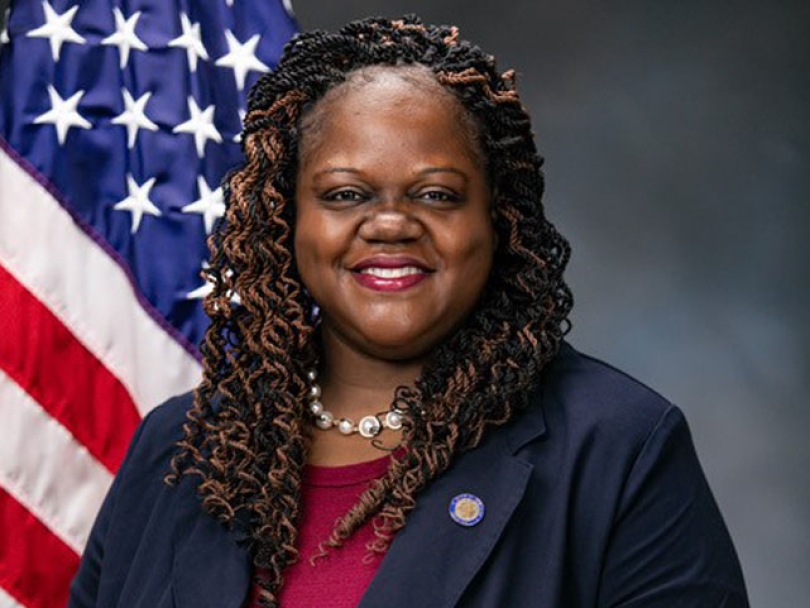
Sen. Lea Webb
Sponsored bills
Maddy summaryThis bill extends the effective date for a tax exemption on certain food donations until July 1, 2026. It modifies an existing 2025 tax law provision that exempts food donations from sales tax, changing the implementation date to July 1, 2026, instead of the original proposed timeline. The exemption directly benefits food banks, charities, and restaurants donating surplus food, as they will no longer owe sales tax on those donations after the new date. The change only affects the timing of the exemption’s application, not the scope of the tax exclusion itself. This is a procedural adjustment to align with prior legislative proposals.
Maddy summaryThis is a procedural Senate resolution (not a bill), requesting Governor Hochul to declare July 1, 2026, as "Canada Day" in New York State. It memorializes the strong economic, cultural, and trade ties between New York and Canada, including $17 billion in annual exports and over 1,300 Canadian businesses operating in the state. The resolution has no binding effect; it simply asks the Governor to issue a ceremonial proclamation recognizing these connections. The legislature adopted it on February 3, 2026, and will send it to the Governor and Canada's New York Consul General.
Provides an exemption from requirements for the alienation of parkland for renewable energy generating projects with a generating capacity not exceeding two megawatts and which are located above real property currently used for vehicle parking.
Includes Lyme disease and other tick-borne diseases as occupational diseases for purposes of workers' compensation; clarifies that disability includes disability caused by Lyme disease or other tick-borne diseases; requires insurance coverage of long term medical care for Lyme disease and other tick borne diseases.
Requires the inclusion of cultural competency training in the basic training and pre-employment course curricula for state police officers and municipal police officers and sheriffs, members of fire departments and companies, corrections officers, first responders, emergency medical technicians and advanced emergency medical technicians.
Requires disclosure of information concerning non-invasive prenatal screening for chromosomal abnormalities including the benefits and limitations of non-invasive prenatal testing, the difference between non-invasive prenatal testing and prenatal diagnostic testing, and current recommendations from the American College of Obstetricians and Gynecologists (ACOG), the Society for Maternal Fetal Medicine, and the American College of Medical Genetics and Genomics (ACMG).
Eliminates certain court surcharges and fees and probation and parole surcharges and fees; eliminates the requirement that a parolee or releasee receiving a merit termination of sentence be financially able to comply with an order of restitution; eliminates the requirement that a person receiving a discharge of sentence be financially able to comply with an order of restitution and the payment of certain surcharges or fees (Part A); mandates that courts engage in an individualized assessment of a person's financial ability to pay a fine prior to imposing a fine (Part B); eliminates the availability of incarceration as a remedy for a failure to pay a fine, surcharge, or fee, lifts and vacates existing warrants issued solely on a person's failure to timely pay a fine, surcharge or fee and ends existing sentences of incarceration based on such failure (Part C); vacates existing unsatisfied civil judgments based on a person's failure to timely pay a surcharge, or fee (Part D); prohibits the collection of a fine, restitution or reparation from the funds of an incarcerated person; prohibits the payment of court fines, mandatory surcharges, certain fees, restitution, reparation or forfeitures from the earnings of prisoners (Part E); vacates existing unpaid surcharges, DNA databank fees, crime victim assistance fees, sexual offender registration fees, supplemental sex offender victim fees, or probation or parole supervision fees; repeals certain provisions of law relating to restrictions on remitting such fees (Part F).

Maddy summaryS 3632 establishes a 13-member Problem Gambling Advisory Council in New York to advise state leaders on preventing and treating problem gambling. The council will develop strategies for improving access to gambling resources, increase public awareness, and recommend how to allocate gambling-related fees to fund services. It must produce an annual report to the governor and legislature by October 1st, including findings on mobile sports betting impacts. The council will include government officials, community health representatives, and members appointed by legislative leaders. This is a procedural bill creating a new advisory body with no direct funding changes.
Maddy summaryThis bill creates a certification process for organizations providing in-home substance use disorder treatment services in New York. It requires applicants (including out-of-state entities registered with the state) to meet specific clinical standards, including conducting screenings for overdose risk, mental health conditions, and suicide risk. Certified providers must implement safety plans, medication-assisted treatment, naloxone access, and regular recovery planning. The law aims to standardize and expand access to in-home treatment while ensuring providers meet defined safety and clinical requirements.