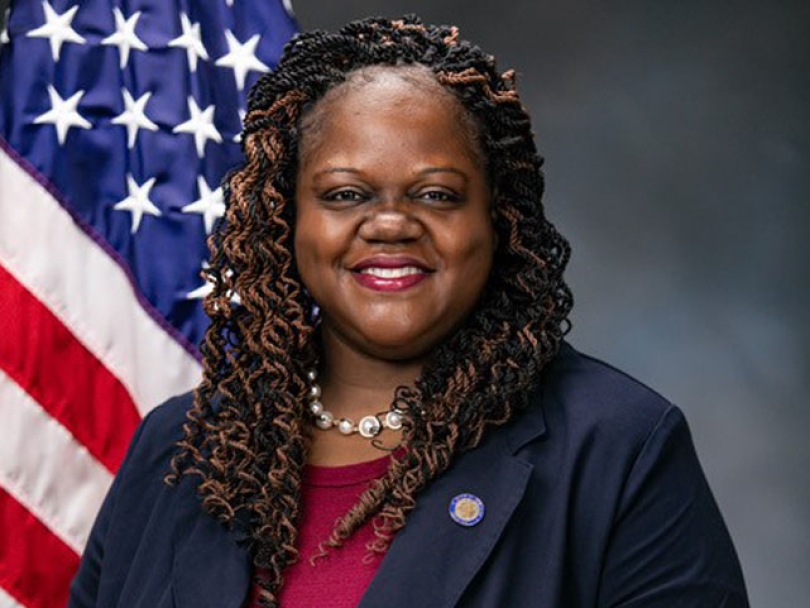
Photo of Lea Webb
D New York Senate · District 52 On the 2026 ballot

Sen. Lea Webb

Compare
Total votes
8,145
all sessions
Attendance
99%
87 missed
Near the chamber average
With party
98%
of cast votes
Higher than 83% of chamber peers
Bipartisan score
1%
crosses aisle rarely
Lower than 85% of chamber peers
Sponsored
2,210
bills & resolutions
Higher than 92% of chamber peers
Committees
10
assignments
2,210 bills and resolutions

Sponsored bills

Total
2,210
Primary
294
Co-sponsor
1,916
This page
2,210
matching current filters
Co-sponsor S 2695
Passed · New York Senate · Co-sponsor
Relates to the completion of training requirements for sheriffs and undersheriffs

Maddy summaryThis bill amends existing laws to clarify that elected or appointed sheriffs and undersheriffs are exempt from mandatory basic police training requirements. While the legislation maintains strict training mandates for regular police officers, it explicitly removes these obligations for sheriff and undersheriff positions. The change ensures that these specific law enforcement leaders are not subject to the same certification rules applied to other municipal police personnel.

Passed May 20, 2024 1 co-sponsor
Co-sponsor S 3552
Passed · New York Senate · Co-sponsor
Provides for the licensing of genetic counselors; creates the state board for genetic counseling

Maddy summaryThis bill establishes a formal licensing system for genetic counselors in New York State and creates a new State Board for Genetic Counseling to oversee the profession. The legislation defines the scope of genetic counseling, which includes evaluating family medical histories, ordering genetic tests, and educating patients about hereditary conditions, while explicitly prohibiting counselors from diagnosing diseases, prescribing medication, or performing invasive procedures. To obtain a license, individuals must hold a master's degree or higher in genetic counseling, pass an examination, and meet specific experience and character requirements set by the state. The newly formed seven-member board will be composed of licensed genetic counselors, a physician, and a public representative to regulate professional conduct and manage licensure matters.


Passed May 20, 2024 1 co-sponsor
Co-sponsor S 4742
Passed · New York Senate · Co-sponsor
Authorizes special permits to remain open during certain hours of the morning

Maddy summaryThis bill allows businesses licensed to sell alcohol for on-site consumption to apply for special permits to operate between 4 a.m. and 8 a.m. on January 1st. The legislation specifically targets retail establishments in communities where sales must cease early on New Year's Day, enabling them to serve customers during those specific morning hours. To obtain this permission, business owners must pay a fee of $51 per day. The law takes effect 60 days after it is signed into law, giving authorities time to implement any necessary rules.

Passed May 20, 2024 1 co-sponsor
Co-sponsor S 2477
Passed · New York Senate · Co-sponsor
Enacts the New York state fashion workers act

Maddy summaryThis bill establishes the New York State Fashion Workers Act to regulate model management companies and protect the rights of models working in the state. It requires these companies to register with the Department of Labor, providing detailed information about their business operations and ownership, and mandates that larger firms post a financial bond. The law also defines specific duties and prohibited actions for both model management companies and their clients, such as requiring clear written summaries of job terms known as deal memos. Additionally, the act creates a formal process for filing complaints and outlines penalties for violations, ensuring oversight of the fashion modeling industry.

Passed May 20, 2024 1 co-sponsor
Co-sponsor S 6616
In committee · New York Senate · Co-sponsor
Relates to prohibited hospital interference with patient care

Maddy summaryThis bill prohibits hospitals from restricting licensed medical practitioners who are acting in good faith and within their professional scope of practice. Specifically, it prevents hospitals from limiting a doctor's ability to share comprehensive medical information with patients or from blocking necessary treatments for pregnancy complications when those services are required to meet the standard of care or prevent serious health risks. The legislation also protects these practitioners from retaliation, such as firing or discipline, if they provide care or communicate in accordance with the new rules. Additionally, the state health department is tasked with creating online materials to help medical staff understand these new protections.

In committee May 20, 2024 1 co-sponsor
Primary S 9676
In committee · New York Senate · Lead sponsor
Enacts the student voter empowerment act

Enacts the "student voter empowerment act"; requires each institution of the state university of New York and the city university of New York to designate a staff member to act as a student voting coordinator; requires such coordinator to develop and implement a student voting action plan to increase student voter registration and voting and democratic participation among students.

In committee May 17, 2024 0 co-sponsors
Primary S 9537
In committee · New York Senate · Lead sponsor
Authorizing the empire state development corporation to retain an independent MWBE consultant firm for the purpose of helping reduce contractor violations of the provisions of article 15-A of the executive law

Authorizes the empire state development corporation to retain an independent MWBE consultant firm for the purpose of helping reduce contractor violations of the provisions of article 15-A of the executive law; requires contractors in violation of the provisions of article 15-A of the executive law to retain independent monitors to oversee compliance.

In committee May 16, 2024 0 co-sponsors
Co-sponsor S 9507
In committee · New York Senate · Co-sponsor
Establishes a state disaster emergency grant and loan program

Maddy summaryThis bill creates a new state program to offer grants and low-interest loans to small businesses facing financial losses from declared emergencies. Administered by industrial development agencies, the program targets businesses with 50 or fewer employees that were operational before the disaster and suffered damage, inventory loss, or revenue decline. To qualify, applicants must demonstrate prior financial viability and submit a plan for how they will use the funds, with each business limited to receiving up to $25,000 in total assistance. Agencies are required to establish uniform criteria for selecting recipients and coordinate efforts to prevent duplicate funding from multiple sources. The legislation also mandates that agencies track loan performance and report the data annually, while exempting any deferred interest from state taxes.

In committee May 16, 2024 1 co-sponsor
Showing 1,441 to 1,450 of 2,210 bills