

Provides that beginning in the 2026-2027 academic year, certain graduate students shall be required to pay 25% of all current and future mandatory university fees; provides that in the 2027-2028 academic year and thereafter, no mandatory university fees shall be charged, with the exclusion of the graduate student association student activity fee.
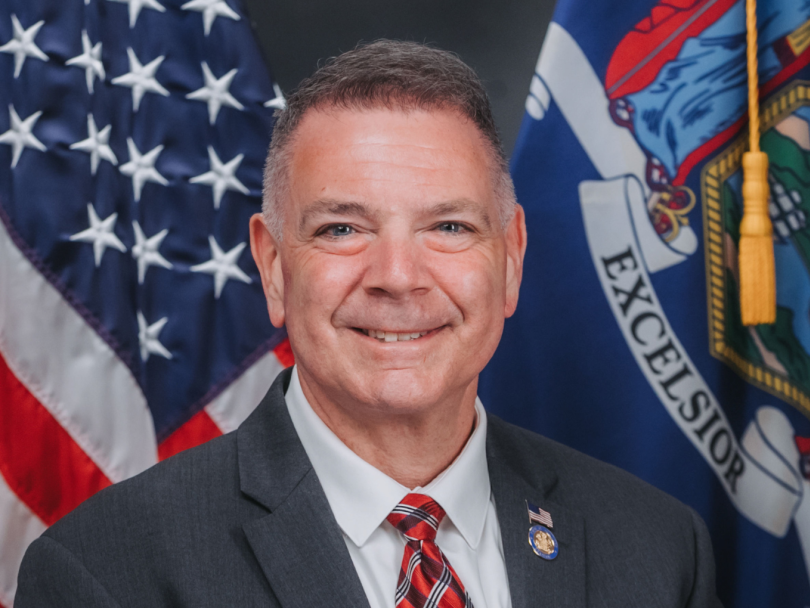
Sen. Steve Rhoads
Sponsored bills
Maddy summaryThis bill would allow local governments (counties, cities, towns, villages, or school districts) to create a property tax exemption for the primary residence of veterans with a 100% service-connected disability. To qualify, veterans must have an honorable discharge, a 100% disability rating from the U.S. Department of Veterans Affairs, and be permanently and totally disabled due to military service. The exemption covers all real property taxes, special district charges, and assessments on their primary home. This policy change directly affects veterans meeting these specific criteria, providing them with tax relief on their main residence starting with 2026 assessment rolls.
Maddy summaryThis bill creates a 50% property tax exemption on the primary residence of surviving spouses whose police officer spouse died while performing duty. It directly affects surviving spouses of officers killed in the line of duty, providing immediate tax relief on their home. The exemption applies to the assessed value of the primary residence, with local governments allowed to reduce the percentage. The law requires local authorities to adopt specific resolutions to implement the exemption and establishes documentation standards through the state's criminal justice and tax services divisions.
Grants Nassau county fire marshals, supervising fire marshals, fire marshals, assistant fire marshals, assistant chief fire marshals or chief fire marshals pension benefits for service rendered beyond twenty-five years.
Maddy summaryS 6997 requires utility companies and contractors to electronically submit detailed information about pole attachments (including equipment ownership, work dates, and contractors) to a central database. It creates a public complaint system for safety issues like unsafe attachments or violations of industry standards, with inspectors required to investigate within two weeks. Violations can result in fines up to $50,000 for repeat offenses, and the commission must publish semiannual lists of repeat violators. The bill also adds new disclosure requirements for contractors working in public rights-of-way when applying for permits.
Maddy summaryThis bill expands New York's veterans tuition award program to allow qualified veterans to transfer unused benefits to their spouse, child, or survivor. It defines "qualified veteran" as someone who would qualify for the award if they met enrollment requirements, and specifies who counts as an "eligible immediate family" member. Veterans can transfer all or part of their unused award, with transfers limited to children under 26 who meet service requirements (e.g., veteran served 10+ years unless discharged due to death or specific conditions). The bill caps annual transfers at 100 and requires veterans to designate beneficiaries via a form before the program's effective date in 2026.
Prohibits the sale of kratom to individuals under the age of twenty-one; imposes a civil penalty of not more than five hundred dollars for the sale or provision of kratom to any person under the age of twenty-one.
Directs counties, in coordination with their regional emergency medical services councils, to develop and maintain comprehensive county emergency medical system plans that provide for coordinated emergency medical systems within such counties.
Relates to rechargeable battery recycling; adds a battery used as the principal electric power source for an electric scooter or bicycle with electric assist to the definition of "rechargeable battery"; provides that a battery manufacturer may not sell, offer for sale, or distribute rechargeable batteries in the state unless the battery manufacturer is implementing or participating under an approved plan; allows a city with a population of one million or more to enforce through its own agencies.
Aligns state and local procurement laws with federal law prohibiting the procurement of certain information and communications technology and electronic parts or products which are determined to pose a risk to state and national security.